US Approval Restrictions Could Shut German Humanoid Robots Out of the American Market
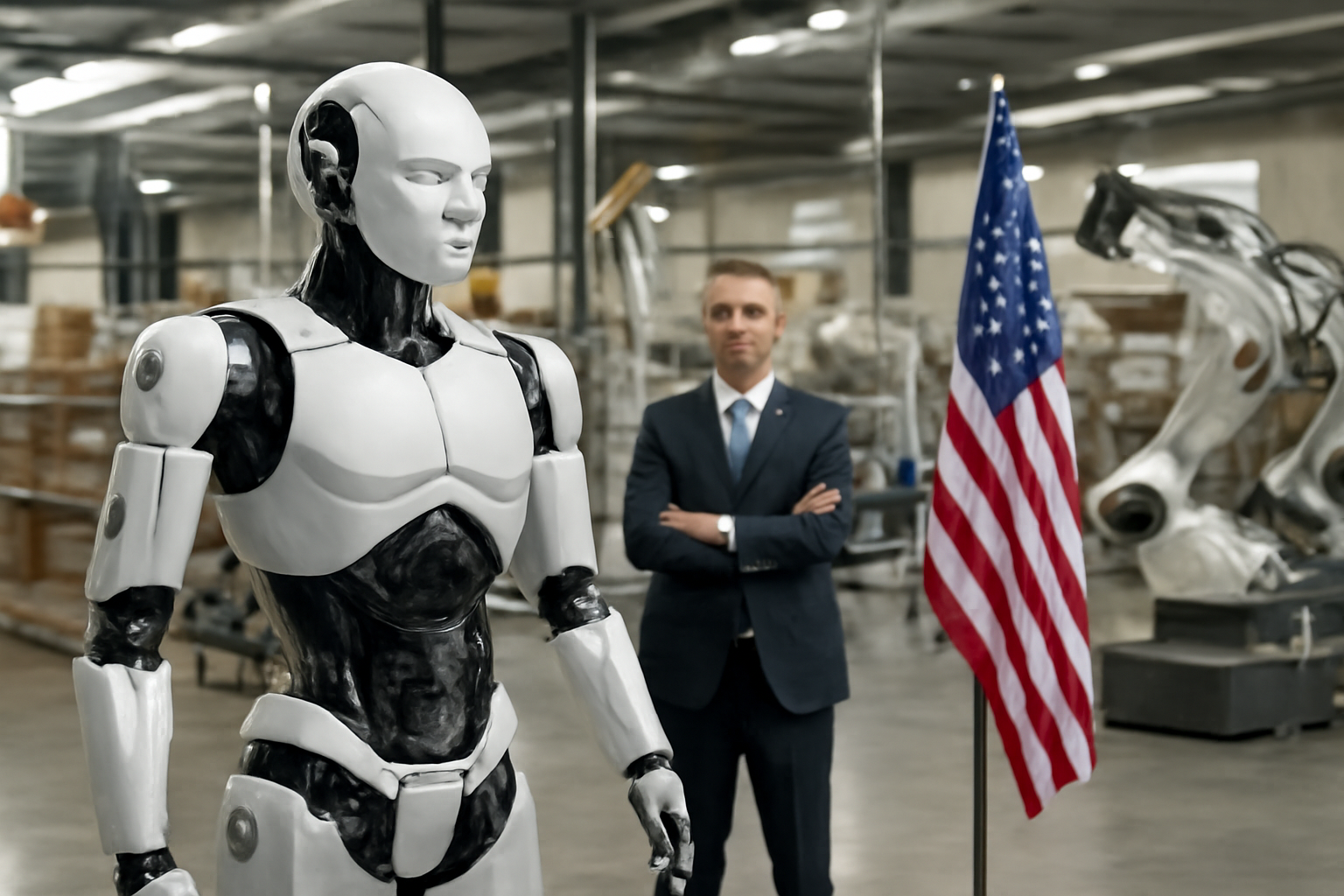
German-language reporting says new US approval requirements could block humanoid robots built in Germany from entering the American market. President Donald Trump framed the policy in employment terms, saying jobs will be created in the US rather than in Germany. The move targets a sector Berlin and German industry treat as their main hope for a high-tech comeback after falling behind in artificial intelligence.
Approval rules, not tariffs
Humanoid robots built in Germany could be barred from the United States market under new American approval restrictions, according to German-language reporting on the measure. The barrier described is regulatory rather than fiscal: the obstacle sits in authorisation and market-entry requirements, not in customs duties. For exporters that is a different kind of problem from a tariff, because a duty can be priced into a contract while a missing approval removes the sale entirely.
The reporting quotes US President Donald Trump framing the restrictions as an employment measure. In the German rendering of his words, jobs will be created in the United States, not in Germany. The statement links market access directly to where production and hiring take place, rather than to product safety or technical standards.
Several operational details are absent from the available reporting. It is not specified which product categories are covered, whether the rules apply only to finished robots or also to subsystems and components, when the requirements take effect, which agency administers the approvals, or what compliance path a foreign manufacturer would have. Until those parameters are published, German producers cannot size their exposure or model the cost of compliance.
Germany's high-tech bet
The restrictions land on a sector that Germany has positioned as strategic. German industry fell behind in the development of artificial intelligence, and humanoid robots badged Made in Germany are treated as the country's big hope for its high-tech future, the reporting notes.
The logic of that bet rests on hardware. Humanoid robotics sits at the intersection of mechanical engineering, drive and actuator technology, sensors, precision manufacturing and control software — the industrial base Germany still holds, as opposed to the large-model AI layer where it is trailing. A restriction that limits access to a major Western market therefore hits the one part of the technology stack where German firms were expected to compete.
What restricted access means for producers
Robotics is a volume business. Development costs for humanoid platforms are carried across serial production, and unit economics improve only with scale. Losing or delaying access to a large addressable market changes the arithmetic for every company building these systems.
- Market access risk shifts from customs to certification, which is slower to resolve and harder to litigate than a tariff line.
- Component suppliers — drives, gearboxes, sensors, control electronics — are exposed indirectly if the restrictions reach subsystems and not only finished units.
- Investors weighing German robotics ventures must now price in a possible loss of the American market, which affects valuations and funding rounds before any rule takes effect.
- Local assembly, a US joint venture or licensing become the practical workarounds, each of which moves value added out of Germany.
The employment framing in Trump's statement points at exactly that outcome: production and jobs relocating to the United States as the condition for selling there. For German manufacturers the choice narrows to building locally, partnering with an American firm, or concentrating on Europe and Asia instead.
A new friction point in transatlantic trade
The available reporting does not describe a German government response or any countermeasure. Because external trade and market access are European Union competences, a formal reply would run through Brussels rather than Berlin, and would depend on the legal form the American restrictions ultimately take.
What is clear from the reporting is the direction of travel: an emerging technology category is being folded into the same market-access-for-domestic-jobs logic already applied to more established industrial goods. For a German sector still in the scaling phase, that arrives earlier in the product cycle than it did for cars or steel — before export volumes, service networks and installed bases have been built.