US Threatens 100% Tariffs on Indian Goods Over Russian Oil Purchases, Putting FTA Talks at Risk
India is preparing to increase purchases of Russian crude after supply from West Asia was disrupted, but the move could trigger tariffs of 100% on Indian goods from the United States, according to Indian media reports. The threat is tied to energy sourcing rather than to any dispute over market access, and it places the bilateral free trade agreement under negotiation in jeopardy.
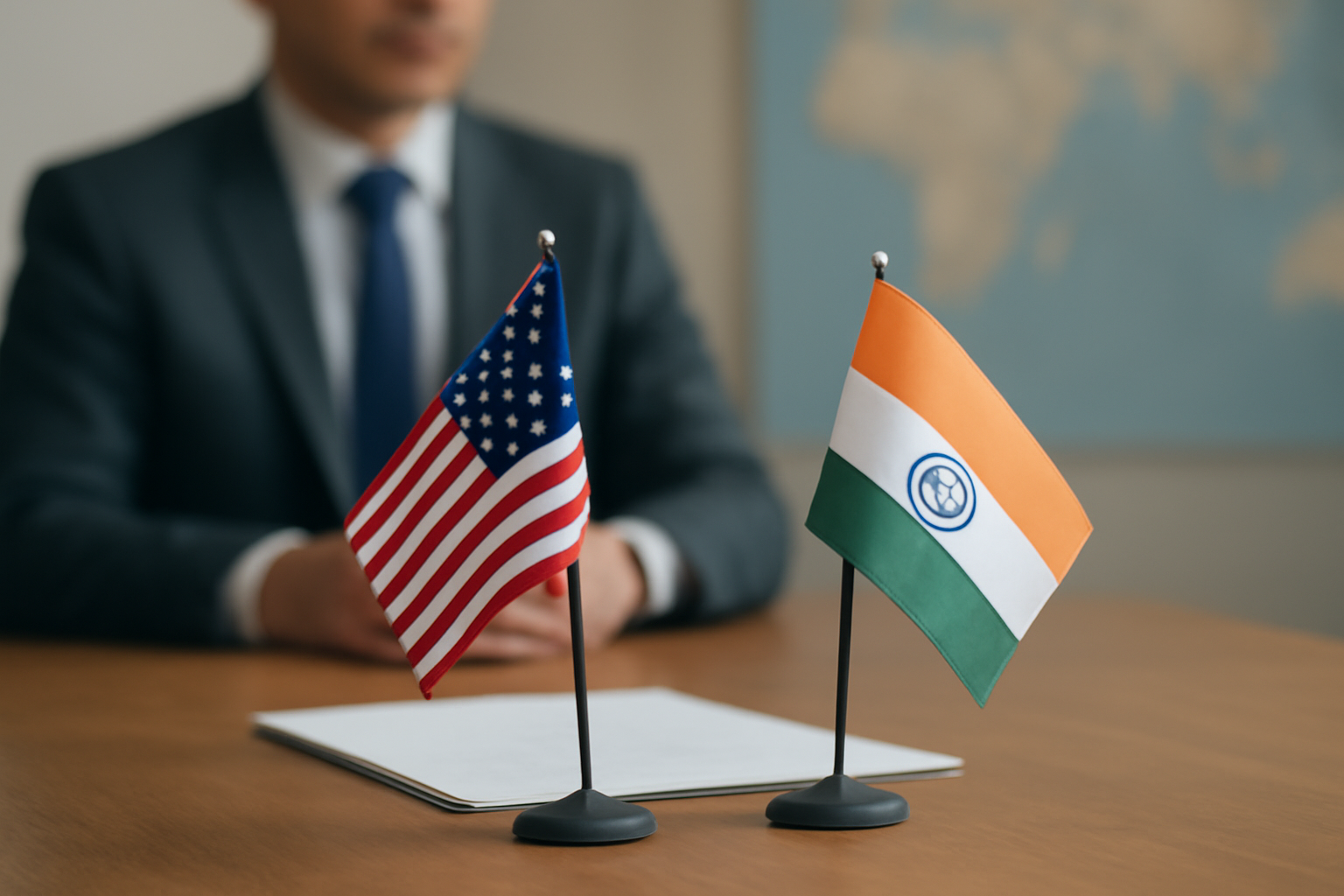
Tariff threat tied to crude sourcing
India's plan to buy more Russian crude oil has run into a direct trade threat from Washington. According to reports in the Indian press, the United States could impose tariffs of 100% on Indian goods if New Delhi increases its purchases of Russian oil, a step India is weighing after supplies from West Asia were disrupted.
The rate is the only hard figure in the reporting so far, and it is punitive rather than protective. A duty of 100% doubles the landed cost of a shipment and removes almost any margin an exporter could work with. In most product categories trade does not continue at that level; it stops. No effective date, legal instrument or list of covered goods has been made public, which leaves both the timing and the scope of the measure open.
FTA negotiations exposed
The most immediate casualty would be the bilateral free trade agreement under negotiation between the two governments. Indian reporting indicates the tariff threat could put those talks in jeopardy. A free trade agreement rests on a scheduled, reciprocal reduction of duties over several years, and a unilateral rate of 100% applied outside that framework undercuts the premise that either side can rely on the schedule it signs.
For negotiators the difficulty is that the trigger sits outside the trade file entirely. The familiar friction points in the talks — market access for agriculture and dairy, automobiles, medical devices, digital rules — are not what is being disputed in this case. The condition attached is India's energy sourcing. That means concessions made at the negotiating table would not, on their own, remove the threat, and it gives Indian negotiators little to trade against it.
Why India is looking at Russian barrels
The reported shift in sourcing follows a disruption to oil supply from West Asia. India operates one of the world's largest refining systems and imports most of the crude it processes, so an interruption on a major supply route has to be covered from elsewhere within weeks rather than months. Russian grades are the option now under consideration.
For Indian refiners the calculation has always been a spread: the discount on a Russian barrel against the commercial and political cost of taking it. What changes under a 100% tariff threat is who pays that cost. It is no longer carried by the refining sector, which captures the discount, but by exporters of unrelated goods, who would absorb the tariff.
What exporters and refiners are watching
Until the scope of the measure is defined, Indian exporters cannot hedge the risk with any precision. The practical questions are:
- Whether the tariff would apply across all Indian goods or only to selected categories
- What volume or share of Russian crude would trigger it, and how that threshold would be measured
- Whether the free trade agreement talks continue in parallel or are suspended while the threat stands
- How quickly Indian refiners could re-source barrels from other suppliers if the measure is enforced
The wider signal for trade flows is that energy policy and goods tariffs are being treated as a single lever. Exporters in sectors with no connection to crude — textiles, engineering goods, gems and jewellery, pharmaceuticals, seafood — would carry the cost of a decision taken on energy security grounds. Importers in the United States sourcing from India face the same uncertainty in reverse, with no way to price a tariff whose trigger lies in another country's refinery purchasing. That linkage, rather than the headline rate itself, is what makes the outcome hard for either side to plan around.