Uruguay's dairy sector leans on live heifer exports to Turkey as domestic supply tightens
Continued shipments of live Holstein and Jersey heifers to Turkey are absorbing Uruguay's surplus of dairy females and helping hold domestic prices firm, according to Fedeleche. Springing heifers are trading between US$1,600 and US$1,800 per head, with registered animals reaching US$2,000 or more. A December loading is already booked and talks are under way for 2027, while freight costs keep China out of the market.
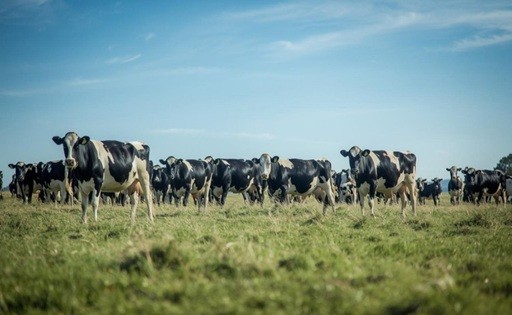
Live dairy cattle exports from Uruguay to Turkey remain a central support for the country's dairy sector at a moment when the domestic supply of animals is thinner and prices are holding firm, according to a report published by Fedeleche. The trade is absorbing part of the surplus of Holstein and Jersey heifers generated by Uruguayan milk farms, keeping animals off the local auction ring at a time when supply is already reduced.
Export flow keeps the domestic market balanced
Federico Di Santi, director of the DSR cattle brokerage, said the continuity of foreign purchases allows part of the surplus of Holstein and Jersey heifers to be absorbed and contributes to sustaining the internal market. Holando, as the breed is known locally, is the dominant dairy type in Uruguayan herds.
“The good thing for the sector is that the business is continuous,” Di Santi said during an interview with La Lechera at Expo Prado. The spring selling season opened with supply somewhat below the level recorded a year earlier, and among the reasons is precisely the export of heifers to Turkey, which has remained active over recent months.
Added to that is a favourable environment for producers, with sustained milk prices and good values for animals destined for the industry. According to Di Santi, those conditions are leading some producers to retain heifers on their own farms rather than sell them. The result is less cattle available at auction and values similar to those observed during the autumn.
Price references hold near autumn levels
The reference values currently reported for the Uruguayan market are as follows:
- Springing heifers of general characteristics: between US$1,600 and US$1,800 per head.
- Animals of higher quality, with registered pedigree and special sale conditions: up to US$2,000 and in some cases above that level.
- Heifers with later calving dates: around US$1,500 per head.
These references remain close to those recorded during the autumn, although they are being set on a smaller supply and with active trading. For sellers, the combination of reduced availability and steady external demand has removed the downward pressure that normally accompanies the start of the spring season.
December loading booked, 2027 under assessment
For Di Santi, the main value of the business with Turkey lies not only in the price obtained for each animal. The central point is that sustained demand exists, allowing dairy operations to place the surplus of heifers they generate as a structural feature of milk production.
DSR currently has an operation scheduled for loading in December and is already analysing new possibilities for 2027. The operator considers, however, that values may need some adjustment for the activity to remain viable. Prices reached particularly high levels over recent months, and according to Di Santi a moderate correction would allow the export flow to stay active.
Freight costs keep China on the sidelines
China has also begun making inquiries about Uruguayan dairy cattle, although no advanced operations exist at this stage. Transport to China is between 40% and 50% more expensive than shipping to Turkey, which makes it difficult to compete while cattle prices in Uruguay remain elevated.
For that reason, as long as Turkey continues buying actively, the possibility of a strong reappearance of China as a destination for Holstein heifers remains limited. Lower domestic supply, sustained milk prices and external demand are allowing the sector to begin spring with firm values, and the challenge ahead will be keeping that export flow active even if cattle prices need to adjust to preserve the competitiveness of the business.