UPSIDE Foods scales cultivated chicken capacity and secures halal certification
UPSIDE Foods says it has increased cultivated chicken production capacity 10,000-fold and can make more than 1 million pounds, or about 450 tonnes, annually. Its hybrid product has received US regulatory clearances and what Cibum reports is the cultivated meat sector’s first halal certification.
Capacity moves beyond demonstration scale
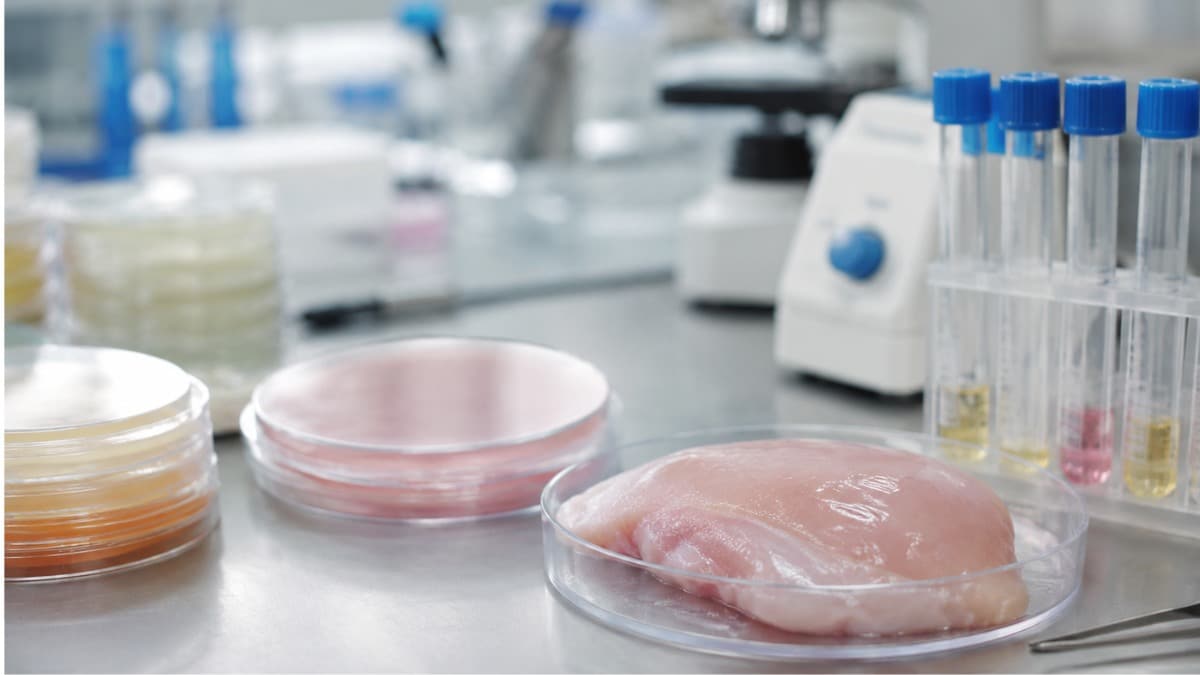
UPSIDE Foods has launched a cultivated chicken product after increasing its production capacity 10,000-fold, according to Greek food industry publication Cibum. The US company says its system can produce more than 1 million pounds, or about 450 tonnes, of product annually. Production uses 20,000-litre cultivation tanks at a site occupying less than two stremmas of land.
The figures represent a move toward commercial output for a sector that has largely operated through pilot plants, demonstrations and limited restaurant releases. UPSIDE’s announced capacity does not by itself establish sales volumes or plant utilisation, but it gives foodservice buyers and ingredient suppliers a clearer measure of the product volumes the company intends to support.
Hybrid formulation targets production costs
The chicken is not composed exclusively of cultivated cells. It combines cultivated chicken cells with soy protein isolate, pea fibre and olive oil. Cibum reports that the formulation allows UPSIDE to obtain more finished product from the same cultivation capacity, addressing production cost, which remains a central constraint for cultivated meat companies.
The model also links cultivated meat manufacturing with established agricultural ingredient supply chains. Soy processors, pea-fibre suppliers and edible-oil companies can participate in the product’s growth rather than compete with it solely through plant-based alternatives. UPSIDE says pricing is comparable with premium organic chicken, although the source provides no specific retail or foodservice price. That positioning places the product above mass-market poultry and makes premium foodservice channels a practical starting point.
US clearances and halal certification widen access
UPSIDE received a second no-questions letter from the US Food and Drug Administration and a second label approval from the US Department of Agriculture. According to Cibum, this makes it the first company worldwide to hold US regulatory clearance for two distinct cultivated meat products. The company also became the first cultivated meat producer to obtain halal certification following a one-year assessment by Circle H.
Initial distribution will focus on corporate and university foodservice programmes, including Stanford dining, alongside selected California restaurants. These controlled channels can introduce the product without requiring immediate national retail distribution. Halal certification could broaden the addressable customer base, although religious authorities have not adopted a uniform position on cultivated meat.
Europe remains outside the launch market
The product has no immediate commercial route into the European Union. No cultivated meat has been authorised in the bloc, where it would require novel food approval and a safety assessment by the European Food Safety Authority. Cibum notes that comparable novel-food procedures can take years, limiting the current practical significance of UPSIDE’s launch for European and Greek buyers.
The US rollout nevertheless provides a commercial test of three assumptions: whether cultivation can operate reliably at the announced scale, whether a hybrid recipe can bring prices closer to established premium poultry, and whether institutional diners will accept the product. For processors and investors, repeat production and sustained orders will now matter more than headline capacity. For conventional poultry suppliers, the initial volume remains small, but the launch creates a measurable benchmark for a competing production technology.