Ukrainian frozen raspberry imports intensify pressure on Polish producers
Poland imported 27,500 tonnes of frozen raspberries from Ukraine in 2025, up about 35% from 2024, according to the Agriculture Ministry. Ukrainian processing capacity and lower production costs are also increasing competition for Polish suppliers in Western Europe.
Imports rise by 35%, not 70%
Poland imported 27,500 tonnes of frozen raspberries from Ukraine in 2025, with a value of PLN 412.9 million, according to data from the Polish Ministry of Agriculture and Rural Development reported by WP Finanse. The volume was about 35% higher than the 20,400 tonnes recorded in 2024. The ministry disputed a claim by politician Przemysław Czarnek that imports had increased by 70% to 36,500 tonnes and €125 million.
The longer series shows that Ukrainian supply was already substantial before the latest increase. Poland imported 24,800 tonnes in 2023 and 22,100 tonnes in 2022. Nevertheless, the early-2026 figures indicate renewed acceleration. Between January and May, imports reached 6,790 tonnes worth PLN 119.5 million, an increase of 650 tonnes and PLN 48.5 million from the same period of 2025. Statistics Poland told WP Finanse that frozen raspberry imports posted the strongest increase among frozen fruit categories during the period, rising 68.2% year on year.
Ukrainian processor expands near the Polish border
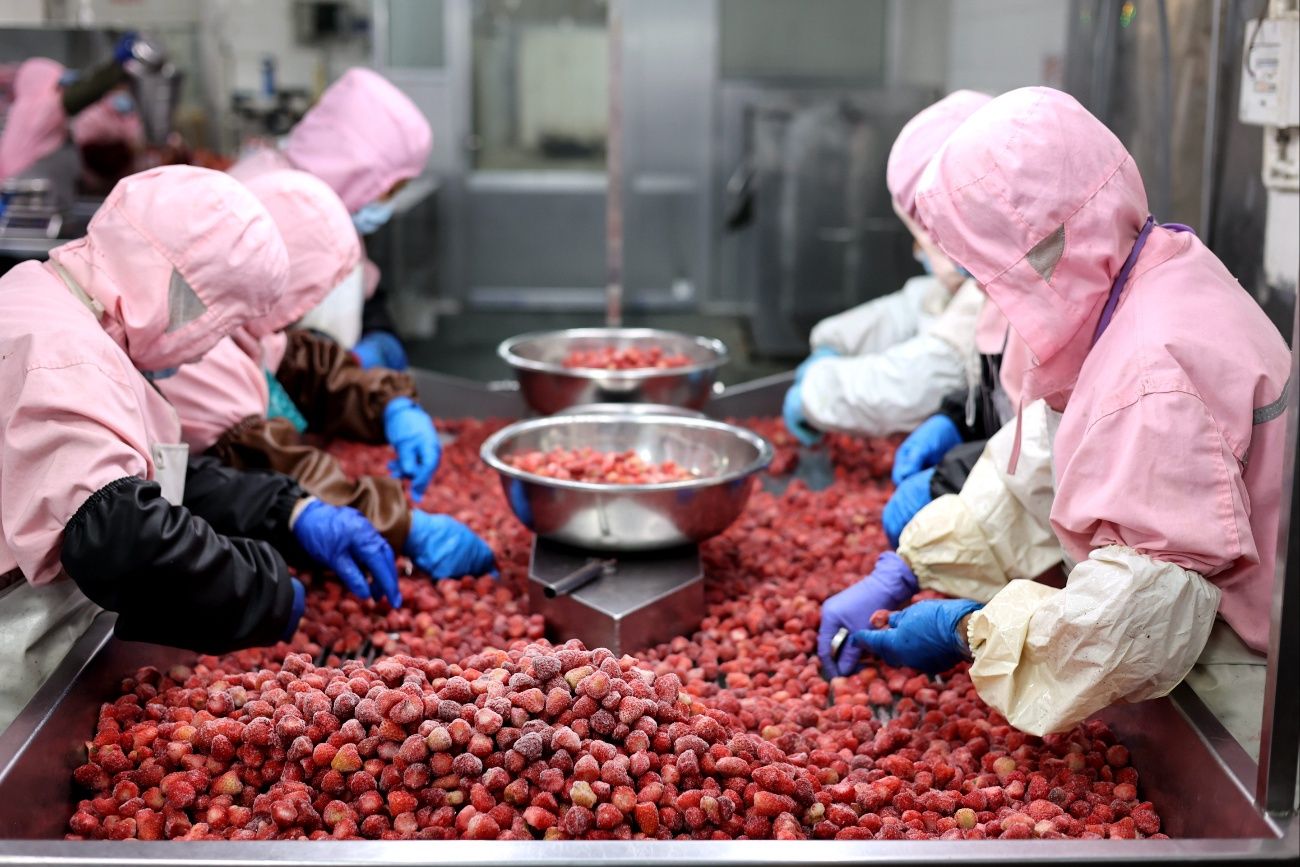
Ukraine’s competitive position is being reinforced by investment in larger farms and modern processing assets. West Berry, a Ukrainian frozen berry exporter established in 2016, currently processes about 7,000 tonnes of products annually, mainly frozen raspberries as well as blueberries, blackberries and currants. It sources fruit from growers and wild-berry collectors, then sorts, processes, freezes and packages the produce for shipment to nine countries. Forbes Ukraine reports that Poland accounts for half of the company’s export sales.
West Berry opened a new plant near Drohobych in western Ukraine’s Lviv region in February 2026. The roughly 10,000-square-metre facility has sorting and processing lines, six finished-product storage chambers and two blast-freezing tunnels with combined capacity of seven tonnes per hour. Company director Volodymyr Samborskyi said that operating for about 20 hours could produce roughly 140 tonnes per day. At that rate, the company’s present annual volume could be processed in about 50 working days.
West Berry’s revenue has risen by more than UAH 400 million since 2022, almost twice the increase achieved during the preceding five years. Its owners expect revenue of about UAH 750 million, equivalent to approximately PLN 62.5 million, in 2026. WP Finanse identified the European Union’s removal of tariffs and quotas on Ukrainian products, alongside tighter trade restrictions on Russia and Belarus, as factors supporting this expansion.
Competition shifts to Western European markets
Polish industry representatives say the pressure extends beyond Poland’s domestic market. Witold Boguta, president of the national association representing fruit and vegetable producer groups, said Ukrainian suppliers redirected deliveries to Western Europe when Polish farmers blocked border crossings around the turn of 2023 and 2024. Those suppliers now compete in markets previously served by Polish frozen-fruit companies, offering lower-priced products, although Poland remains a major re-exporter.
Agricultural economist Łukasz Zaremba identified higher Polish labour costs, stricter environmental requirements and the replacement of established crop-protection products with more expensive or less effective biological alternatives as disadvantages. Ukrainian plantations are also relatively young, productive and planted with varieties sought by buyers. Ukrainian fruit must, however, comply with EU pesticide-residue limits.
The effects are reaching growers and cold-storage operators. Some Polish farms supplying processors are reducing raspberry and strawberry plantings, while investment is moving towards higher-quality dessert fruit, including protected cultivation. A cold-storage company in the Lublin region linked its financial difficulties to cheaper Ukrainian raspberries after choosing more expensive Polish fruit. Zaremba warned that freezing and cold-storage businesses could eventually lack domestic raw material. Ukraine may also face rising labour costs as war-related mobilisation and migration constrain its workforce and future reconstruction increases demand for workers.