Ukraine’s 10-year tobacco strategy contrasts with policy uncertainty for Poland’s 3,500 farms
Ukraine has set out a 10-year plan to protect its tobacco-growing market, while Poland lacks a comparable long-term vision, Dziennik Łódzki reports. The contrast matters for roughly 3,500 Polish farms at the beginning of the tobacco supply chain.
Different planning horizons for two tobacco sectors
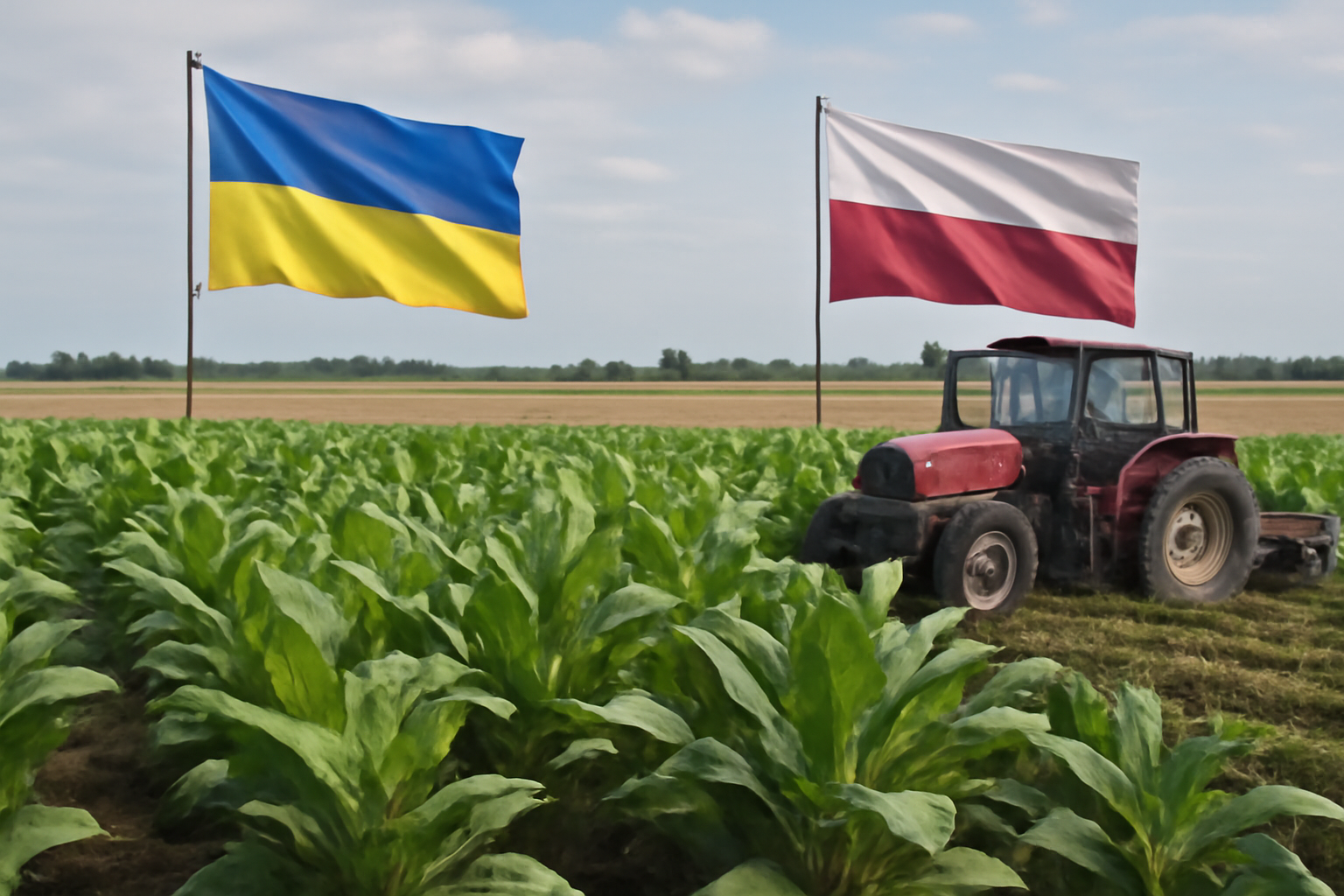
Ukraine has adopted a 10-year approach to protecting its tobacco market, while Poland has no comparable strategic vision for its growers, according to Dziennik Łódzki. The Polish publication presents the difference as a question of long-term security for agricultural producers rather than only as an issue for multinational tobacco companies.
The available source material does not specify the instruments, funding or production targets included in Ukraine’s plan. It nevertheless identifies a clear contrast in policy horizons: Ukrainian tobacco growers can operate within a framework intended to cover a decade, while Polish farms do not have an equivalent long-term direction. That distinction can affect how producers assess future planting, investment and succession.
About 3,500 Polish farms begin the supply chain
Poland’s tobacco industry starts with approximately 3,500 agricultural holdings, Dziennik Łódzki reports. These farms form the first stage of a wider chain that includes leaf purchasing, primary processing and industrial manufacturing. Their position means that uncertainty at farm level can extend beyond growers to companies that depend on a stable supply of domestically produced leaf.
The figure also shows why tobacco policy cannot be viewed solely through the activities of large manufacturers. For growers, a long production horizon matters because agricultural decisions involve land, specialist knowledge and relationships with buyers. Without a clearly stated strategy, individual farms must make those decisions with less visibility over the future operating environment.
The source does not provide figures for Poland’s tobacco acreage, leaf output, farm incomes, purchase prices or trade flows. It also does not quantify Ukraine’s current production. Direct comparisons of competitiveness, costs or market share therefore cannot be made from the information available. The central comparison is institutional: one country has announced a 10-year plan, while the other is described as lacking a vision for a sector involving about 3,500 farms.
Policy clarity shapes decisions across the market
A long-term strategy does not by itself guarantee higher output or profitability. Its commercial value depends on the specific rules and whether they remain predictable. However, a defined planning period can give producers, processors and buyers a common timetable for decisions. The absence of such a framework leaves market participants more dependent on short-term regulatory and commercial signals.
For Poland, the immediate issue is whether policymakers will set out a durable role for domestic tobacco cultivation. For Ukraine, the test will be how the stated 10-year protection plan is translated into practical measures and whether those measures provide continuity for growers and purchasers. Until more details are available, the clearest measurable point remains the scale of the Polish farm base: approximately 3,500 holdings whose decisions affect the beginning of the country’s tobacco supply chain.