Ukraine Expands Fuel-Supply Routes Through Romania by Rail and River
Ukraine is expanding rail and river capacity through Romania to diversify fuel-import routes amid military pressure on its Black Sea ports. Kyiv is also increasing reserves and testing underground storage for petroleum products.
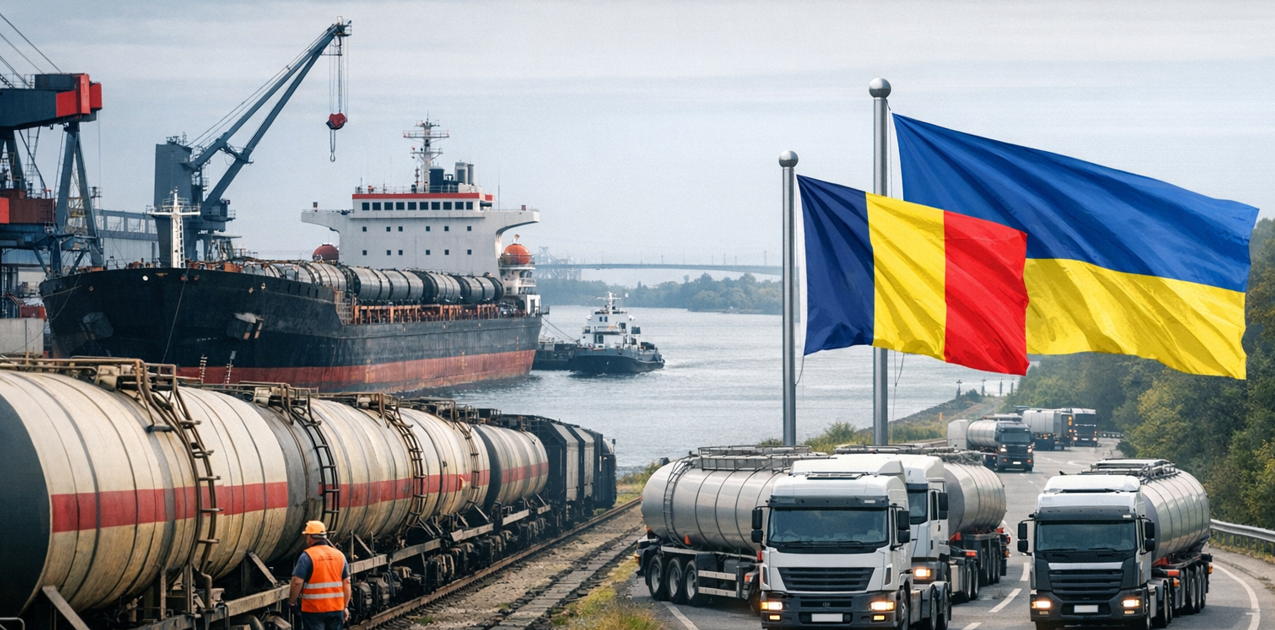
Romania gains a larger role in Ukraine’s fuel supply
Ukraine has reached agreements to expand the rail and river capacity used to transport fuel through Romania, strengthening an alternative supply corridor as military risks continue to affect logistics around the Black Sea. Ukrainian Energy Minister and First Deputy Prime Minister Denys Shmyhal said the arrangements were moving into implementation at government level.
The agreements followed a recent meeting between Ukrainian President Volodymyr Zelenskyy and Romanian President Nicușor Dan. Shmyhal described them as concrete measures to increase logistical capacity, although no additional volumes, investment amounts or completion dates were disclosed.
According to B1 TV, citing Ukrainian Shipping Magazine, Romanian transit is becoming increasingly important to Kyiv’s efforts to maintain a stable fuel market and diversify supply routes. Representatives of Ukraine’s economy and infrastructure ministries, tax and customs services, Antimonopoly Committee and business community reviewed the situation on Thursday.
Black Sea pressure redirects cargo toward the Danube
Russian attacks and mounting pressure on Ukraine’s Black Sea ports have changed the country’s logistics map. Part of the cargo previously dependent on maritime routes has shifted toward the Danube and rail links along Ukraine’s western border, increasing the strategic value of transport connections with Romania.
The Ukrainian Danube ports of Reni and Izmail, both close to the Romanian border, have become important cargo gateways. They handle Ukrainian exports as well as essential imports, including fuel. Greater capacity on the connecting river and rail routes could give importers and distributors more options when individual ports or transport corridors face disruption.
The initiative does not eliminate the operational risks surrounding the Danube corridor. It instead broadens the number of routes available to market participants and reduces reliance on infrastructure exposed to pressure elsewhere on the Black Sea. The commercial effect will depend on how much additional capacity the agreements create and how quickly governments, railway operators, ports and customs authorities can put it into service.
Kyiv increases reserves and tests underground storage
Shmyhal said that Ukraine’s fuel market remained controlled and balanced on 3 September 2026, with available resources sufficient to cover current consumption. Kyiv is nevertheless increasing fuel reserves as part of its effort to reduce supply vulnerabilities.
Ukraine has also launched a pilot project for underground fuel storage. The project is intended to provide a foundation for a wider network of facilities where petroleum products could be stored more securely. No capacity figure or timetable for the proposed network was reported.
Energy cooperation between Romania and Ukraine had already widened before the latest logistics agreements. The two countries agreed in March to expand cooperation in the sector, and Volodymyr Zelenskyy and Nicușor Dan subsequently signed an energy framework agreement in Bucharest alongside other documents. For fuel-market participants, the latest rail, river and storage measures add redundancy to the supply system, but their practical value will be determined by throughput, border processing and the resilience of the infrastructure connecting Romania with Reni, Izmail and Ukraine’s inland distribution network.