UK retailers sell Paraguayan charcoal linked to Chaco deforestation, Global Witness says
An investigation by Global Witness traces barbecue charcoal sold by B&Q and Waitrose to Paraguayan supplier Taruma, whose wood comes from properties that have cleared more than 28,000 hectares of Chaco forest since 2012. UK law bans imports tied to illegal deforestation but does not cover charcoal, while stricter EU rules covering all deforested land take effect on 30 December.
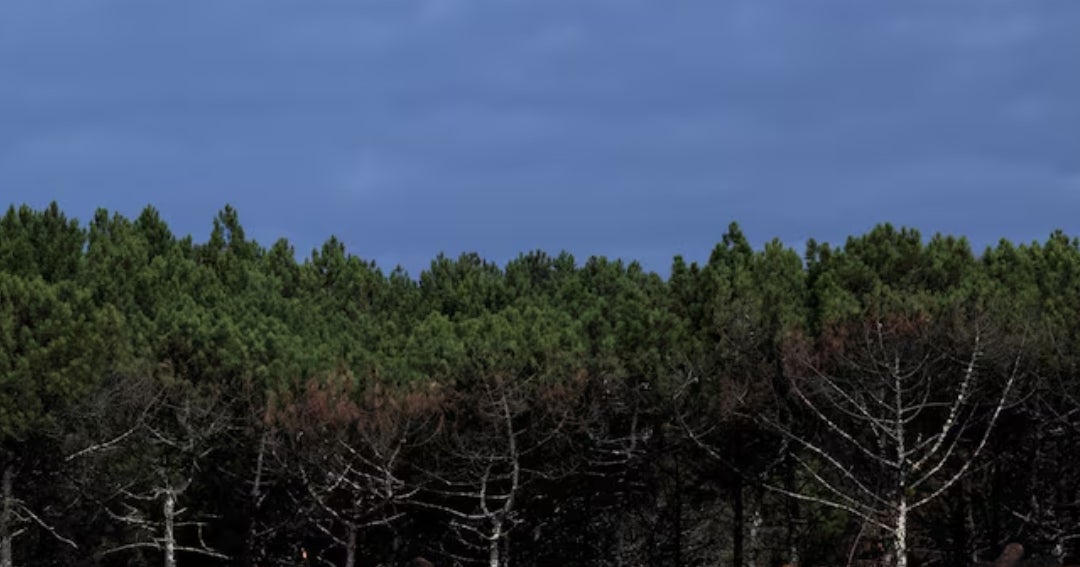
Major British retailers including B&Q and Waitrose are selling barbecue charcoal made from trees felled to open up farmland in the Paraguayan Chaco, according to an investigation published Thursday by the campaign group Global Witness.
The report traces charcoal sold in UK supermarkets and hardware stores to Taruma, a Paraguayan forestry company that Global Witness identifies as the largest international supplier to the British barbecue brand Big K, whose products are sold across the country. Waitrose and B&Q did not respond to requests for comment.
The South American Chaco, also known as the Gran Chaco, is the continent's second-largest forest after the Amazon and extends across Paraguay, Argentina, Brazil and Bolivia. Researchers, among them NASA scientists, have found that Paraguay has one of the highest deforestation rates in the world relative to its forest area, driven largely by crop farming and cattle ranching.
Satellite analysis behind the findings
A satellite analysis cited in the report found that Taruma sources wood from properties that have cleared more than 28,000 hectares of forest since 2012. A second supplier, Paben SA, which worked with Big K until 2023, has cleared roughly 2,700 hectares of forest in the Paraguayan Chaco since 2021, the report says.
- More than 28,000 hectares cleared since 2012 on properties supplying Taruma, according to the satellite analysis cited by Global Witness.
- About 2,700 hectares cleared since 2021 by Paben SA, a Big K supplier until 2023.
- EU rules covering goods from all deforested land, legal or not, take effect on 30 December.
Paben SA did not respond to requests for comment. In a written response to Reuters, Taruma denied any wrongdoing. “Taruma does not log forests and does not hold logging permits, so our operations do not contribute to deforestation or to its effects on the regional climate. Our sustainability team closely follows research on land-use change in the Chaco,” said the company's chief executive, Rahmeen Farudi.
Paraguay's National Forest Institute, Infona, did not respond to requests for comment.
A gap in UK import rules
Global Witness said that both Paraguay's permissive environmental laws and the UK's own environmental legislation allow deforestation-linked charcoal to reach the British market. The UK Environment Act 2021 prohibits imports tied to illegal deforestation, but it applies only to goods from illegally cleared land and does not cover charcoal products, meaning Paraguayan material produced on legally deforested land can still enter Britain.
That contrasts with the stricter EU rules, which will ban all products linked to deforested land regardless of whether the clearance was legal, once they take effect on 30 December. The UK Department for Environment, Food and Rural Affairs, Defra, did not immediately respond to a request for comment.
Mercosur ambitions in the balance
Paraguay is seeking closer commercial ties with Europe through the Mercosur-European Union agreement, amid growing scrutiny of the environmental impact of imports from the South American bloc, which also includes Argentina, Brazil and Uruguay. The country, a significant exporter of soy and beef, presented its first national forest policy in July, committing to move towards stricter environmental monitoring in order to meet EU trade standards.
Although the UK is no longer an EU member, the sale there of environmentally contested products could damage Paraguay's ambitions to sell other goods into the EU under the Mercosur agreement.
Environmental groups and several EU governments, including France, Austria and Poland, have warned that expanding Mercosur agricultural exports to Europe could accelerate deforestation in ecosystems such as the Gran Chaco.