Investigation links barbecue charcoal sold by B&Q and Waitrose to Chaco deforestation in Paraguay
An investigation into the charcoal trade has traced barbecue charcoal sold by major British retailers, including B&Q and Waitrose, to trees felled in Paraguay's Chaco to clear land for agriculture. The available material does not quantify volumes, name exporters or importers, or specify the period covered. The case puts chain-of-custody documentation for a low-value, hard-to-trace commodity under scrutiny.
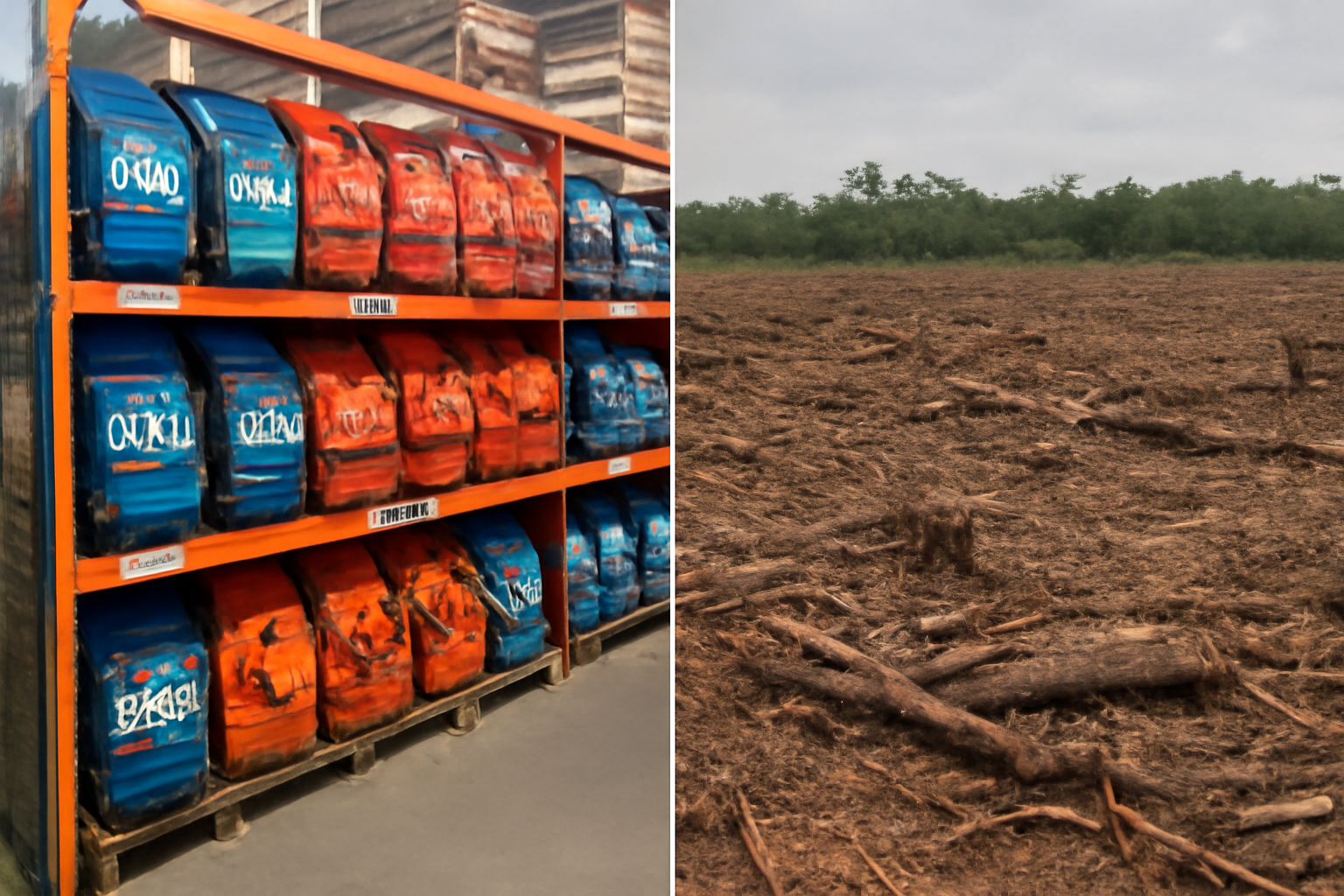
Barbecue charcoal sold by major British retailers, including B&Q and Waitrose, comes from trees cut down in Paraguay's Chaco region to open up more farmland, according to an investigation into the charcoal trade. The finding places two of the UK's best-known chains — one a home improvement group, the other a supermarket — at the end of a supply chain that begins with land clearance on one of South America's most actively converted forest frontiers.
The material available on the investigation does not quantify the volumes involved, name the exporters or importers that moved the product, or set out the period covered. What it does establish is the connection itself: charcoal on UK retail shelves produced from wood felled during the conversion of Chaco forest to agricultural land.
Clearance wood is the cheapest charcoal feedstock there is
Charcoal sits at the bottom of the forest products value chain. Sawlogs and pulpwood are sold first; what remains after clearing — branches, stumps, species with no industrial use — is worth little standing and costs money to dispose of. Carbonising it into charcoal turns a disposal cost into a saleable product and gives the operation clearing the land a second revenue line alongside the agricultural value of the plot itself.
That economics is why land clearance and charcoal production so often travel together, and why the product is difficult to police. Charcoal is graded by burn quality rather than by species or origin, lots from different producers are routinely blended before export, and by the time a consignment is bagged for a European retailer the paperwork rarely reaches back to a specific plot of land.
Where the sourcing questions land
For the retailers named, the immediate issue is documentary rather than commercial. Barbecue charcoal is a seasonal, low-value line, but the sourcing standards attached to it are the same ones the chains apply to timber, garden furniture and paper. The investigation raises a set of questions that fall on buyers and importers rather than on the Paraguayan end of the chain:
- whether chain-of-custody documentation for imported charcoal identifies the forest area of origin or stops at the exporter;
- whether certification claims carried on retail packaging were verified at lot level;
- how blended consignments are treated when only part of the volume can be traced;
- what contractual remedies buyers hold when an origin is disputed after the product has been sold.
The answers determine whether the response is a supplier review or a wider change in how the category is bought.
A trade flow with limited public visibility
Charcoal is a small line in trade statistics relative to grain, meat or sawn timber, and it attracts correspondingly little scrutiny. It moves both in bagged consumer units and in bulk, passes through intermediaries in several jurisdictions, and is often re-exported from the country where it was processed rather than where the wood was cut. The origin recorded at customs is therefore not necessarily the origin of the tree.
For Paraguay the report touches a sensitive point. The Chaco is being converted to farmland because of agricultural returns, not because of charcoal; charcoal is the by-product that helps finance the clearing. Removing a European retail outlet reduces one revenue stream from that process without altering the economics of the land use change behind it.
Neither retailer's response is recorded in the material available, and the investigation's own sourcing evidence — how individual bags were traced back to the Chaco — is not detailed there either. Both will determine how far the story runs: a documented, lot-level trace is far harder for a supplier to contest than a general origin claim.