British animal-health restrictions keep Greek frozen gyros out of the UK market
Exports of Greek meat products to Great Britain remain blocked by restrictions imposed after a foot-and-mouth disease case in Greece, with raw frozen gyros among the goods covered. One large Greek producer estimates six-month losses of 2 million to 2.5 million euros, about 90% of it tied to the British market. Greece shipped roughly 27 million euros of meat and meat preparations to the UK in 2025 out of a 280.6 million euro total.
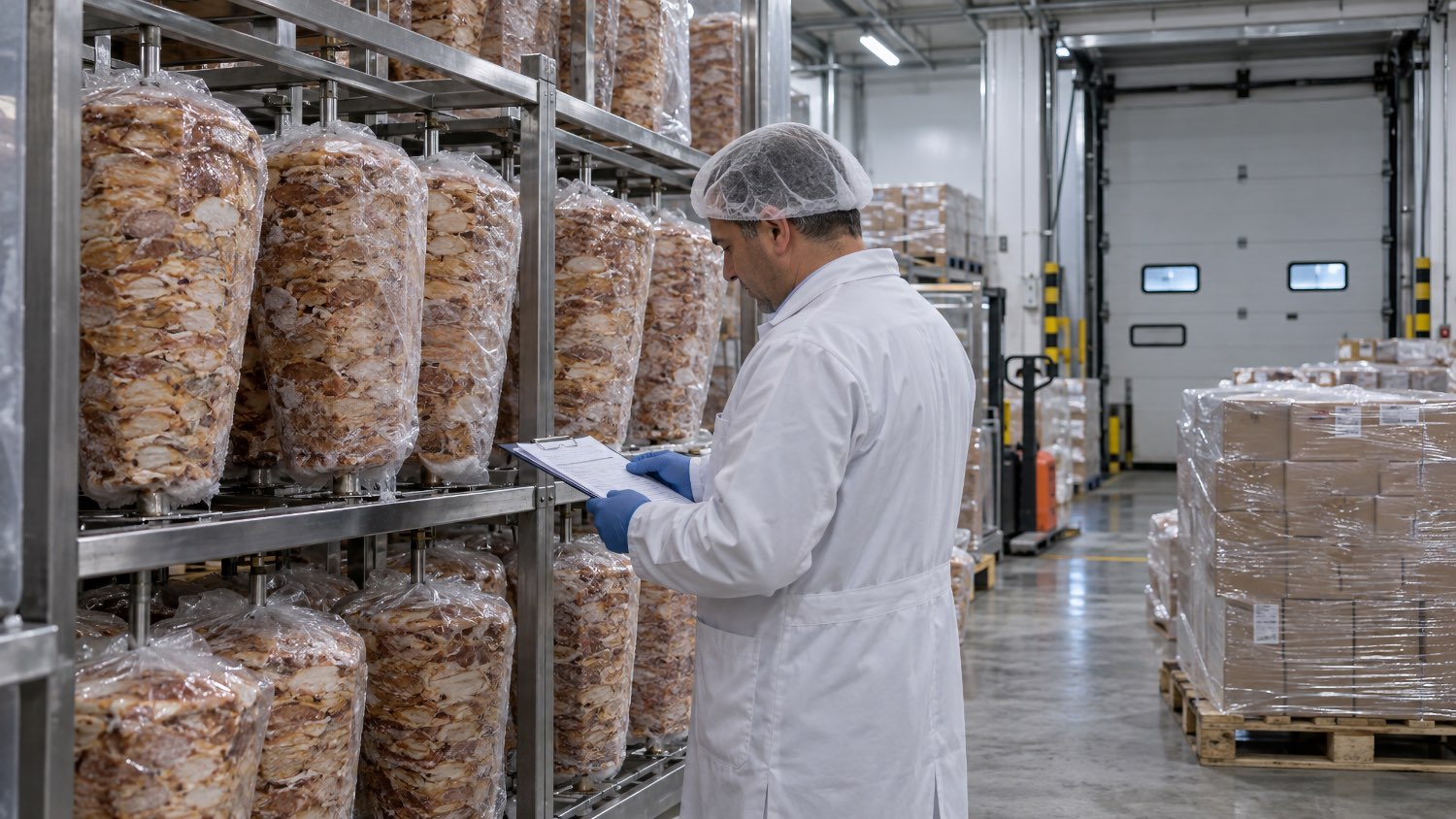
Exports of Greek meat products to Great Britain remain frozen because of restrictions imposed after an outbreak of foot-and-mouth disease in Greece, with meat-preparation companies in the Larissa area among those affected, the regional outlet onlarissa.gr reported on 29 September.
Which products the measures cover
British authorities continue to apply restrictions on imports of fresh and frozen meat, and on specific products that have not undergone the prescribed heat treatment. Raw frozen gyros falls into that second category, a product with a strong presence in the Greek food industry and steady demand in the British market.
Because the measures are defined by heat treatment, products that have been cooked to the required standard sit outside their scope. That leaves exporters a technical route back to British customers only if they change the specification of the product itself, which is not the same article that British kebab outlets and food service buyers order.
According to reporting by Capital cited in the article, even gyros produced in Larissa from meat of European origin cannot be shipped to Great Britain as long as the finished product falls within the categories covered by the measures in force. The origin of the raw material does not change the outcome; what counts is the product category and the absence of heat treatment.
Where the exposure sits
The prefecture of Larissa hosts production and processing units for meat products with export activity. Companies there make gyros, souvlaki, burgers and other meat preparations, selling both domestically and in foreign markets. The restrictions add pressure to a sector that leans heavily on exports and on stable access to European markets, and they hit a single product line rather than a whole plant, which limits the ability to switch capacity to something else at short notice.
The scale of the problem is already showing up in company accounts. One large Greek producer in the segment estimates losses of 2 million to 2.5 million euros over six months, with about 90% of the impact tied to the British market.
The numbers behind the British channel
Britain is a significant destination for Greek meat products. In 2025 Greek exports of meat and meat preparations reached 280.6 million euros, of which products worth roughly 27 million euros went to the United Kingdom, just under a tenth of the total.
- Greek exports of meat and meat preparations in 2025: 280.6 million euros
- Shipments to the United Kingdom: about 27 million euros
- Six-month losses reported by one large Greek company: 2 million to 2.5 million euros
- Share of those losses linked to Britain: about 90%
Industry presses for regionalisation
The point drawing the strongest reaction from the sector is that the restrictions apply to Greece as a whole, even though the foot-and-mouth case that triggered them was identified on Lesvos. Companies and industry representatives are asking the British authorities to apply so-called regionalisation, so that the bans cover only areas where cases have been recorded rather than production units in other parts of the country.
The Ministry of Rural Development has already gathered the relevant data, with the aim of putting the request to the British side through the Ministry of Foreign Affairs. No timetable for a British decision has been indicated.
For producers in Larissa the outcome matters directly. Any change in the status of the restrictions would affect the access of Greek products to one of the most important markets in Europe, and would determine whether the lost volumes return or have to be placed elsewhere.