UBTech scales humanoid robot output to 10,000 units a year at Liuzhou plant
Chinese manufacturer UBTech Robotics is configuring its new plant in Liuzhou, Guangxi, for an annual capacity of 10,000 humanoid robots, assembled with automated processes supported by Siemens. The target sits far above demonstrated industrial demand: only 7,000 humanoid robots were delivered for industrial use in all of 2025. Goldman Sachs nevertheless forecasts 6.48 million units by 2035.
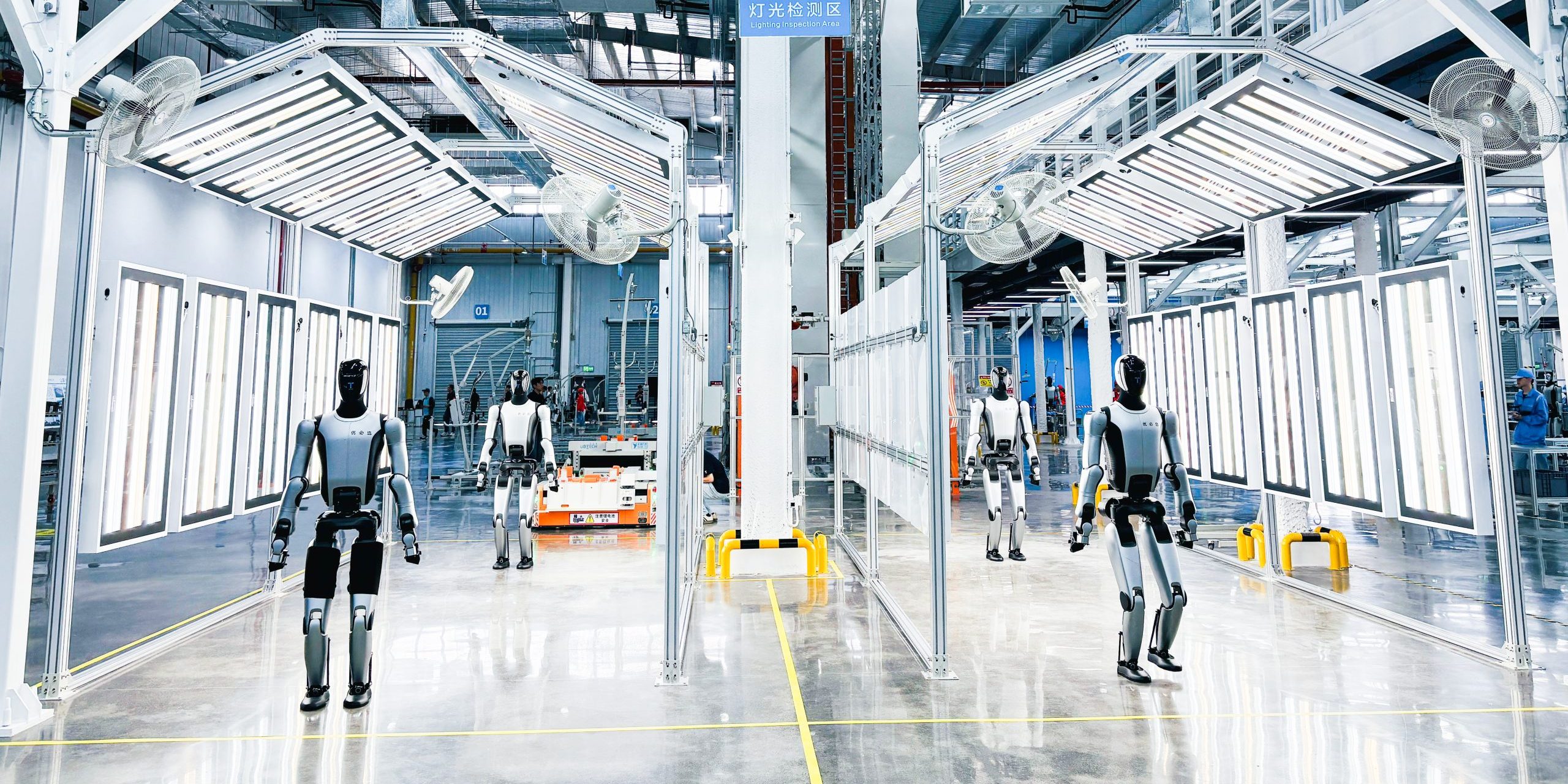
Chinese robot maker UBTech Robotics has raised the bar for humanoid robot manufacturing. In mid-September the company announced that its plant in Liuzhou, in the Guangxi region, is being configured for an annual capacity of 10,000 humanoid robots — a rate already described as one robot every ten minutes, according to the German engineering publication ingenieur.de.
Series production, rather than technology demonstration, is now the sector's central problem. Scaling output is regarded as the biggest obstacle to meeting current growth forecasts, and UBTech is addressing it with automated manufacturing processes, supported by Siemens.
One line, three models
The Liuzhou line is designed to build the bipedal Walker S models alongside the wheeled Cruzr S2 and Cruzr Y1. Video material from the site shows the wheeled machines already working inside UBTech's own factory, carrying boxes of smaller components between stations and moving noticeably more dynamically than the legged variant.
The mix is commercially revealing: the units UBTech deploys in its own plant today are the wheeled ones, while the bipedal platform remains the model most associated with the company's public demonstrations and customer trials.
Capacity ahead of demand
The announced capacity sits well above the industry's demonstrated annual requirement. Reuters, citing figures from the International Federation of Robotics (IFR), reported that only 7,000 humanoid robots were delivered for industrial purposes in the whole of 2025. For comparison, around 540,000 conventional industrial robots were installed worldwide in 2024. Humanoids are currently used mainly in research institutions and to collect data inside factories.
Forecasts point far higher. Goldman Sachs, in a projection published a few weeks ago, expects sales of 6.48 million units by 2035, after previously assuming 1.38 million. That figure, however, also covers humanoid machines intended for applications outside industry.
- Planned annual capacity at Liuzhou: 10,000 humanoid robots
- Industrial humanoid deliveries in 2025: 7,000 units (IFR data cited by Reuters)
- Conventional industrial robots installed worldwide in 2024: about 540,000
- Goldman Sachs forecast for 2035: 6.48 million units, raised from 1.38 million
Customers, capital and market access
According to media reports, UBTech's customers include BYD, Geely, FAW Volkswagen, Dongfeng, Foxconn and Texas Instruments. In early 2026 it was also reported that Airbus intends to trial Walker S2 humanoid robots at UBTech. Asked by ingenieur.de, Airbus said it was "in a very early phase of concept review"; no further information has emerged since.
Among investors, enthusiasm and caution appear to alternate. According to the financial outlet Ad-hoc-News, Chinese regulators have noticeably slowed preparations for initial public offerings by humanoid robot developers, with official scrutiny centred on whether the sector's sometimes immense valuations reflect actual commercial demand.
International market access is tightening at the same time. The US Federal Communications Commission recently published a "Covered List" in which "advanced robotic devices" — a category that includes Chinese humanoid robots — are treated as a national security risk, making entry into a key market harder for Chinese manufacturers.
China could set a global marker with the series production of humanoid robots, as it did in electric mobility, with clear parallels in the mass manufacturing of batteries and the development of efficient electric drives. AgiBot, Unitree Robotics and UBTech — the three companies that have so far delivered the most humanoid robots worldwide on current information — are all based in China, although those totals include models not intended for industrial use. Plants are also being built elsewhere: in Germany, Neura and Agile Robots now produce humanoid robots as well.