Türkiye’s cotton import dependence set to deepen as output falls 11.5%
USDA expects Türkiye’s cotton production to fall to 2.7 million bales in 2026/27 while textile consumption remains at 6.8 million bales. Imports are forecast to rise to 4.8 million bales as tighter global supplies threaten higher raw-material costs.
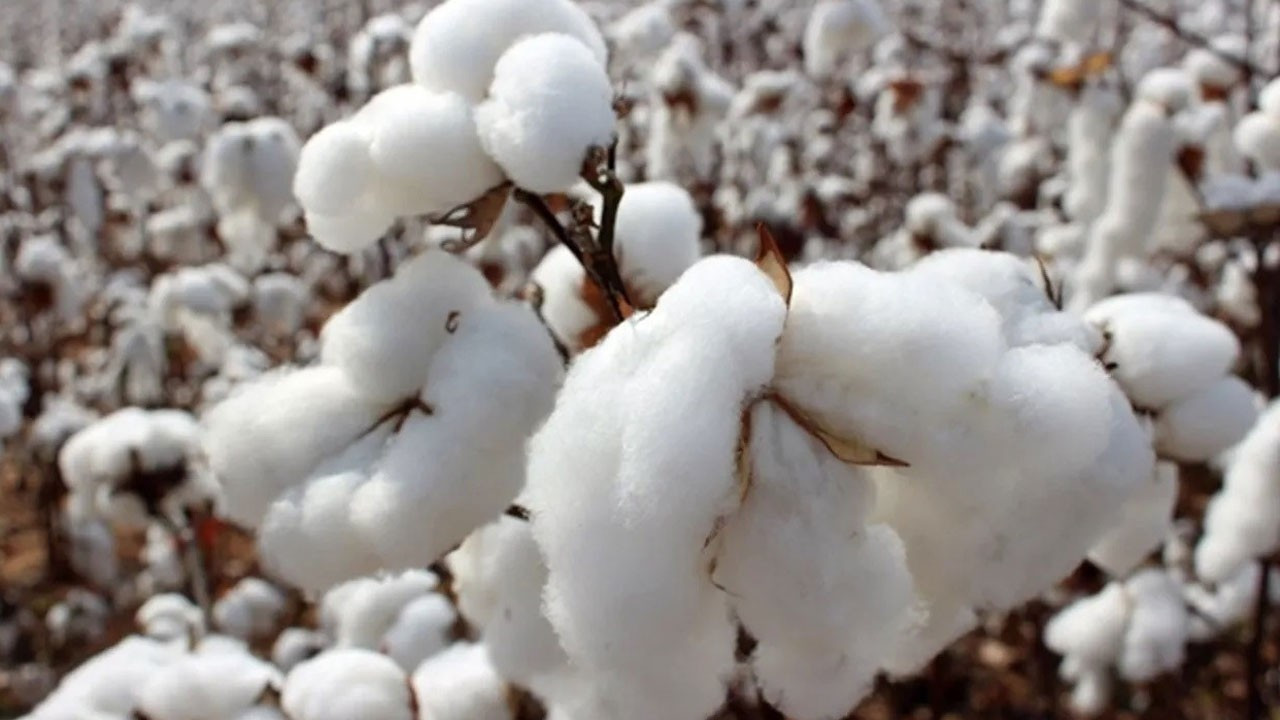
Domestic cotton covers only 40% of demand
Türkiye’s cotton import dependence is expected to increase in the 2026/27 season as domestic production contracts while demand from the textile industry remains unchanged. According to USDA supply-and-demand estimates published on August 12 and reported by Ekonomim, output is forecast to fall by 11.5% from 3.05 million bales in 2025/26 to 2.7 million bales.
Textile mills are expected to consume 6.8 million bales, the same volume as in the previous season. Domestic production would therefore cover only about 40% of industrial requirements, leaving a gap of approximately 4.1 million bales. With one bale equivalent to roughly 218 kilograms, the forecasts correspond to production of about 588,000 tonnes and consumption of 1.48 million tonnes.
The widening deficit comes as Turkish textile manufacturers contend with high production costs and lost orders. Cotton is one of the industry’s principal raw materials, making the availability and price of imported fibre an increasingly important factor for mills, yarn producers and apparel supply chains.
Imports rise while exports retreat
USDA expects Türkiye’s cotton imports to increase by about 4.3%, from 4.6 million bales in 2025/26 to 4.8 million bales in 2026/27. The new-season forecast represents approximately 1.05 million tonnes. USDA’s initial projection in May had also anticipated imports reaching 4.8 million bales, an increase of 300,000 bales under the figures available at that time.
Exports are forecast to move in the opposite direction. Shipments are expected to decline by about 43%, from 1.05 million bales to 600,000 bales. Despite the production decline and continued mill demand, ending stocks are projected to rise from 1.08 million to 1.18 million bales.
Recent trade data already show Türkiye’s reliance on foreign cotton. Ekonomim reported that imports rose by 28.7% in 2025 to more than 1 million tonnes, with the import bill reaching $1.71 billion. During the first half of 2026, import volume increased by 2% year on year to 632,000 tonnes, while its value fell by 2% to $1.05 billion. Over the same period, exports dropped by 20.5% in volume and 19.7% in value.
Lower global stocks add price risk
USDA raised its estimate for Türkiye’s 2026/27 crop by 50,000 bales in August, from the 2.65 million bales projected in July. Forecasts for imports, consumption and exports were left unchanged at 4.8 million, 6.8 million and 600,000 bales, respectively. The agency also lifted projected global production by 370,000 bales to 117.6 million, as higher estimates for Brazil, Greece and Türkiye more than offset a downward revision for the United States.
Global consumption is nevertheless forecast at 122.9 million bales, exceeding production by about 5.3 million bales. World ending stocks are expected to decline by 7% to 69.7 million bales, their lowest level since 2011/12. USDA anticipates a moderate increase in global cotton prices during 2026/27 as inventories tighten. For Türkiye’s textile sector, the combination of lower domestic output, greater import requirements and potentially firmer international prices could intensify pressure on raw-material costs.