Turkish Textile Producers Expand Egyptian Capacity as Costs Rise at Home
Turkish-owned factories generated $606 million of Egypt’s garment exports in the first nine months of 2026, accounting for 21% of the country’s total. Producers are expanding Egyptian capacity while maintaining supply links with Türkiye for fabric and other inputs.
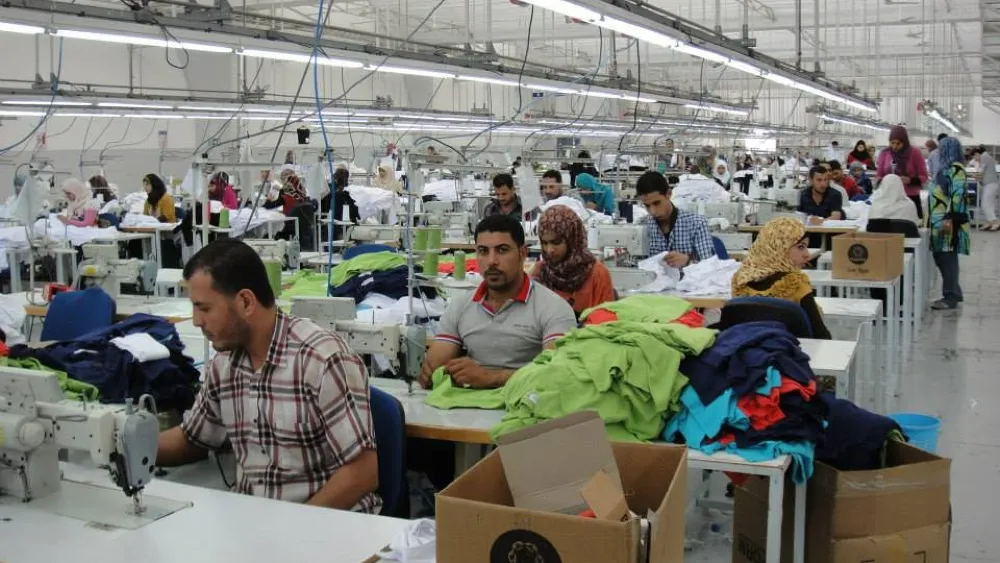
Turkish factories take a larger export role
Turkish textile and apparel producers are expanding manufacturing in Egypt as rising costs weaken the competitiveness of production in Türkiye. According to Tek Referans, Turkish-owned factories in Egypt exported $606 million of ready-made garments during the first nine months of 2026, representing 21% of the country’s total garment exports.
The shift has made Egypt one of the main overseas production centers for Turkish textile capital. Before the pandemic, Turkish investment in the country was concentrated more heavily in textiles. Since the pandemic, garment and clothing manufacturers have increasingly used Egypt as a production base. Turkish textile and apparel investments in Egypt are reported to employ more than 100,000 people.
Large producers add capacity
Companies from Türkiye’s Aegean region and the Denizli textile cluster are among the investors increasing their Egyptian operations. Denizli-based Gamateks opened its first Egyptian factory in 2009 and brought a second plant into operation in 2018. Through its Cairon Textile and Alphatex businesses, the company produces knitted fabric, outerwear, loungewear and sports textiles.
Yavuzçehre Tekstil, another established textile and apparel exporter from Denizli, manufactures in the Alexandria area. CSA Textile Egypt SAE, owned by Abalıoğlu Holding, also operates in Alexandria. It produces viscose, bamboo and cotton yarn and exports to Egypt’s domestic market as well as Türkiye and Europe.
Çağlar Bağcı, president of the Aegean Apparel Exporters’ Association, said the post-pandemic investment wave has focused mainly on ready-made garments and clothing rather than textile production. He added that the companies establishing operations in Egypt are generally large manufacturers, not small and medium-sized businesses.
Egypt targets high-volume US orders
Bağcı said Egyptian production has not yet reached the capacity needed to meet European buyers’ requirements for both order size and quality. Turkish investments in the country are therefore aimed more heavily at the US market, where orders can run into millions of units.
The model also preserves an industrial link with Türkiye. Bağcı said Turkish companies ship fabric and similar inputs to their Egyptian plants, which then export the finished garments. Türkiye’s garment exports have declined, while its exports of textiles and raw materials have increased. He therefore described Egypt as an opportunity rather than a threat to the Turkish industry.
This division of production gives Turkish groups access to an alternative manufacturing base without necessarily removing Turkish mills from their supply chains. It also strengthens Egypt’s position in garment assembly and high-volume export manufacturing, while supporting demand for Turkish fabric and intermediate goods.
Costs drive the relocation
Bağcı attributed the movement to Egypt to mounting production costs and deteriorating competitive conditions in Türkiye. He said more than $60 billion had been invested in Türkiye’s textile, garment and clothing industries since the pandemic, but companies were being pushed abroad because of cost pressure, an exchange rate that had not risen in line with inflation and support mechanisms that were not functioning adequately.
He argued that steps were needed to prevent further departures and said overseas investments could return if production conditions in Türkiye improved. For manufacturers and suppliers, the emerging structure creates a two-country value chain: Turkish fabric and inputs feed Egyptian plants, while Egypt provides the export platform for finished clothing, particularly for large US orders.