Turkish imports squeeze Syrian manufacturers as textile costs rise
Turkish exports to Syria approached $3.5 billion in 2025, while Syrian sales to Turkey fell 46% to $235 million. Cheap finished goods are filling post-war supply gaps but intensifying pressure on Syrian manufacturers, particularly textile producers facing high energy and input costs.
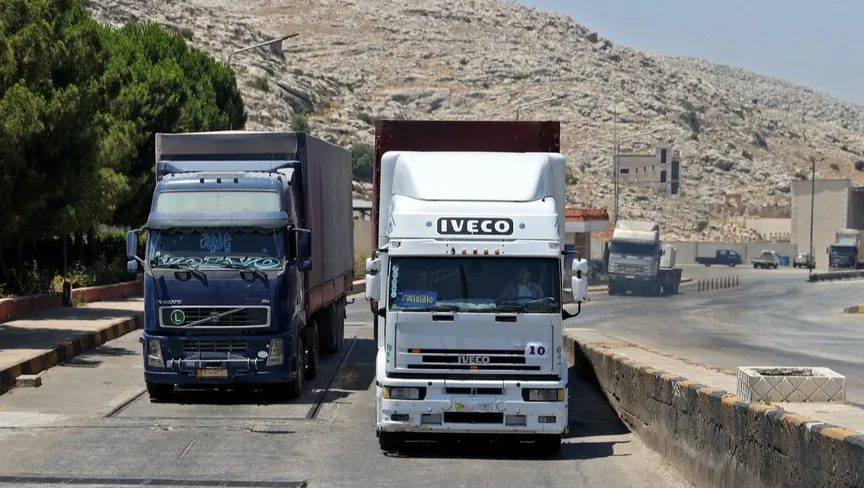
Turkish goods fill a post-war supply gap
Turkish products ranging from sunflower oil, refined sugar and milk powder to cement, machinery and electrical equipment are flowing into Syria as domestic demand recovers and reconstruction begins. According to Asharq Bloomberg, more than 361,000 trucks carrying about 8 million tonnes of goods crossed the Syrian-Turkish border in 2025. Most cargo moved toward Syria, with Turkish exports valued at nearly $3.5 billion.
Syrian exports to Turkey fell by about 46% to $235 million, leaving Turkey with a surplus of roughly $3.3 billion. Trade continued to expand in the first half of 2026, when about 209,000 trucks transported 4.9 million tonnes, Mazen Alloush of Syria’s General Authority for Land and Sea Ports told Asharq Bloomberg. The Turkish crossings handled more freight, particularly imports, than Syria’s borders with Jordan and Iraq.
Price gap weakens domestic producers
Syrian officials attribute the imbalance partly to war damage across infrastructure, agriculture and industry, which has reduced the country’s ability to produce an exportable surplus. Khaled al-Khader, head of Syria’s Authority for Supporting and Developing Local Production and Exports, said imports from Turkey include large volumes of milling and grain products, cement and electrical equipment needed for food security and reconstruction.
Price competition is the sharper problem for local factories. Al-Khader said Turkish products are 30% to 40% cheaper than Syrian alternatives because Turkish manufacturers benefit from scale and developed supply chains. Hossam Abdeen of the Damascus and Rural Damascus Chamber of Industry also pointed to high electricity and diesel prices and said some imports are not subjected to the same technical standards as locally made goods. Manufacturers distinguish between production inputs, which can help restart factories, and finished products that compete directly with Syrian output.
Textile factories face an import trap
The textile sector shows the pressure most clearly. Enab Baladi reported that imported ready-made garments face a duty of $4 per kilogram in Syria, while textile raw materials carry duties of about $1.1 per kilogram. Industrialist Mohannad Daadous compared this with duties of up to $8.5 per kilogram on imported garments in Egypt and $6.5 per kilogram on Turkish garments in Lebanon. He said Syrian production costs, which were about 30% below Egypt’s in 2022, became roughly 30% higher during 2025 and 2026.
Higher wages, energy costs, taxes and exchange-rate volatility have led some Syrian factory owners operating in Egypt to ship finished clothing to Syria instead of producing it domestically. Customs expert Hossam al-Durai called for duty-free textile inputs and lower port charges on yarn imports, particularly from China, after fees increased by about €60 per container. Damascus and Ankara are targeting bilateral trade of $10 billion in coming years and are simplifying customs and transport links. Without lower production costs and stronger industrial finance, however, easier trade may expand imports faster than Syrian manufacturing capacity.