Turkish food exporters target $2 billion in US sales within a decade
Turkish food exporters plan to raise annual shipments to the United States from about $900 million to $2 billion over the next ten years, İHBİR president Kazım Taycı said. The association is pushing own-brand listings at Walmart, Costco, Publix and CVS as Gulf routes are disrupted. Sector exports are forecast at $12.4–12.8 billion for 2026.
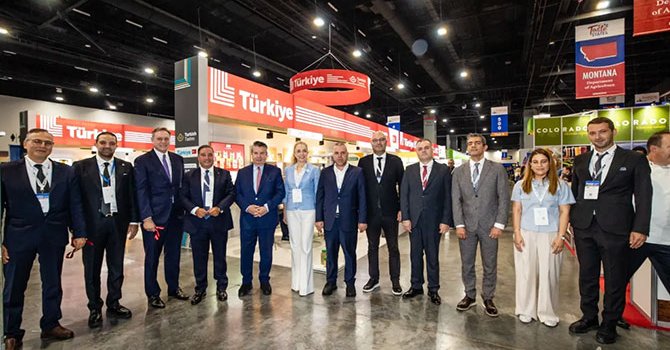
Turkish food exporters intend to raise annual shipments to the United States from about $900 million to $2 billion over the next ten years, Kazım Taycı, president of the Istanbul Cereals, Pulses, Oilseeds and Products Exporters' Association (İHBİR), said in comments reported by turkiyeturizm.com. According to Taycı, the United States has moved up to second place among the association's export destinations.
Taycı described the objective as steady growth rather than a single jump in volumes, and said the association is expanding trade fair participation, promotion and branding work in a market he characterised as having strong consumption capacity. Processed agricultural goods account for a significant share of the shipments, with chocolate, sugar confectionery and bakery products the leading product groups.
From private label to own brands
Taycı said the change in the US market is not limited to export volumes. Turkish companies, which previously produced mainly for retailers' private labels, are now listed under their own brands at major chains including Walmart, Costco, Publix and CVS.
For the coming period, he said the priorities are strengthening the perception of Turkish food on quality, reliability and variety, and securing permanent shelf space rather than one-off placements.
Miami show anchors the marketing push
Around 50 Turkish companies took part in the Americas Food & Beverage Show 2026 in Miami, held for the 30th time this year, with support from the Ministry of Trade and organisation by İHBİR. Roughly half of the Turkish participants exhibited within the national pavilion and the other half individually. Türkiye's ambassador to Washington, Sedat Önal, attended the opening. The show drew more than 10,000 professional visitors from over 100 countries.
A tasting event attended by more than 100 buyers was held as part of the Miami fair, presenting chocolate, confectionery and bakery products alongside dishes prepared with Turkish pulses and cereals. Beyond trade fairs, İHBİR is running promotional activity in New York, Chicago, Miami, Los Angeles and Las Vegas under the themes "Made in Türkiye", "Turkish Food", "Turkish Delight" and "Turkish Chocolate", combining billboard campaigns with social media and digital communication and direct contact with large buyers and content creators.
Gulf disruption redirects trade flows
Taycı said developments in and around the Strait of Hormuz have made shipments to Gulf markets more difficult. Rising freight costs, cancelled vessel sailings and general uncertainty are weighing on exports of processed agricultural products.
Declines in markets such as the United Arab Emirates, Iran, Qatar and Kuwait are being offset with alternative regions, he said. Alongside the United States, the association has increased participation in food fairs in the Far East, Europe, Central Asia and North Africa, and Taycı noted that the Foodist show in Istanbul is also generating new commercial contacts. In Türkiye's immediate neighbourhood, Syria has climbed to third place in the association's export rankings, and reconstruction and economic recovery there are expected to lift demand for Turkish food products further.
Sector outlook flat for 2026
Taycı said the cereals, pulses, oilseeds and processed products sector he represents is forecast to end 2026 with exports of $12.4 billion to $12.8 billion. That would be close to the roughly $12.5 billion recorded in 2025.
He described holding the current export level as significant given global protectionist policies and regional problems, and said the association will concentrate more on economically stable markets. The United States and the Far East are among the priority destinations, while research and product development work is intended to raise the share of more innovative, higher value-added goods in total exports.
Full market analysis