Turkey’s Ulaş state farm expects 50% rise in triticale seed harvest
TİGEM’s Ulaş farm expects to harvest about 6,000 tonnes of triticale in 2026 after regular rainfall lifted projected yields by 50% to 60%. The state operation supplies approximately half of Turkey’s certified triticale seed requirement.
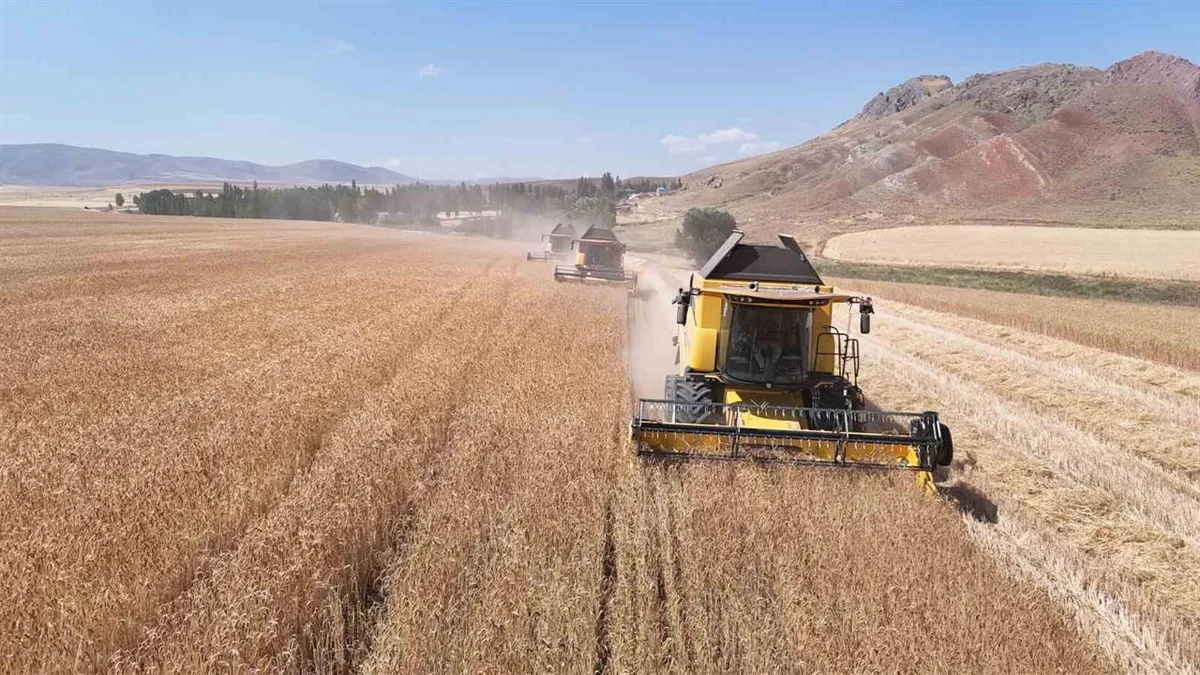
Harvest begins after favorable rainfall
Turkey’s state-owned Ulaş agricultural enterprise has started its 2026 triticale harvest in Sivas province, targeting approximately 6,000 tonnes after regular and timely rainfall improved yield prospects. The farm, operated by the General Directorate of Agricultural Enterprises, or TİGEM, expects production to increase by about 50% from the previous year. Kemal Sercan Helvacıoğlu, the enterprise’s head of crop production, told Demirören News Agency that yields could be 50% to 60% higher than in earlier years because precipitation arrived in sufficient volumes and at suitable stages of crop development.
Five combine harvesters are working across the triticale fields, and the operation is expected to take approximately 15 days, according to Mersin Haber and Haberler.com. The publications put the planted area at 14,796 decares, equivalent to 1,479.6 hectares. Demirören News Agency reported a slightly lower figure of 14,790 decares. The enterprise is harvesting four varieties: Tatlıcak 97, Karmı 2006, Özer and Tatlı.
A major source of certified seed
The Ulaş farm supplies approximately 50% of Turkey’s certified triticale seed requirement, according to Demirören News Agency. That concentration makes its harvest important beyond the immediate volume of grain collected. After harvesting, the crop is screened and treated at the enterprise’s seed preparation facilities. Once certification is completed, the higher-grade seed is distributed to farmers through authorized dealers.
Triticale, a hybrid of wheat and rye, is used both as seed and animal feed. At Ulaş, production is geared toward supplying farmers with certified planting material while also supporting the enterprise’s livestock activities. Helvacıoğlu said the farm produces triticale and sainfoin seed, as well as green vetch and dried alfalfa for roughage. He also told Demirören News Agency that the enterprise does not produce wheat.
Dryland farming shapes output
The state farm holds 71,427 decares of land. Mersin Haber and Haberler.com reported that 50,042 decares are cultivable, while Demirören News Agency gave the figure as 50,040 decares. Much of this land is managed under a fallow-based dryland farming system adapted to the climate around Ulaş. The dependence on rain makes the timing and distribution of precipitation a central factor in annual yields.
The expected improvement in 2026 therefore reflects better growing conditions rather than a reported expansion of the triticale area. At an anticipated 6,000 tonnes from roughly 14,790 to 14,796 decares, the crop will provide a substantial volume for processing and certification. The final amount of marketable seed will depend on cleaning, treatment and certification after harvest.
The enterprise was founded in 1944 as an agricultural combine, became a state production farm in 1950 and has operated under TİGEM within the Ministry of Agriculture and Forestry since 1984. Its role has evolved around the production of certified seed and feed crops suited to dry conditions in central Turkey.
For Turkish growers, the harvest’s main consequence will be the availability of domestic certified triticale seed through TİGEM’s dealer network. With about half of national requirements linked to one operation, execution during the 15-day harvest and the subsequent certification process will determine how much seed reaches farms for the next planting cycle.