Turkey’s TMO Sets Green Lentil Purchase Price as Output Forecast Jumps 62.6%
Turkey’s TMO will buy natural green lentils at 32,000 TL per tonne from 31 August 2026, its first announced price since 2021. The intervention follows a forecast that national output will rise 62.6% to 48,000 tonnes.
TMO returns to the market after five years
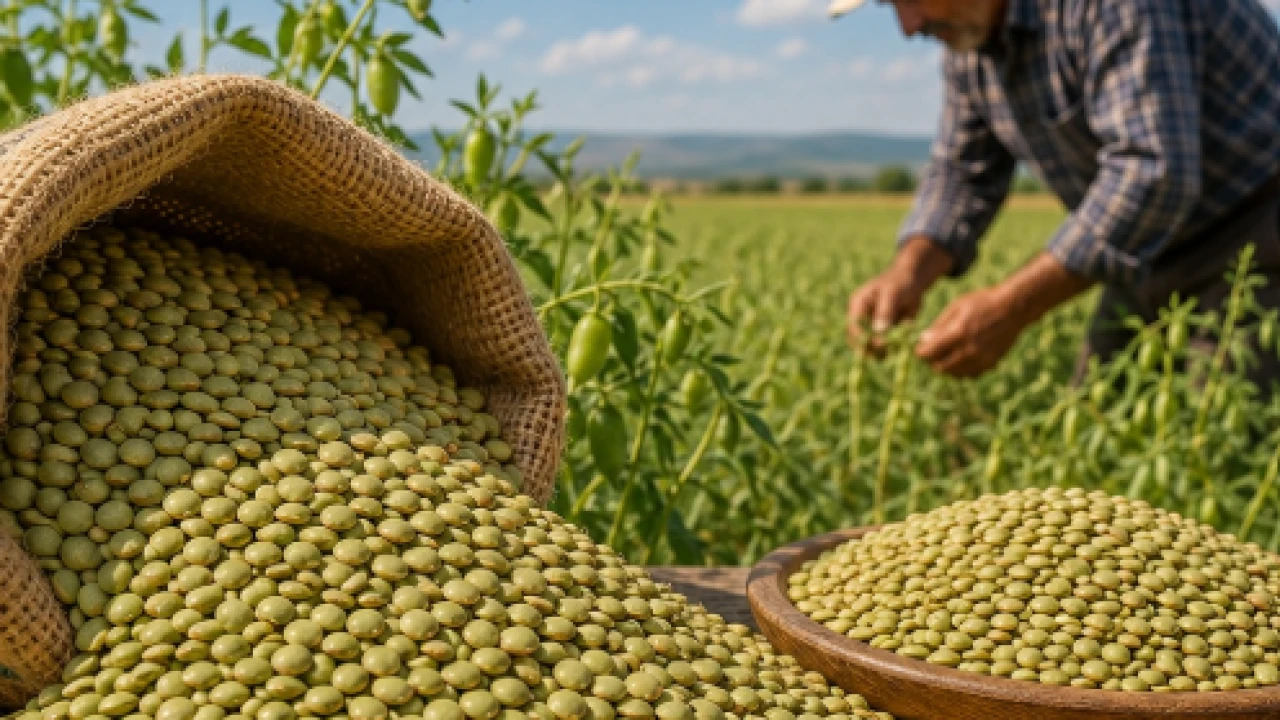
Turkey’s state grain agency, Toprak Mahsulleri Ofisi (TMO), has set its 2026 purchase price for natural green lentils at 32,000 TL per tonne, equivalent to 32 TL per kilogram. Purchases will begin on 31 August 2026, marking the agency’s first announced green lentil price since 2021.
According to Gıda Bülteni, TMO expects Turkey’s green lentil production to increase by 62.6% from the previous year to 48,000 tonnes in 2026. The agency said market prices had met growers’ expectations in the years following its previous announcement, removing the need for an official purchase price. This season’s projected supply increase prompted TMO to resume intervention.
TMO said it may purchase the full quantity that each producer has registered in Turkey’s Farmer Registration System, known as ÇKS. That commitment gives registered growers a buyer for their documented output and is intended to reduce the risk of forced sales at depressed prices during a season of rapidly expanding supply.
Procurement terms support the floor price
Purchases will take place six days a week, excluding Sundays and public holidays. Farmers can arrange appointments through TMO’s website, the e-Devlet government portal, regional directorates, branch offices and agency units. Payments will be transferred to growers’ bank accounts beginning on the 21st day after delivery.
The procurement terms also reduce some transaction costs. TMO will not deduct the 1% service charge at temporary purchasing centres, will waive unloading fees for tipper vehicles and will cover commodity-exchange registration charges. Farmers will additionally qualify for basic support, planned-production support and certified-seed support, although TMO did not disclose the per-kilogram value of those payments.
The programme applies only to natural green lentils. TMO announced neither a purchase price nor a new procurement programme for red lentils, another important pulse crop in Turkey, and provided no indication of whether a separate intervention could follow.
Large gap remains between farm and retail prices
The official purchase price is substantially below packaged retail prices, but the figures represent different stages of the supply chain. Gıda Bülteni reported that Migros was selling a one-kilogram pack of domestic private-label green lentils for 66.95 TL, while another domestic product reached 119.95 TL. CarrefourSA listed imported Canadian green lentils at 67.50 TL per kilogram, with some other branded products exceeding 160 TL.
On that basis, widely available retail products cost roughly 2 to 3.7 times the 32 TL per-kilogram producer price, while the difference can reach five times for higher-priced brands. Cleaning, sorting, packaging, transport, product losses, financing costs and supplier and retailer margins all contribute to the spread, meaning the TMO price cannot be compared directly with the price of a finished retail pack.
The production forecast nevertheless changes the balance facing growers and processors. A 62.6% expansion would create more domestic raw material for cleaners and packers, while TMO purchases could prevent the additional crop from entering commercial channels all at once. The scale and timing of deliveries to the agency will therefore influence private procurement and inventory accumulation during the season.
For consumers, the larger harvest does not automatically imply that shelf prices will fall toward the intervention level. Retail prices incorporate processing and distribution expenses, and the examples reported by Gıda Bülteni vary widely by brand and origin. However, greater domestic availability could strengthen competition among suppliers if enough of the crop remains outside TMO inventories.
TMO’s return establishes a public benchmark at 32,000 TL per tonne and a guaranteed outlet for registered production. Its immediate effect is clearest at farm level: growers can compare private bids with a stated government price while deciding whether to sell commercially or deliver to the agency.