Heatwave damages Tunisia’s oasis date harvest, clouding export outlook
Extreme heat has damaged dates in Tunisia’s oases, threatening the harvest of a crop central to the country’s agricultural economy. Tunisia ranks among the world’s ten largest date producers, but the available reporting provides no estimate of lost output or export volumes.
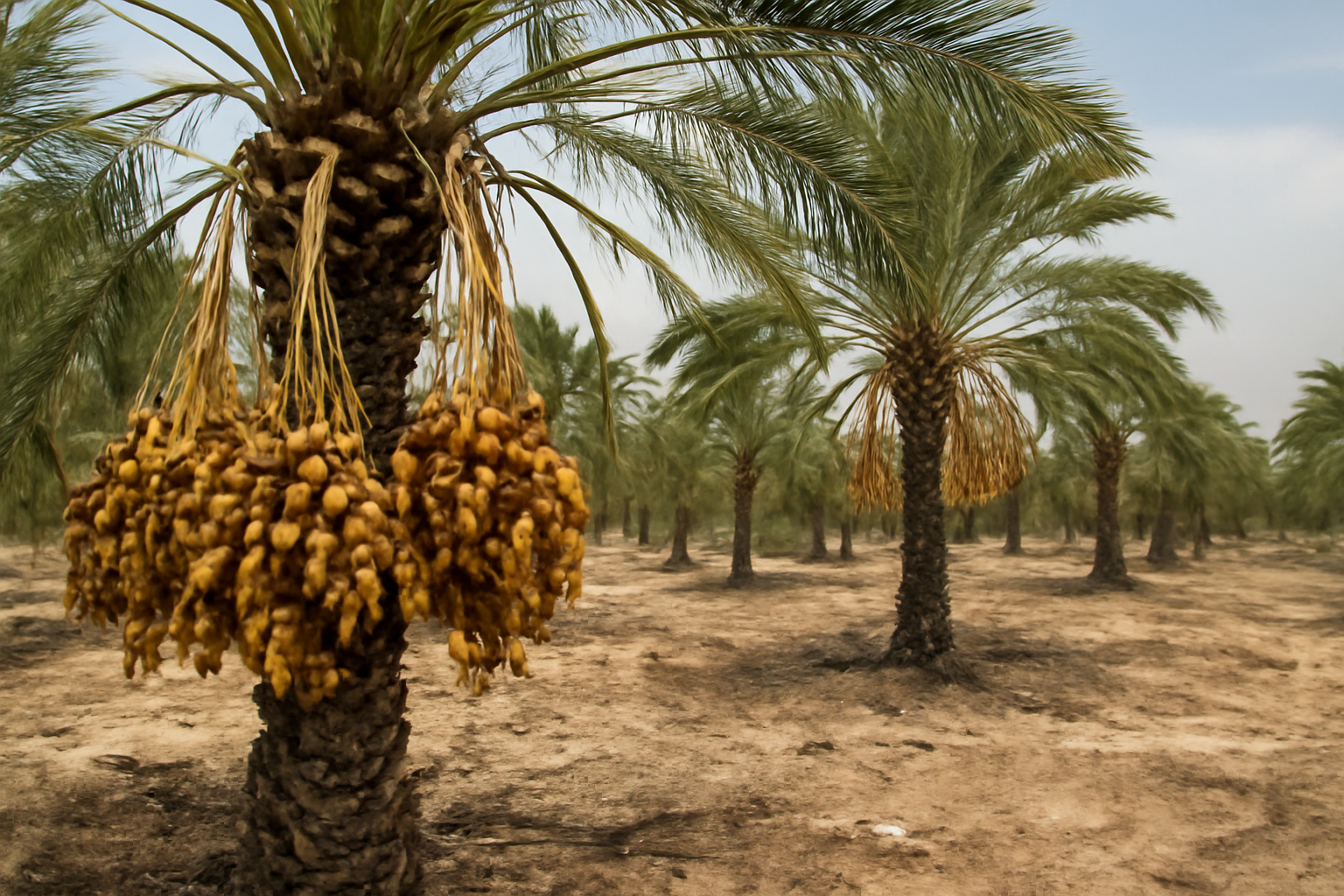
Extreme heat reaches Tunisia’s date-growing oases
A heatwave has damaged dates grown in Tunisia’s oases, putting part of the country’s harvest at risk. The available report describes the date industry as a pillar of Tunisian agriculture and a strategic sector for the national economy. Tunisia is also identified as one of the world’s ten largest date producers, giving the weather event significance beyond the affected farming districts.
No estimate has been provided for the volume of damaged fruit, the share of the crop affected or the geographical extent of the losses. The reporting also gives no revised production forecast. The immediate impact on national supply therefore remains uncertain, but damage during the crop’s development can reduce both marketable volumes and the proportion of fruit suitable for higher-value sales.
Quality losses could matter alongside lower output
For growers and processors, the commercial effect will depend not only on how many dates are lost but also on the condition of the surviving crop. Heat damage can leave a larger share of production outside the specifications sought by premium buyers. Without a quantified assessment, it is too early to determine whether the event will chiefly reduce total output, affect quality grades or create both problems at the same time.
This distinction matters across the supply chain. Exporters need consistent size, appearance and condition to fulfil contracts, while processors can sometimes absorb fruit that does not meet the requirements of the premium fresh market. A shift in the available quality mix could consequently affect procurement decisions even if the final decline in harvested tonnage proves limited.
Export outlook depends on the final harvest assessment
Dates are a strategic agricultural product for Tunisia, so any material harvest loss would affect growers, packing businesses, processors and traders. Exporters may face tighter availability if damage is concentrated in commercially important varieties or in oases supplying international customers. Buyers, meanwhile, will need to monitor whether contracted quantities and quality specifications can still be met.
The lack of figures prevents a reliable assessment of the effect on export supply or prices. Tunisia’s position among the ten leading producers does not by itself show how the heatwave will influence the wider world market; that will depend on the scale of local losses and production elsewhere. For now, the event represents a supply risk rather than a confirmed market shortage.
Industry awaits concrete loss figures
The next decisive information will be the area affected, expected marketable yield and the division of losses by variety and quality grade. An updated harvest forecast would allow exporters and importers to compare available volumes with existing commitments. Until those data emerge, market participants have little basis for calculating possible changes in purchasing needs or contract coverage.
The heatwave nevertheless highlights the exposure of oasis agriculture to extreme temperatures. For Tunisia, the issue concerns a crop with national economic importance and an established position in global production. The final consequences will become clearer only when damaged fruit is assessed and the harvest reaches commercial channels.