Trump's Furniture Tariff Threat Muddies Effort to Reset China Trade
US President Donald Trump has renewed a threat to impose furniture tariffs of up to 200 per cent, aimed at reviving production in North and South Carolina. Analysts cited by the South China Morning Post say the measure could cut Chinese exports without reshoring output, and risks reigniting tensions just as a US-China trade truce had been extended.
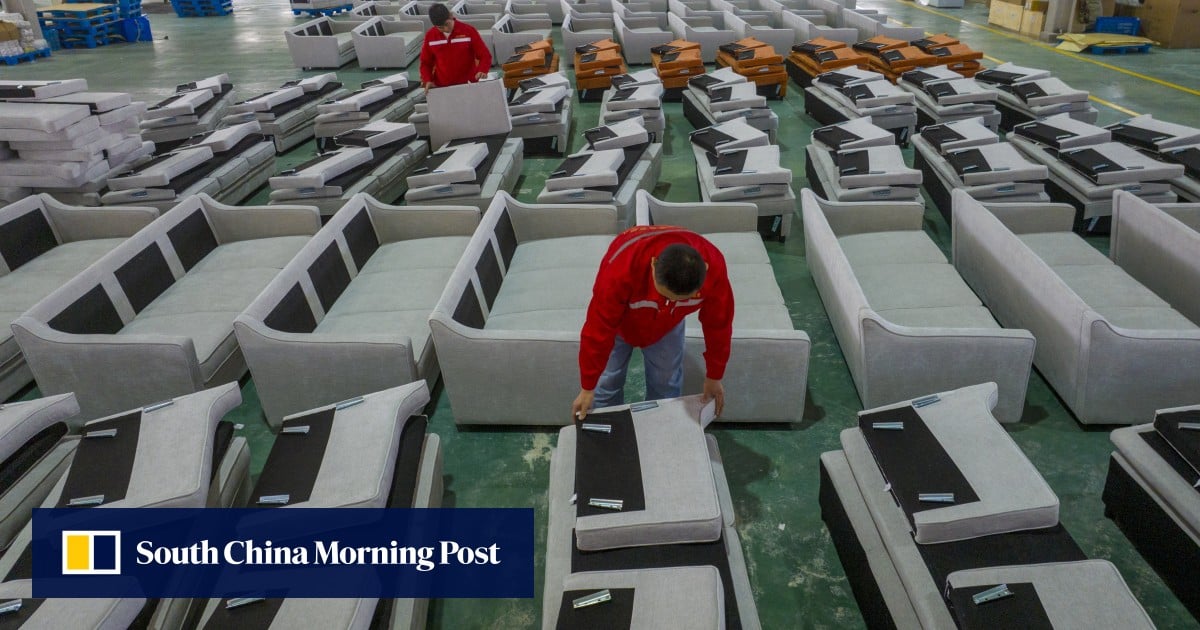
US President Donald Trump has renewed his threat to impose tariffs on imported furniture, a move the South China Morning Post reports could erode part of China's export flows while doing little to revive American manufacturing. Analysts cited by the newspaper warned that the measure risks escalating tensions between the world's two largest economies just as an extended trade truce and conciliatory statements had pointed toward a more workable negotiating stance.
Tariffs of up to 200 per cent
Speaking at a cabinet meeting on Tuesday, Trump suggested duties on furniture imports could reach 100 or even 200 per cent, and signalled that the measures would be implemented "pretty quickly." He framed the tariffs as an effort to revive the domestic industry in North Carolina and South Carolina, longtime centres of US furniture production.
"That [furniture] business was stolen from us by others, not only China," Trump said, according to the South China Morning Post. "All of a sudden, you're ordering furniture from China." The pledge followed his announcement last week on social media that his administration had opened a tariff investigation into furniture imports, with findings expected within 50 days.
Broad-based, not China-specific
Analysts told the South China Morning Post that the tariffs are likely to be structured broadly rather than aimed squarely at Beijing. "The measures are likely broad-based with the intention to reshore furniture manufacturing rather than directly target China," said Lynn Song, chief economist for Greater China at ING.
For importers, that distinction matters. A broad-based duty would capture furniture from every supplier country, not only Chinese factories, reshaping sourcing decisions across the sector rather than simply shifting orders from China to other exporters. It also means buyers cannot easily dodge the tariff by re-routing purchases through third countries.
Why reshoring may not follow
Even steep duties may fail to bring production back to the United States, analysts cautioned, because furniture is difficult to relocate. "Furniture is not like electronics," one analyst warned. "You cannot ship in bits and parts and screw it together in North America." Unlike electronics assembly, furniture manufacturing depends on bulky materials, labour-intensive processes and established supplier networks that cannot be rebuilt quickly.
The result, according to the newspaper's sources, could be higher import costs and reduced Chinese shipments without a corresponding increase in US output — a squeeze on trade volumes rather than a manufacturing revival.
Timing complicates the truce
The threat lands at a delicate moment. The two governments had recently extended a trade truce and paired it with conciliatory language, signals that markets read as a step toward stabilising relations. A fresh furniture tariff, analysts said, could undercut that momentum and reintroduce friction into negotiations that had appeared to be cooling.
For exporters and importers, the near-term uncertainty is the investigation's 50-day timeline. Until the findings are published, buyers face unclear duty rates on a product category that cannot easily be re-routed through third countries, leaving furniture supply chains exposed to a policy decision expected within weeks.