Thyssenkrupp and Salzgitter pursue green steel despite hydrogen supply gap
Germany’s Thyssenkrupp Steel and Salzgitter are investing billions of euros in hydrogen-ready steelmaking, with new production routes scheduled for 2027. Limited supplies of competitively priced green hydrogen mean both projects will initially depend partly on natural gas, while EU trade and carbon rules seek to support higher-cost European production.
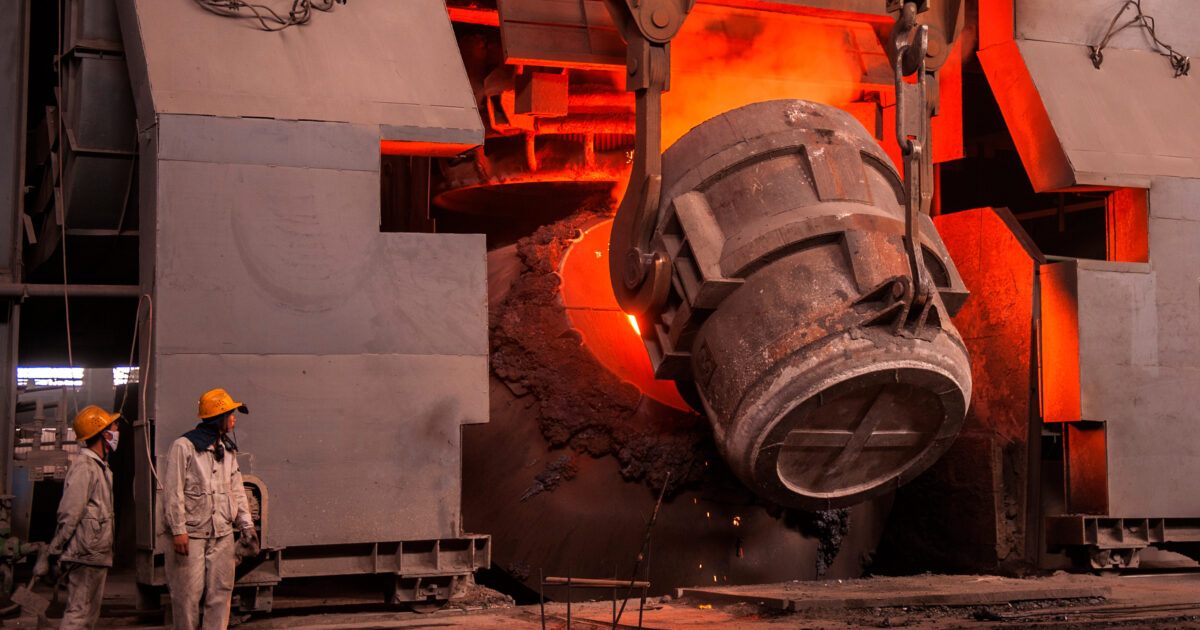
German steelmakers build new production routes
Thyssenkrupp Steel and Salzgitter are advancing two of Germany’s largest low-carbon steel projects, but the plants will begin operating before sufficient volumes of competitively priced green hydrogen are available. According to Industriemagazin, the resulting dependence on natural gas highlights the unresolved economics of Europe’s steel transition.
Thyssenkrupp is building a hydrogen-ready direct-reduction plant and two electrically powered melting units in Duisburg. The facility is designed to produce 2.5 million tonnes of directly reduced iron annually. Thyssenkrupp says that operating it with hydrogen could eventually avoid up to 3.5 million tonnes of CO₂ emissions per year. Germany’s federal government and North Rhine-Westphalia are supporting the project with around €2 billion, while completion is now expected in 2027 after an earlier timetable was revised.
Salzgitter’s first SALCOS stage includes a direct-reduction plant, an electric arc furnace and an electrolyser. The company puts investment at €2.7 billion, including about €1 billion in public funding. Production through the new route is scheduled to begin in the first half of 2027.
Hydrogen volumes fall far short of plant capacity
Direct reduction replaces the coke used to remove oxygen from iron ore in a conventional blast furnace with a gas mixture that can contain increasing proportions of hydrogen. Fully hydrogen-based reduction mainly produces water vapour, after which the solid iron is melted in electrically powered equipment. However, both German projects are designed to use natural gas or a mixture of gas and hydrogen during the transition.
The scale of the shortage is clearest at Salzgitter. A supply agreement concluded with energy company EWE in June 2026 provides for around 10,000 tonnes of green hydrogen annually from 2030. The companies say this represents only about 6.5% of SALCOS’s potential requirement. Salzgitter’s own 100-megawatt electrolyser is expected to produce another 9,000 tonnes per year, while the direct-reduction plant could consume as much as 150,000 tonnes annually.
Natural gas can still reduce emissions compared with the blast-furnace route, but production approaches climate neutrality only when renewable hydrogen accounts for a very high share of the reducing gas. The gap leaves steelmakers exposed to hydrogen availability, transport infrastructure and energy costs even after the new equipment starts operating.
EU protection meets weak demand and excess capacity
The investments are entering service in a difficult global market. OECD calculations cited by Industriemagazin put worldwide steel overcapacity at around 640 million tonnes in 2025, potentially rising to 745 million tonnes by 2028. Chinese companies exported a record 131 million tonnes of steel in 2025, more than the EU’s total annual steel production.
Demand offers limited relief. The World Steel Association expects steel consumption in the EU and the United Kingdom to grow by 1.3% in 2026 and 3% in 2027, but volumes in developed economies remain well below 2017 and 2018 levels. High European energy prices and rising labour costs add to the pressure on producers financing low-carbon capacity.
The EU tightened its trade rules on 1 July 2026. The covered steel products now have a combined annual duty-free import quota of 18.3 million tonnes, with an additional 50% tariff applied above the relevant quota. Importers will also have to document where steel was originally melted and poured from 1 October 2026, a measure intended to prevent minor processing in third countries from disguising its origin.
CBAM entered its definitive phase on 1 January 2026 and initially covers iron and steel alongside aluminium, cement, fertiliser, electricity and hydrogen. It links the carbon cost of qualifying imports to the EU emissions market. Yet quotas and carbon charges cannot by themselves guarantee buyers for higher-cost low-carbon steel. Proposed procurement rules and credits for low-carbon steel in new cars remain in the EU legislative process, leaving Thyssenkrupp and Salzgitter dependent on both energy infrastructure and future market-creation measures.