Thailand’s vehicle exports fall 8.32% in H1 2026 as EV shipments surge 1,234%
Thailand exported 421,144 finished vehicles in the first half of 2026, down 8.32% year on year, while electric-vehicle shipments increased 1,234%. The divergence comes as Chinese manufacturers and Vietnam’s VinFast gain ground in Southeast Asia’s expanding EV market.
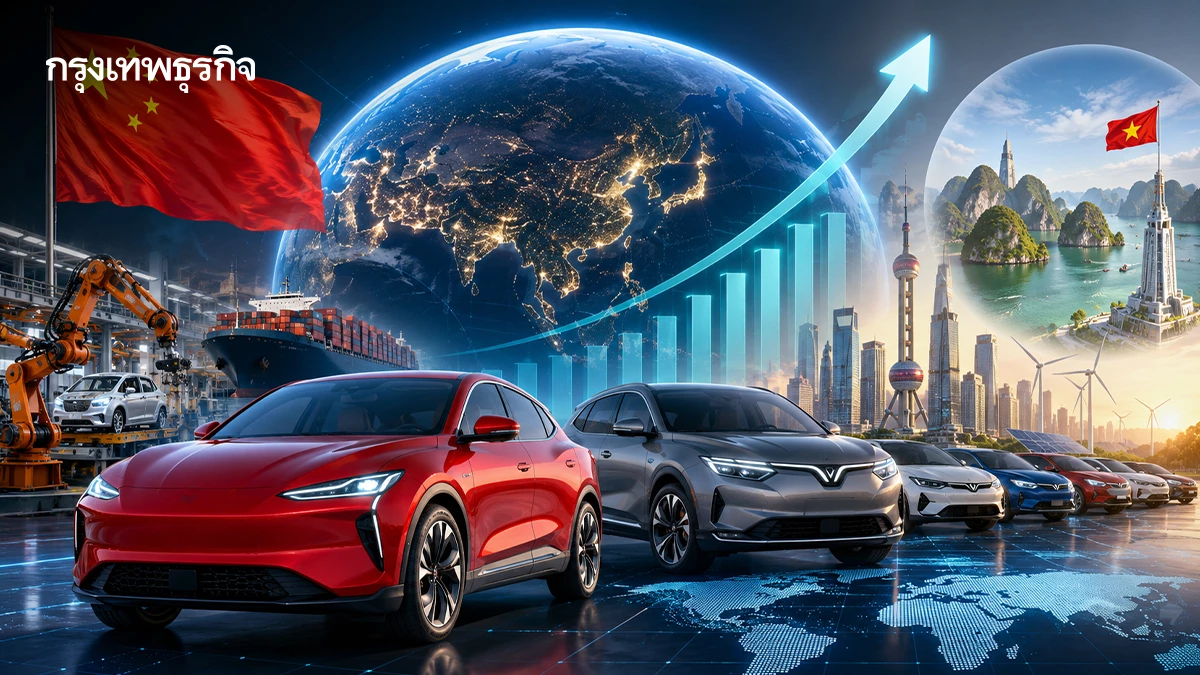
Finished-vehicle exports lose ground
Thailand exported 421,144 finished vehicles between January and June 2026, an 8.32% decline from the same period a year earlier, according to data from the Federation of Thai Industries reported by Bangkok Biz News. Electric-vehicle exports moved in the opposite direction, rising 1,234% and highlighting a rapid change in the composition of the country’s automotive shipments.
The figures present a mixed picture for one of Southeast Asia’s established vehicle-production centers. Lower total exports put pressure on factories, component suppliers and logistics companies tied to conventional models. The jump in EV shipments, however, gives manufacturers operating in Thailand a growing channel at a time when electrification is reshaping demand, investment and competition across the region.
Regional EV competition intensifies
Electric vehicles accounted for about 25% of all vehicle sales in Southeast Asia in the first half of 2026, Bangkok Biz News reported, citing an International Energy Agency analysis. Chinese manufacturers supplied 55% of regional EV sales, while Vietnam’s VinFast represented another 30%. These shares show that Thailand’s producers face competition not only from imported Chinese vehicles but also from an emerging Southeast Asian manufacturer.
China’s role extends beyond the region. Chinese EV exports during the first six months of 2026 were almost equal to the country’s total for all of 2025. More than 1 million electric vehicles remained in China awaiting sale in global markets, according to the report. That inventory creates the potential for continued pricing and competitive pressure in emerging markets, including Southeast Asia, where policy support has helped accelerate adoption.
Domestic registrations support Thailand’s EV base
Thailand had 1,277,257 registered electrified vehicles in June 2026, equivalent to 2.78% of its total vehicle fleet, according to Department of Land Transport figures cited by Bangkok Biz News. The total was 3.17% higher than in the previous month and included 694,320 hybrid electric vehicles, 491,496 battery-electric vehicles and 91,441 plug-in hybrids.
New registrations of electrified vehicles reached 39,606 during the month, up 1.01% from May. Passenger cars with no more than seven seats accounted for 36,331 registrations, while private motorcycles contributed 3,009. By powertrain, the monthly total comprised 14,378 hybrids, 22,899 battery-electric vehicles and 2,329 plug-in hybrids. The expanding domestic fleet can support charging, maintenance, parts and workforce capabilities that are also relevant to export manufacturing.
Global demand remains uneven
Worldwide vehicle sales fell about 5% year on year in the first half of 2026 as demand weakened in China and the United States amid economic pressure, higher oil prices and changes in EV policy, according to the IEA analysis. EV sales nevertheless increased 35% in the second quarter compared with the first, reaching records in 50 countries. Australia, Brazil, India, South Korea and Vietnam were among the markets where sales nearly doubled between March and June from the corresponding period of 2025.
The IEA expects electric vehicles to account for 29% of worldwide vehicle sales in 2026, one percentage point above its earlier forecast. China’s weaker vehicle market remains a constraint: Chinese EV sales are expected to be flat for the first time in 10 years, even though electric models represent more than 60% of domestic sales. For Thailand, the 1,234% export increase offers a route into faster-growing markets, but the 8.32% decline in total shipments shows that EV growth has not yet offset weakness in the broader export portfolio.