Thailand and US still split on market access as pork blocks tariff deal
Thai Foreign Minister Sihasak Phuangketkaew said Thailand and the United States remain divided over market opening in their tariff negotiations, with access for US pork one of the main obstacles. A leader-level call expected on 17-18 September did not take place and no new date has been set. Thailand faces a 12.5% US tariff and is asking for the 10% rate applied to Indonesia and Malaysia.
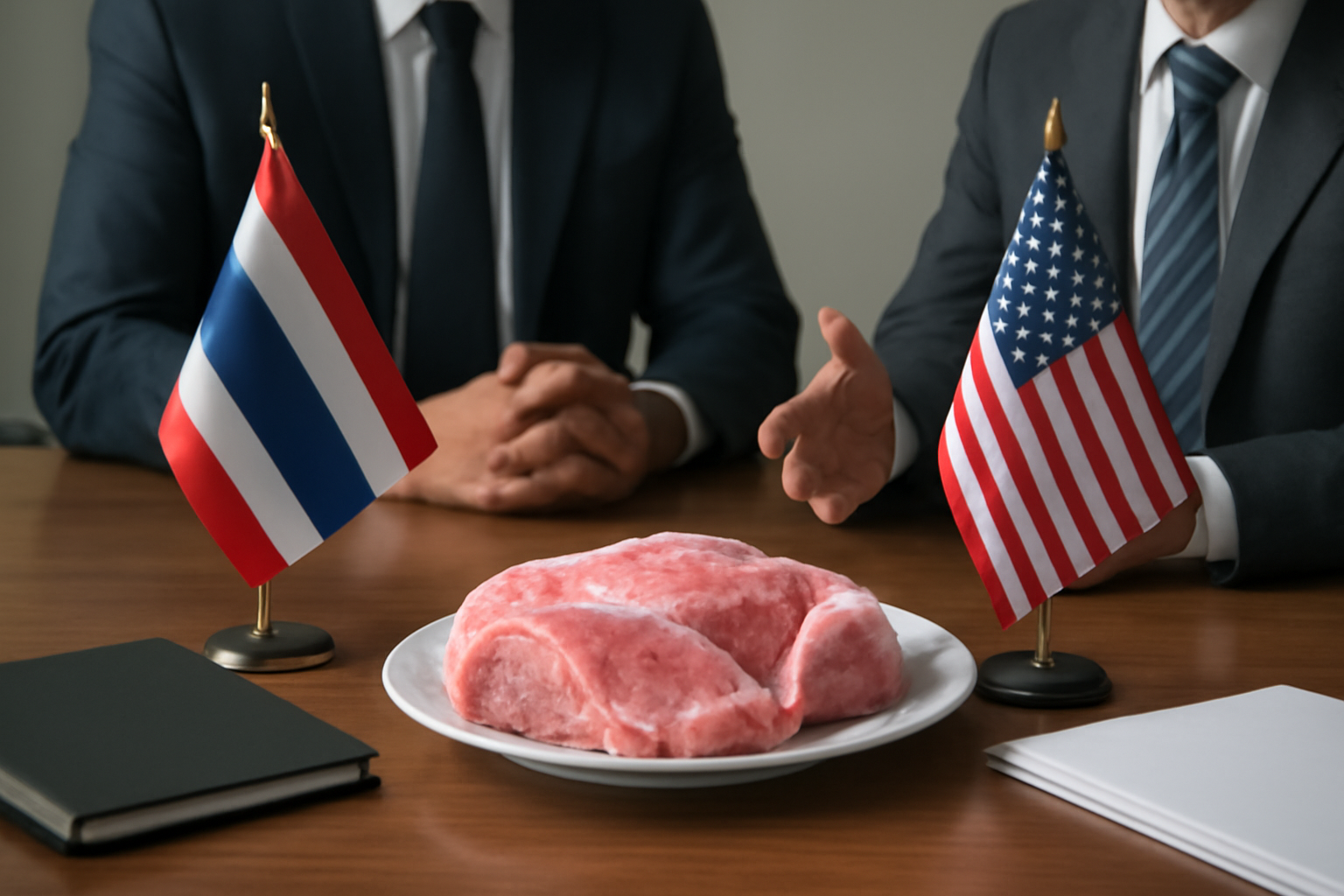
Thailand and the United States remain divided over market access in their tariff negotiations, Thai Foreign Minister Sihasak Phuangketkaew said, with the opening of Thailand's pork market to American suppliers standing out as one of the main obstacles. His comments were reported on 24 September 2026 by the InfoQuest news agency and were made in an interview with Bloomberg Television on the sidelines of the United Nations General Assembly in New York.
Pork access is the main obstacle
"We are currently in serious discussions with the United States on tariffs," Sihasak told Bloomberg Television. He identified market opening as the area where the two sides still disagree and pointed to pork as the clearest example.
American pork is at present almost entirely absent from the Thai market. Thai regulations prohibit certain lean-meat-enhancing agents that are in routine use among hog producers in the United States, which in practice keeps US product out regardless of the tariff applied. The barrier is therefore regulatory rather than fiscal, and lifting it would require a change to Thai rules rather than a tariff concession.
Leaders' call did not take place
The extended negotiations have already affected the diplomatic calendar. A telephone conversation between Prime Minister Anutin Charnvirakul and President Donald Trump had been expected on 17-18 September to wrap up the talks, but it did not happen. Thai officials have not announced a new date for a call between the two leaders.
Commerce Minister Suphajee Suthumpun said last week that most of the issues under discussion had been resolved, with a small number still being negotiated with the Office of the United States Trade Representative (USTR) before the matter is taken to leader level.
Tariff gap with regional peers
Thailand currently faces a US tariff of 12.5% on most of its exports falling under the forced-labour provisions of Section 301, according to InfoQuest. Bangkok is asking Washington to treat it in the same way as other countries in the region.
- Thailand: 12.5%
- Vietnam and the Philippines: 12.5%
- Indonesia and Malaysia: 10%
The 2.5-percentage-point gap separates Thai goods from those of the two neighbouring economies that have already secured the lower rate, while leaving Thailand level with Vietnam and the Philippines. For price-sensitive export categories, that difference is carried directly by margins.
Bangkok's negotiating stance
Sihasak said Thailand is not a major power and therefore has to negotiate, adding that the government is trying to secure the best possible agreement and will be flexible where it can. Both sides are discussing access to the Thai market as well as the treatment of US companies seeking to invest in the country, he said, and Thailand wants conditions that benefit both economies, acknowledging that each side will have to give and take.
He added that Thailand does not believe trade should be used as an instrument and that it continues to support a rules-based multilateral trading system. As a smaller economy, he said, the government is pushing for the best terms it can obtain while holding its position on issues it regards as central to the national interest.