Thailand targets higher-value market for southern cocoa through better processing
Thailand is focusing on grading, fermentation and drying to improve the consistency and market position of cocoa grown in the south. The initiative aims to turn cocoa fruit into higher-value products, establish a recognizable Thai identity and give growers better access to buyers.
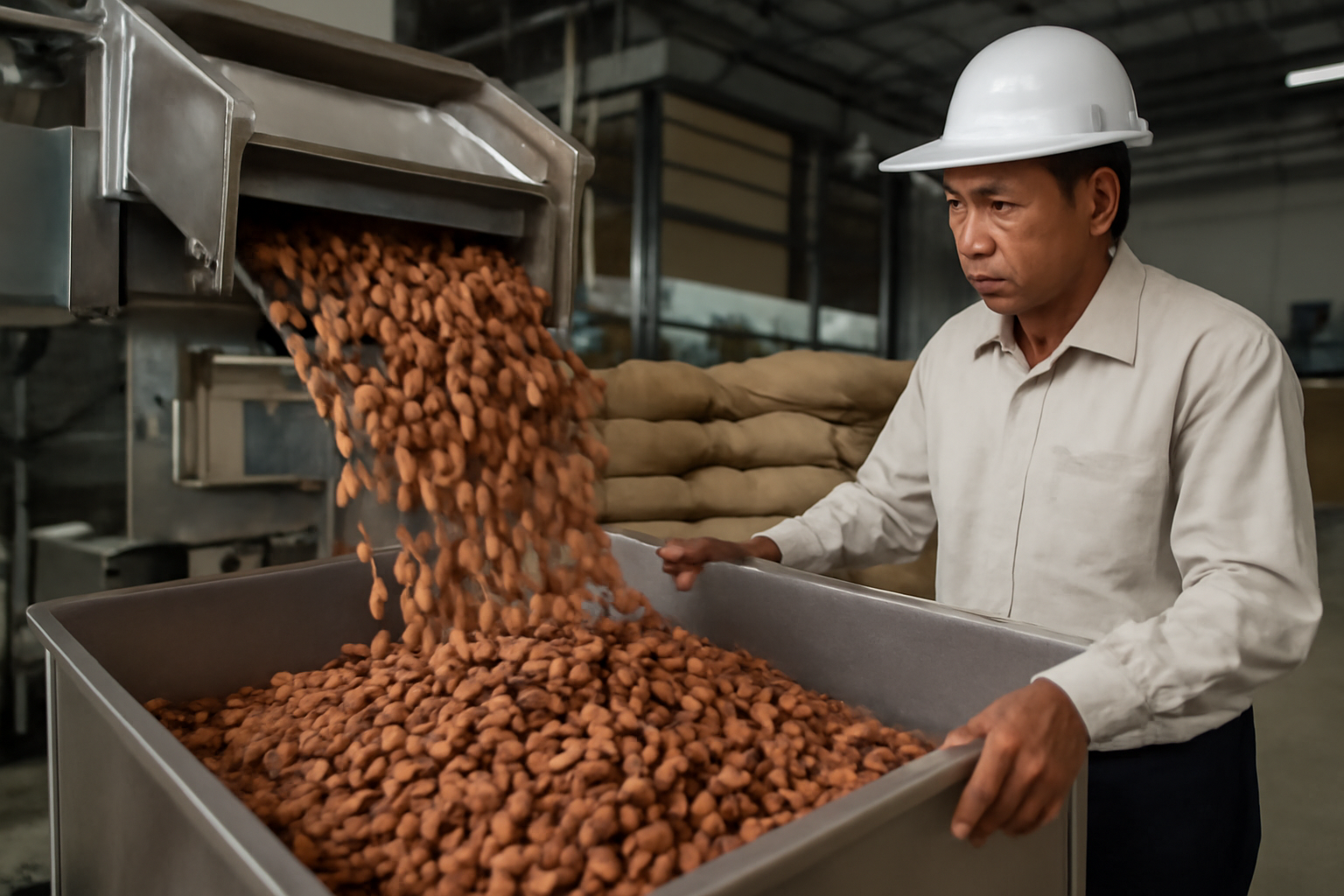
Quality becomes the central challenge
Cocoa is attracting attention as an alternative commercial crop for farmers in southern Thailand. The emerging strategy is not limited to expanding cultivated area or raising output. Its central objective is to make Thai cocoa more consistent, distinctive and capable of reaching markets that reward quality.
That shifts attention from the farm alone to the full post-harvest process. Grading, fermentation and drying determine whether harvested cocoa can be converted into a reliable raw material for processors and buyers. Improvements at these stages are therefore being presented as a route from cocoa fruit to higher-value products rather than simply a way to handle a larger crop.
Grading can reduce variation
Grading is the first step in separating cocoa according to its condition and quality. A more systematic approach can help prevent uneven material from entering the same batch and affecting the final product. For processors, greater uniformity makes procurement and production planning easier. For growers, it creates a clearer basis for demonstrating quality to potential customers.
Consistency matters because buyers need confidence that repeat orders will deliver comparable material. A distinctive national or regional cocoa identity cannot rest on origin alone; it also requires dependable handling after harvest. Better grading can connect the characteristics of southern Thai cocoa with specifications that processors and specialist buyers can assess.
Fermentation and drying shape marketable quality
Fermentation is a critical stage in developing the characteristics of cocoa, while drying stabilizes the processed beans for storage and further use. Innovation in both practices is intended to reduce inconsistencies that can emerge when batches are handled differently. More controlled methods can also help growers and processors preserve the qualities they want buyers to associate with Thai cocoa.
The three stages are interdependent. Careful grading cannot compensate for inconsistent fermentation, and successful fermentation can lose value if drying is poorly managed. Treating them as one production system offers a more credible path to repeatable quality. It also makes quality control easier to explain across the supply chain, from growers and local processors to manufacturers evaluating the beans.
A route to value rather than volume alone
The emphasis on processing reflects a broader commercial choice. Increasing production without consistent quality may expand supply but does not automatically improve market access or growers’ returns. A quality-led model seeks to differentiate Thai cocoa and create opportunities in markets where origin, processing and flavor characteristics influence purchasing decisions.
For southern farmers, the opportunity depends on whether improved methods can be applied consistently and linked to actual buyers. Processors need predictable inputs, while growers need clear standards and a market that recognizes the additional work involved. If grading, fermentation and drying are coordinated, Thailand can build a stronger proposition around cocoa as a value-added crop. The immediate task is to translate technical improvements into repeatable commercial quality and a recognizable identity that buyers can trust.