Thailand Targets Distribution of 10,000 Tonnes of Southern Fruit
Thailand’s Department of Internal Trade is working with three wholesale markets and six modern retail groups to distribute at least 10,000 tonnes of southern fruit. The campaign focuses on durian, mangosteen and langsat entering the market in August 2026.
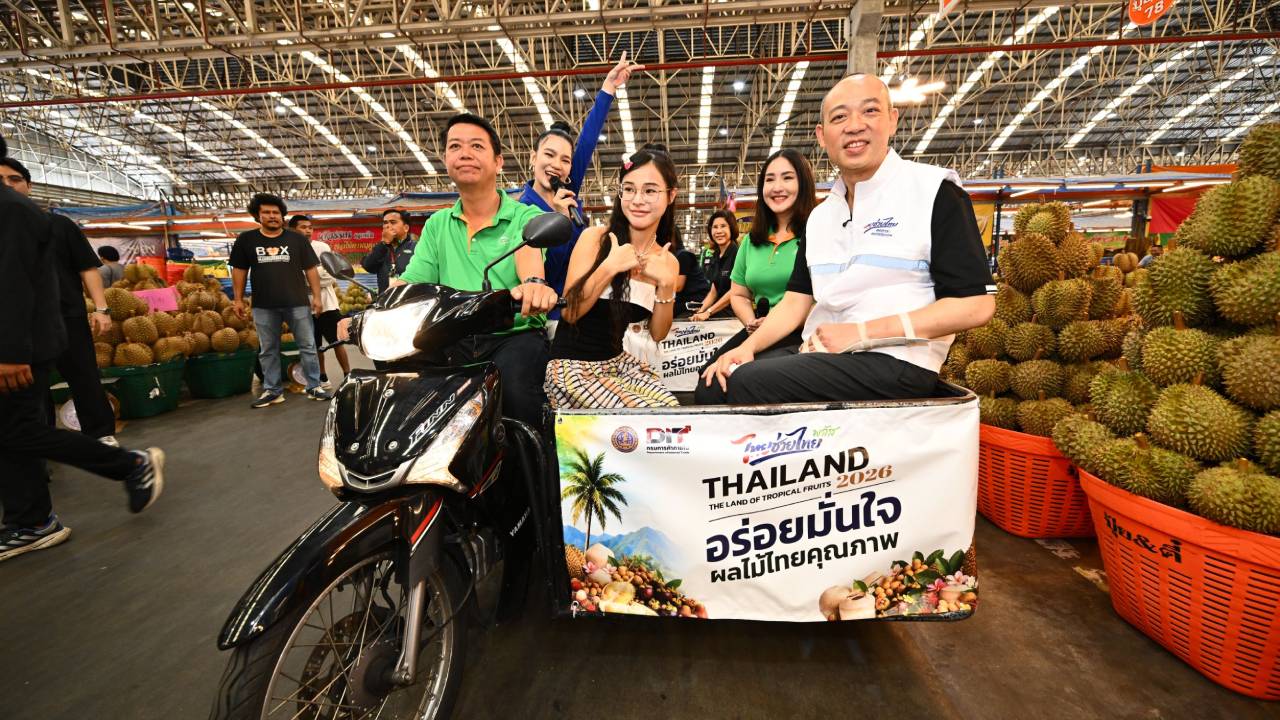
Government moves to absorb the seasonal crop
Thailand’s Department of Internal Trade has launched a campaign to distribute at least 10,000 tonnes of fruit from the country’s southern producing regions. According to Daily News, the initiative concentrates on durian, mangosteen and langsat, which are entering the market in large volumes during August 2026.
The department, part of the Ministry of Commerce, is coordinating agricultural wholesale markets, modern retailers and other sales channels. Its immediate objective is to move fruit from production areas to traders and consumers before simultaneous harvesting creates a supply concentration that could depress farmgate and wholesale prices. The programme forms part of the government’s management of the 2026 fruit season.
Three markets and six retail groups join campaign
Three agricultural wholesale markets are participating: Talaad Thai, Si Mum Muang Market and Morakot Market. They will serve as collection and distribution points connecting growers with commercial buyers. The government is also working with six modern retail and wholesale operators: Makro, Lotus’s, Big C, GO Wholesale, Tops and The Mall.
Together, the participating organisations will promote southern fruit at more than 200 branches across Thailand. The activities will operate under the “Thailand: The Land of Tropical Fruits” concept and the “Thai Chuai Thai Plus” quality-fruit campaign. Point-of-sale promotion, special offers and consumer communications are intended to increase purchases while the seasonal crop is reaching its peak.
Half the target tied to direct sales activity
The department expects sales promotions and expanded distribution channels to move approximately 5,000 tonnes. It expects another approximately 5,000 tonnes to be absorbed through publicity and sustained consumer demand, bringing the total target to at least 10,000 tonnes. This division shows that the programme relies both on direct commercial handling and on measures designed to stimulate additional household consumption.
The campaign includes online livestreams, communications involving influencers and performers, and a promotional vehicle caravan carrying southern fruit to sales points in Bangkok, surrounding provinces and other parts of the country. Consumers can buy participating Thai fruit through the three wholesale markets and more than 200 partner retail and wholesale branches from the start of the campaign through September 2026.
Price pressure remains the central risk
Daily News reported that the government views wholesale markets as the main mechanism for rapidly aggregating crops and connecting farms with buyers. Modern retailers add national reach and give producers access to more points of sale beyond traditional wholesale channels. Faster movement is particularly important when several southern fruits mature during the same period.
The initiative is primarily a domestic market intervention rather than an export programme. Its effectiveness will depend on whether the participating markets and retailers can convert promotion into purchases quickly enough to prevent inventories from accumulating. For growers, the relevant outcome will be not only whether 10,000 tonnes are moved, but whether the additional demand limits downward price pressure during the August supply peak.