Thailand Targets China’s Fast-Growing Fresh-Snack Market with Branded Food Products
China’s fresh-snack market is forecast to reach 40–50 billion yuan in 2026 after exceeding 40% growth in 2025. Thailand’s Commerce Ministry sees an opportunity for producers of tropical fruit and healthy foods, but says they must build brands and expand across Chinese retail and digital channels.
China’s fresh-snack market accelerates
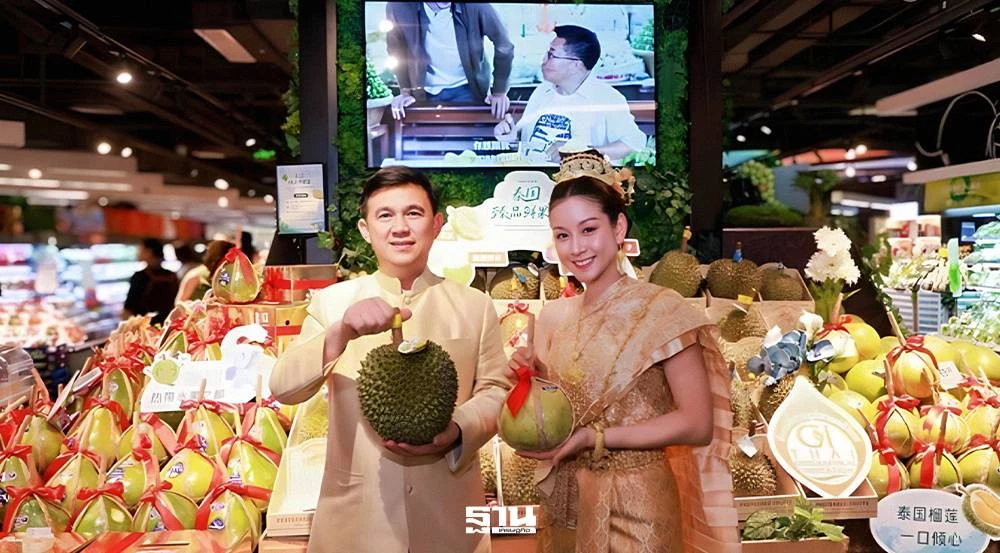
Thailand is encouraging food producers to pursue China’s rapidly expanding fresh-snack segment, with officials identifying tropical fruit, health-oriented products and value-added processing as areas where Thai suppliers could compete. The Department of International Trade Promotion, or DITP, wants exporters to move beyond selling agricultural commodities and develop recognizable Thai brands for Chinese consumers.
According to Thansettakij, China’s fresh-snack market was valued at approximately 18 billion yuan in 2025 after growing by more than 40%. The market could reach 40–50 billion yuan in 2026, equivalent to roughly 200–250 billion baht. The forecast points to a sharp expansion in consumer spending, although Thai companies will face competition from established Chinese brands and large retail groups entering the category.
Freshness, health and convenience shape demand
The category includes dried and freeze-dried fruit, ready-to-eat fresh fruit, fresh bakery products, nuts and grains, dairy products, beverages, meat products and healthy snacks. Its business model combines food retail with ready-to-eat consumption. Products typically have shorter shelf lives, are freshly made and use relatively simple ingredients, aligning with demand for clean-label food and healthier lifestyles.
DITP Director-General Sunanta Kangvalkulkij said younger Chinese consumers increasingly prioritize freshness, quality, health and convenience. She identified durian, mango, coconut, banana and other tropical-fruit products as promising areas for Thai companies. These products already draw on raw materials associated with Thailand, but success in the fresh-snack category will also depend on food safety, packaging, ease of consumption and the ability to offer a distinctive experience.
Retail competition widens access to consumers
Competition is intensifying as major retailers expand into the market. On July 22, 2026, 7-Eleven in Jiangsu province launched “7 Fresh Snacks,” offering products ranging from grains, dried fruit and nuts to meat products. Thansettakij said the launch shows that fresh snacks are moving beyond specialist stores into convenience retail and other channels capable of reaching a broader consumer base.
For Thai suppliers, this expansion creates more potential points of entry but also raises expectations for reliable production, consistent quality and channel-specific packaging. DITP recommends combining brand development on Chinese digital and e-commerce platforms with distribution through convenience stores, supermarkets, modern-trade operators and dedicated fresh-snack shops. A broader channel mix would reduce dependence on traditional distribution and place Thai products at more stages of the Chinese consumer’s purchasing journey.
From raw materials to higher-value brands
The ministry’s strategy calls for Thai businesses to improve raw-material quality, invest in processing and innovation, modernize packaging and create clearer product identities. The objective is to shift from primary agricultural exports toward higher-value finished goods that can command stronger consumer recognition. Product stories and Thai identity are expected to help distinguish these goods in a crowded market, but they must be supported by quality and convenience rather than branding alone.
The initiative forms part of the ministry’s “NEXT LEVEL” policy, which combines quality, innovation, creativity and Thai identity. For producers and processors, China’s projected market growth offers room to sell more value-added tropical-fruit and healthy-food products. For traders and retailers, the commercial test will be whether Thai brands can secure shelf space, manage products with short shelf lives and build repeat demand across both physical and digital channels.