Thailand Targets China’s Fresh-Snack Market as Sales Forecast Reaches 50 Billion Yuan
Thailand is encouraging food producers to enter China’s fast-growing fresh-snack segment through branded, value-added products. The Chinese market was worth about 18 billion yuan in 2025 and is forecast to reach 40–50 billion yuan in 2026.
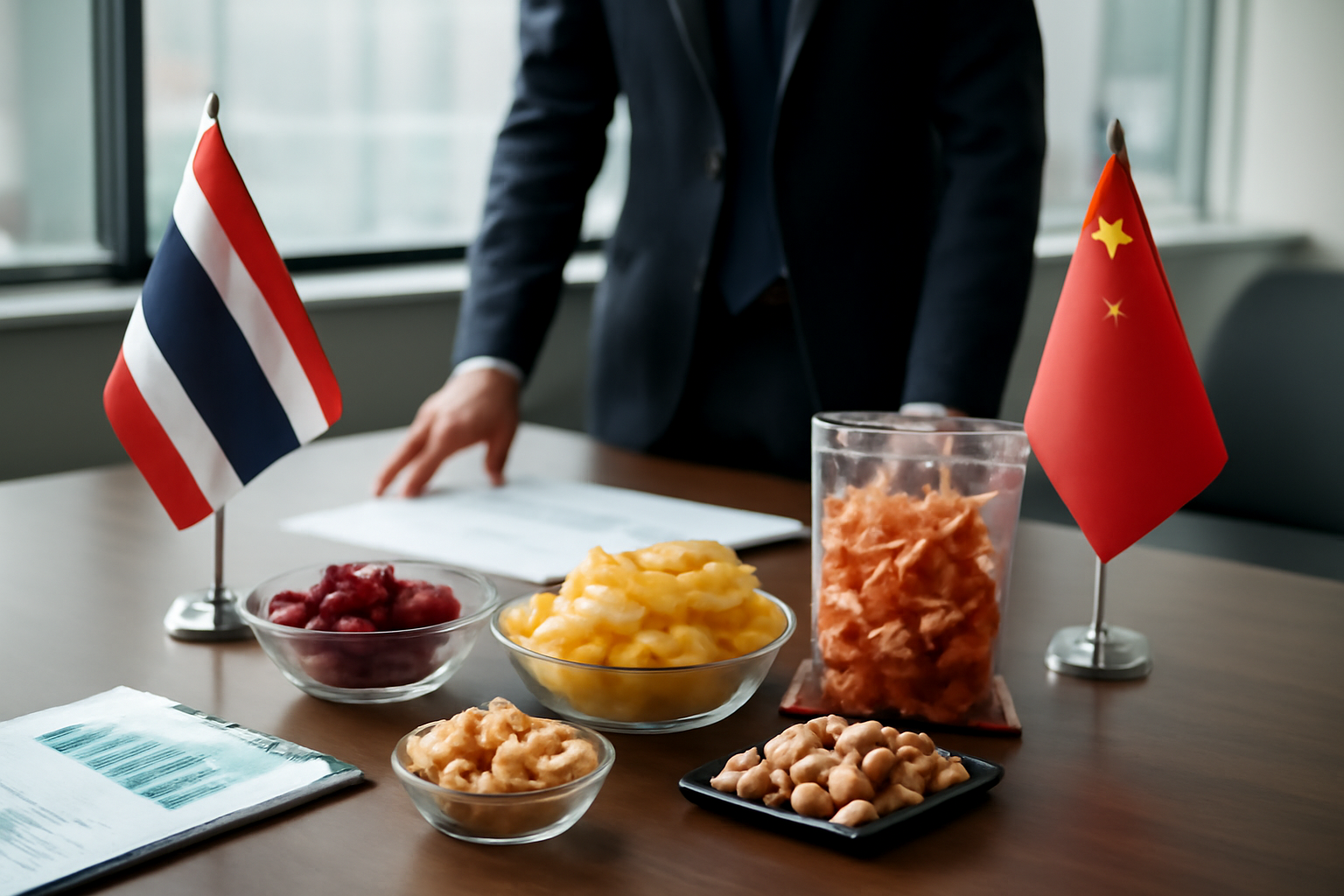
Chinese market forecast to reach 50 billion yuan
Thailand’s Ministry of Commerce is encouraging domestic food companies to pursue opportunities in China’s expanding fresh-snack market, where demand is being shaped by younger consumers seeking freshness, quality, health benefits and convenience. The Department of International Trade Promotion, or DITP, has instructed its overseas offices to identify new markets for Thai goods and services and help Thai products compete more effectively internationally.
According to Khaosod, the DITP’s commercial office in Nanning reported that China’s fresh-snack market was worth approximately 18 billion yuan in 2025, after growing by more than 40%. The market could expand to 40–50 billion yuan in 2026, equivalent to roughly 200–250 billion baht. The projection makes the category a potentially significant outlet for Thai food processors, fruit suppliers and consumer brands.
Fresh products move into mainstream retail
The category includes dried and freeze-dried fruit, ready-to-eat fresh fruit, fresh bakery products, nuts, grains, dairy products, beverages and health-oriented snacks. The model combines elements of food retail and ready-to-eat service, emphasizing freshly produced goods, simple ingredients and relatively short shelf lives. It also reflects consumer interest in clean-label products and healthier lifestyles.
Competition is increasing as major retail operators enter a segment previously associated more closely with specialist stores. On July 22, 2026, 7-Eleven launched “7 Fresh Snacks” in Jiangsu province, offering products ranging from grains, dried fruit and nuts to meat products. The launch indicates that fresh snacks are moving into broader retail channels capable of reaching larger groups of Chinese consumers.
For Thai suppliers, this shift creates access to high-volume distribution but also raises requirements for product consistency, packaging, freshness management and brand recognition. Short shelf lives make logistics and inventory control particularly important, while the breadth of the category means Thai companies will compete with both specialist producers and established convenience-store suppliers.
Thailand promotes tropical fruit and branded products
DITP Director-General Sunanta Kangvalkulkij identified durian, mango, coconut, banana, processed tropical-fruit products and healthy foods as promising Thai offerings. She said companies should use innovation and processing to add value, improve packaging for modern lifestyles, and develop distinctive brands and product stories. The objective is to move beyond exports of primary agricultural commodities toward higher-value products.
The department also recommends combining Chinese digital platforms and e-commerce with physical distribution through convenience stores, supermarkets, modern-trade outlets and specialist fresh-snack shops. This multichannel approach is intended to place Thai products at more stages of the Chinese consumer’s purchasing journey and reduce dependence on traditional sales routes. For producers and exporters, the opportunity therefore extends beyond shipping additional fruit: success will depend on adapting formats, branding and distribution to a category built around convenience and frequent purchases.