Thailand Sets Out Strategy to Become an Asian Wood-Industry Hub
Thailand’s Industry Ministry has outlined a strategy to develop the country into an Asian wood-industry hub, focusing on renewable feedstocks, advanced processing and design. The plan seeks to move the sector beyond log exports by adding value to rubberwood, bamboo and other materials while responding to tighter environmental and carbon rules.
Ministry targets higher-value wood manufacturing
Thailand’s Ministry of Industry has set out an ambition to establish the country as a regional center for the wood industry, building the sector around renewable resources, low-carbon manufacturing and higher-value products.
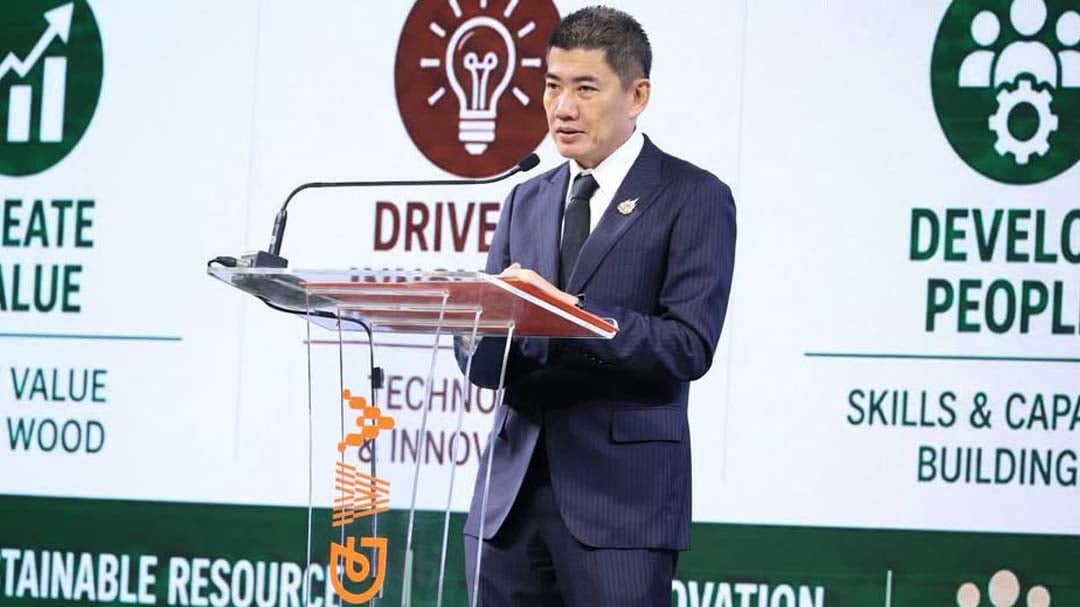
Speaking at the Wood Economic Forum 1.0, Industry Minister Varawut Silpa-archa said the shift toward green industry was directing global innovation toward renewable and low-carbon materials. Wood, he argued, could play a larger role in a sustainable economy if Thailand applied advanced technology, artificial intelligence and digital systems throughout the value chain.
The proposed direction would require Thailand to move beyond exporting logs and place greater emphasis on processed products, design and international markets. Naewna reported that the ministry sees three foundations for this strategy: the country’s agricultural resources, its location and logistics infrastructure, and the capabilities of its skilled workforce.
Rubberwood anchors a circular supply chain
Thailand’s position as one of the world’s leading producers of natural rubber provides the industry with an established source of rubberwood. Rubber trees are felled and replaced after they reach the end of their productive latex-tapping cycle, allowing the timber to be treated as a byproduct of plantation renewal rather than material taken from natural forests.
The ministry described rubberwood as “white gold” because it can extend the economic value generated by each planting cycle. Processing the timber can create an additional income stream for local farmers while supplying manufacturers with renewable raw material for furniture, panels and other products.
This model also supports the government’s circular-economy case for expanding the wood industry. The commercial opportunity, however, depends on developing enough domestic processing capacity to convert plantation timber into products that command more value than unprocessed wood.
Bamboo processing broadens the material base
Deputy Permanent Secretary for Industry Passakorn Chairat said value creation should not be limited to harvesting forest or plantation output. New processing technologies can expand the range of commercial applications for materials already suited to Thailand’s climate.
Bamboo illustrates that potential. Traditionally used in furniture, it can be dried and treated with strengthening coatings to produce boards suitable for house construction, according to Naewna. Such processing could raise the economic value of bamboo and create more durable income opportunities for growers, while giving manufacturers an additional renewable input alongside rubberwood.
The strategy also highlights Thailand’s design and craft skills. Combining these capabilities with modern manufacturing technology could support a broader mix of finished and semi-finished products, reducing the industry’s dependence on basic raw-material sales.
Logistics and carbon rules shape competitiveness
Thailand’s location in the center of Southeast Asia is another part of the ministry’s case. Connections to the Eastern Economic Corridor, deep-sea ports and an extensive logistics system could support the shipment of higher-quality wood products to global markets and make the country a processing base for the region.
Environmental regulation will be a central constraint as the strategy develops. Passakorn pointed to changing global rules and carbon border adjustment measures as factors requiring cooperation across government, growers, processors and other industry participants. Producers seeking access to regulated markets will need credible information on sourcing, production methods and carbon performance.
The ministry said it was prepared to upgrade the wood sector as a driver of Thailand’s next phase of economic development. The proposal presented at the forum is a strategic direction rather than a detailed investment program: the source did not specify funding, capacity targets, implementation dates or projected export volumes. Those details will determine whether Thailand can translate its resource and logistics advantages into a competitive regional manufacturing center.