Thailand seeks New Zealand market access for fresh pomelo and cooked chicken
Thailand has asked New Zealand to advance market access for whole fresh pomelo and cooked chicken products. The request was discussed during a meeting between Thailand’s agriculture minister and New Zealand’s ambassador in Bangkok.
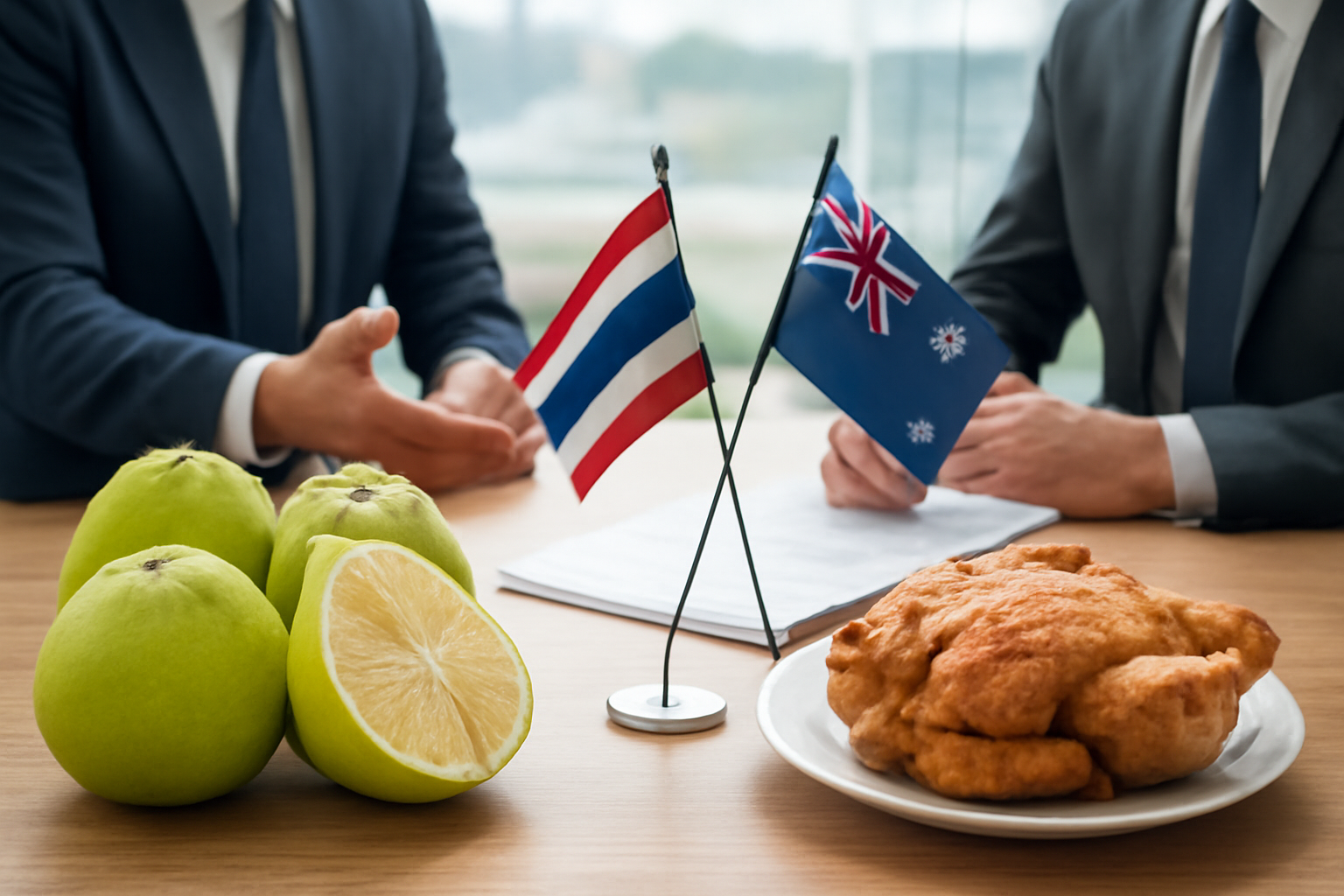
Thailand raises two agricultural market-access priorities
Thailand is seeking New Zealand market access for whole fresh pomelo and cooked chicken products, placing horticulture and processed poultry at the center of its latest bilateral agricultural discussions. Thailand’s Ministry of Agriculture and Cooperatives disclosed the request following a meeting between Agriculture and Cooperatives Minister Suriya Juangroongruangkit and New Zealand Ambassador Raylene Seale Tagaloa Lufilufi, who paid a courtesy call after taking up her diplomatic post in Thailand.
The discussion signals political support for the technical work required before the two product groups can enter the New Zealand market. The information released by the ministry did not specify a timetable for approval, prospective shipment volumes, participating exporters or the value of the potential trade. It also did not indicate that commercial access had already been granted. For producers and processors, the immediate development is therefore an advance in government-level engagement rather than the opening of a completed trade channel.
Fresh fruit access depends on phytosanitary clearance
Thailand’s request covers whole fresh pomelo, a form of access that requires the importing country to assess plant-health risks associated with the fruit and its production and handling systems. The negotiations may determine which orchards and packing facilities can participate, what pest controls are required and how consignments must be inspected or certified. No specific protocol or compliance conditions were included in the available ministry account, so exporters cannot yet treat New Zealand as an operational destination for the product.
For Thai pomelo growers and packers, approval would provide an additional overseas outlet and could support efforts to diversify destinations. The commercial impact, however, will depend on the eventual import conditions and the ability of suppliers to meet them consistently. Treatment requirements, packing rules, traceability and shipment handling can affect costs and the volume that remains commercially viable. Importers in New Zealand would also need reliable supply programs and products capable of meeting local quality and food-safety requirements.
Cooked chicken requires plant and product approval
The second request concerns cooked chicken products, bringing Thailand’s poultry-processing industry into the talks. Unlike fresh fruit, market access for processed animal products normally centers on animal-health controls, food safety, approved production facilities and official certification. The ministry’s report did not identify particular companies, plants or product formats, and it provided no prospective start date.
Any eventual approval could create opportunities for Thai processors that already operate controlled cooking and export-certification systems. Yet the scope of access will matter: eligibility can depend on the approved establishment, production method, heat treatment, ingredients and documentation specified by the importing authority. Until those details are agreed, processors cannot calculate the full compliance cost or determine which product lines could compete in New Zealand.
Negotiations move to the technical level
The bilateral meeting establishes a policy direction but leaves the decisive work to regulators. Authorities must agree on risk assessments, certification and inspection arrangements separately for fresh pomelo and cooked chicken. That distinction is important because progress on one product does not automatically deliver approval for the other.
Industry participants will now watch for formal protocols, establishment approvals and an implementation date. Those steps would convert diplomatic backing into practical market access. Until then, the talks represent a potential expansion of Thailand’s agricultural sales to New Zealand, with the final commercial value dependent on regulatory terms, logistics and demand.