Thailand Moves More Vegetables to Wholesale Markets After Flood Disruption
Thailand is redirecting vegetables from production areas to major wholesale markets after heavy rain and flooding reduced supply and slowed transport. Prices for several products have eased, but some leafy vegetables remain expensive ahead of the October 9–18 vegetarian festival.
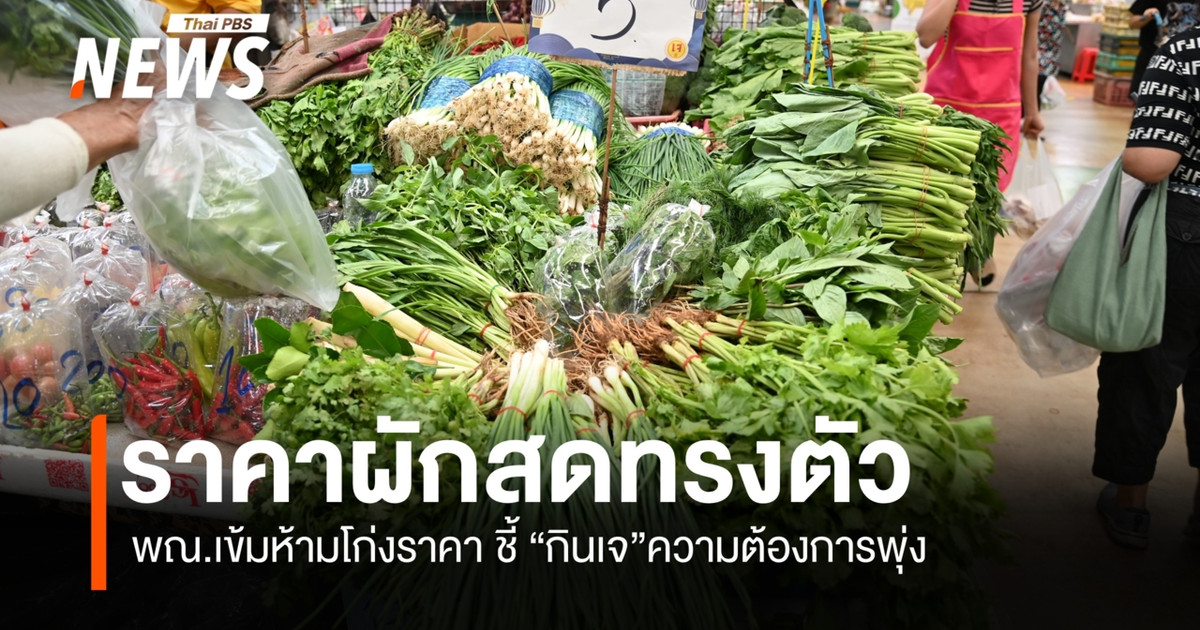
Floods reduce supply and damage quality
Thailand’s Department of Internal Trade is accelerating deliveries of fresh vegetables to major wholesale markets after heavy rain and flooding disrupted production in the central, western and northeastern regions. Director-General Wattanasak Sueaiam said affected farms were sending less produce to market, while continuous rain in areas outside the flood zones had also damaged crops and reduced quality, particularly among leafy vegetables.
Longer transport times have added to quality losses and contributed to price increases for some products. The department is coordinating supplies from producing areas to Si Mum Muang, Talaad Thai, Sri Muang and Lan Muang markets. The aim is to increase market availability as Thailand approaches the vegetarian festival, when vegetable demand is expected to rise.
Wholesale prices retreat from recent peaks
Monitoring at Si Mum Muang, a major vegetable distribution center, indicates that additional arrivals are beginning to ease prices. Thai PBS and Post Today reported that green cabbage fell to 8 baht per kilogram from a recent high of 12 baht. Green jinda chili declined to 42 baht from 70 baht, while red jinda chili dropped to 40 baht from 50 baht. Chinese cabbage eased to 17 baht from 18 baht, and Thai basil fell to 150 baht from 170 baht per kilogram.
Prices for several tender-stem and leafy products have also moved below their peaks but remain under close observation. Spring onion declined to 130 baht per kilogram from 150 baht, and holy basil fell to 120 baht from 150 baht. Chinese water spinach was steady at 100 baht, Thai water spinach at 32 baht and another Chinese cabbage category at 13 baht during October 3–4. Lemon basil was still rising and most recently reached 140 baht per kilogram because heavy rain had reduced output in its principal production areas.
Controls tighten before festival demand
The Commerce Ministry has instructed the Department of Internal Trade and provincial commerce offices to monitor volumes, prices and distribution, while helping resolve transport obstacles in flooded areas. Officials will also inspect displayed prices and weighing equipment. Retailers that fail to display prices can be fined up to 10,000 baht. Selling goods at unreasonably high prices carries a maximum penalty of seven years in prison, a fine of up to 140,000 baht, or both.
The vegetarian festival campaign will run from October 9 to 18, 2026, involving wholesale and fresh markets, retailers, wholesalers, convenience stores, restaurants and future-food businesses. Participants will sell lower-priced prepared vegetarian meals and offer promotions of more than 50% on selected vegetarian ingredients and seasonings. A Thai PBS survey at Ying Charoen Market found most vegetable prices around normal levels, although some items remained costly. The department said it would continue coordinating public and private operators to keep supplies moving and asked sellers to align prices with costs.