Thailand's producer prices rise 7.2% in June as energy costs and Middle East conflict lift food inputs
Thailand's producer price index rose 7.2% year on year in June 2026, driven by high global energy prices, according to the Office of Trade Policy and Strategy. Krungthai COMPASS links the pressure to the Middle East conflict and higher fertilizer and fuel costs, with bread, snacks, instant noodles and soybean oil the most exposed.
Producer prices climb 7.2% in June
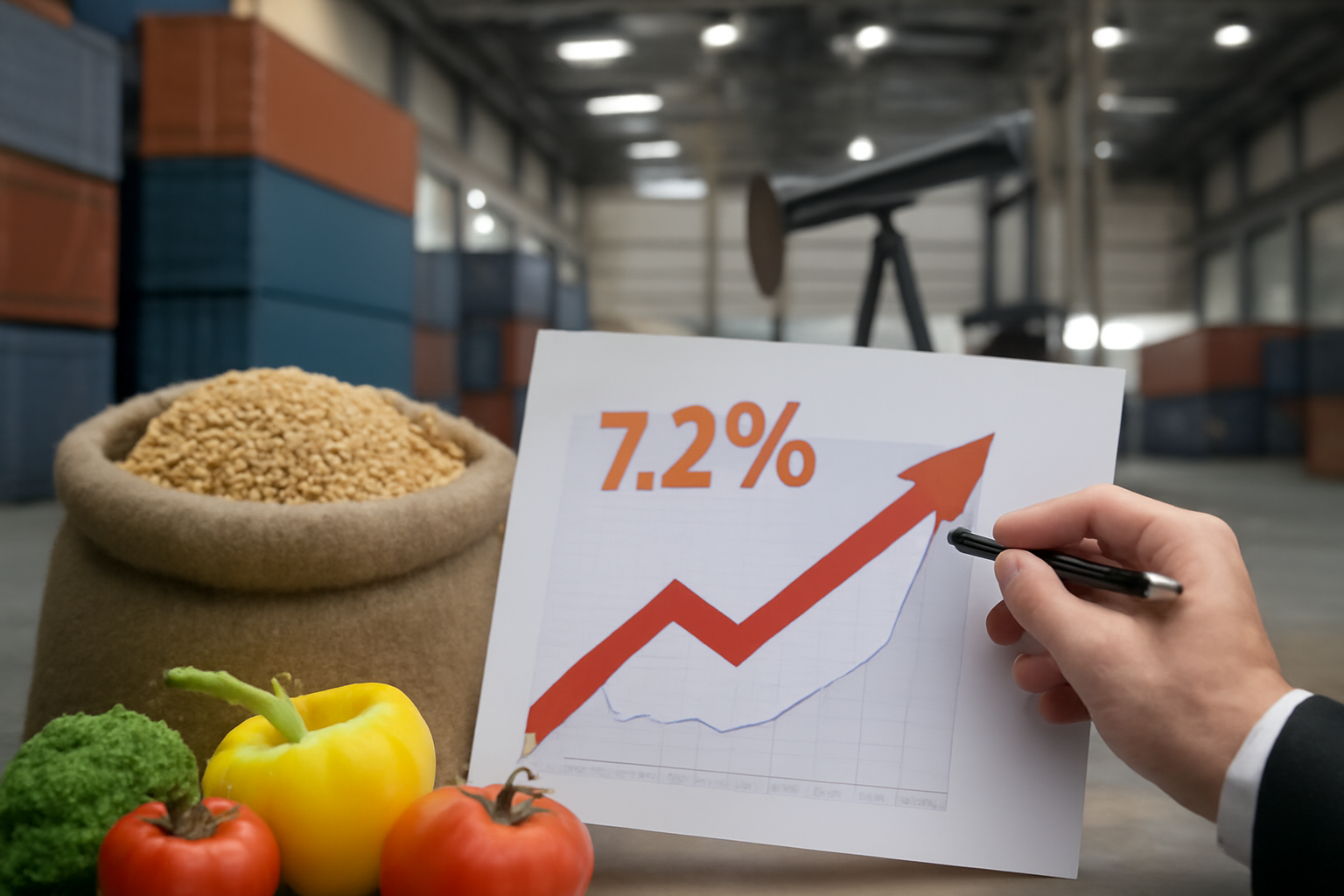
Thailand's producer price index rose 7.2% year on year in June 2026, according to the Office of Trade Policy and Strategy (TPSO). The office linked the increase to persistently high global energy prices, which pushed up costs across the manufacturing and agricultural sectors.
Firmer prices for rice, rubber, cassava and palm oil supported the index. Fruit and livestock pulled in the opposite direction: durian, mangosteen and coconut prices fell, along with pork and chicken.
Conflict shifts the risk from energy to food
An analysis by Krungthai COMPASS argues that the Middle East conflict and the closure of the Strait of Hormuz in late February have raised the risk to the global food chain, moving it from an "Energy Shock" toward a "Food Cost Shock". The Persian Gulf is a major source of chemical fertilizer, oil and natural gas, so prolonged unrest feeds directly into farm input and freight costs.
The bank frames this as a slow-burning food crisis rather than a sudden supply shock. Average prices for soybeans, corn and wheat in March and April stood 5.4%, 3.0% and 9.9% above pre-conflict levels, well below the Russia-Ukraine war, which drove the same grains to peaks of 18.5%, 27.3% and 50.2% between February and December 2022. The greater concern is fertilizer and oil, which have risen faster than during the Russia-Ukraine period and are expected to stay high in the second half of the year even as they ease.
Which Thai food products are most exposed
Krungthai COMPASS identifies two cost channels: higher imported raw-material prices, and higher energy and transport costs. It names four food categories as most exposed - bread and bakery, snacks, instant noodles and soybean oil - because they depend on imported soybeans, corn and wheat, and because energy and transport make up roughly 77.2% to 82.7% of their total production cost.
Pass-through to consumers is limited. A 1% rise in cost translates into a selling-price increase of only 0.08% to 0.32%. Snacks pass through the least, at 0.08%, because intense competition and easy substitutes leave little room to raise prices.
Packaging is a further risk. Plastic packaging costs stayed high in the second quarter of 2026 as the conflict disrupted naphtha imports, a key feedstock for plastic pellets, forcing some producers to cut output temporarily. Conditions have since eased: pellet imports rose more than 39% year on year in May 2026. Food and beverages account for 53% of plastic packaging use, keeping the sector sensitive to those prices.
How producers are adapting
- Supply-chain relocation: diversifying import sources and reformulating products to use more domestic ingredients.
- AI adoption and digital cold-chain technology to preserve quality and extend the shelf life of fresh and chilled food.
- Green and energy transition, investing in energy-saving production such as heat recovery and biogas.