Thailand to propose 30% larger rice reserve and 20% more crude palm oil stocks against El Nino drought
Thailand's Department of Internal Trade is preparing a proposal to raise the strategic rice reserve by 30% and crude palm oil stocks by 20% as protection against El Nino-driven drought. The department says the country faces no shortage of either commodity, but flagged cassava and maize as vulnerable because domestic output does not cover consumption.
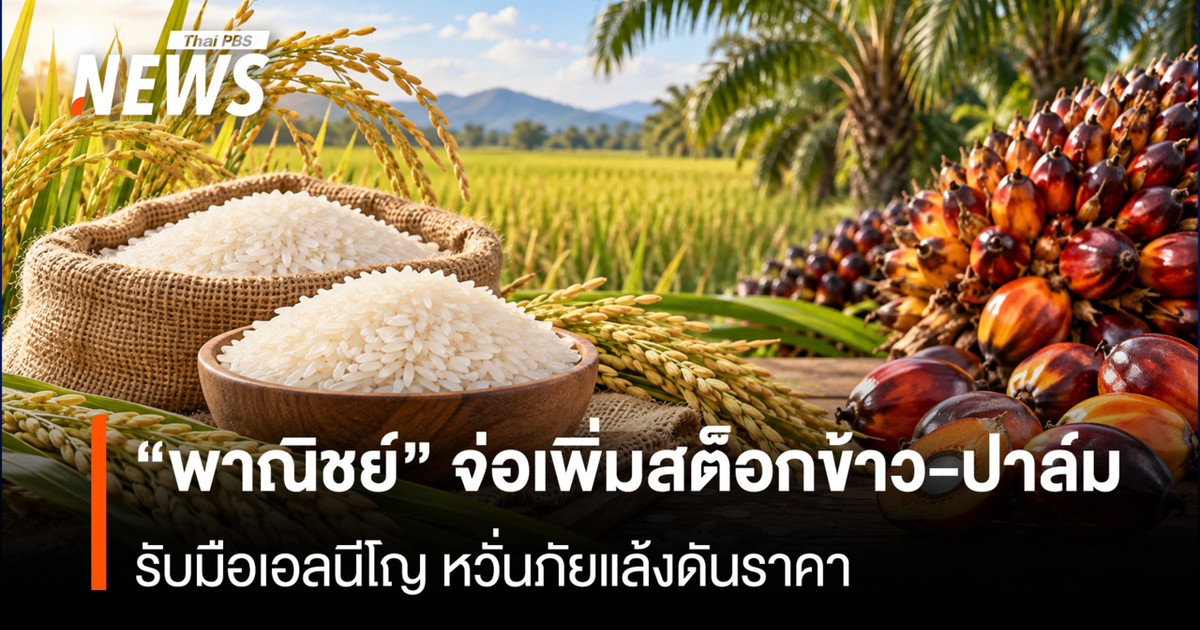
Thailand's Department of Internal Trade is preparing to propose a 30% increase in the country's strategic rice reserve and a 20% increase in its crude palm oil reserve, as part of a contingency plan against drought caused by El Nino. Witthayakorn Maneenet, Director-General of the department, which reports to the Ministry of Commerce, outlined the plan on 24 September, Thai PBS reported.
The enlarged buffer is meant to serve two functions at once. The first is national food security, holding physical volumes of the two staples the domestic market depends on. The second is market stabilisation: a state-held stock that can be used to limit swings in domestic availability and prices if the harvest disappoints. The department framed both the rice reserve and the crude palm oil reserve as protection against quantity and price risk inside Thailand rather than as an export instrument.
World stocks up, prices still firm
The reasoning behind the larger safety stock comes from what the department sees in the global market. Its monitoring of world rice inventories shows volumes rising, yet rice prices overall have not fallen. Stocks are higher and prices remain high at the same time, a combination the department reads as evidence that countries are steadily buying rice to put into their own reserves, both for domestic food security and in anticipation of drought. Crude palm oil prices have followed the same pattern and have not declined either.
That interpretation matters for anyone selling out of Thailand. It implies the current price level is being supported by precautionary buying rather than by consumption, and that a producer country adding to its own reserve reinforces the same dynamic.
No shortage expected in rice or palm oil
Witthayakorn said Thailand will not run into a shortage of rice or palm oil because of El Nino, since the country is a major producer of both. Prices of milled rice and bottled palm oil will not rise sharply, he said, because stocks are sufficient and no supply gap is expected.
Cassava and maize are the weak point
The products the department says require monitoring during the drought period are cassava and maize. Thailand imports part of its requirement for both because domestic output does not cover consumption, which leaves those two crops, unlike rice and palm oil, without a domestic surplus to fall back on if the dry season cuts yields. For feed manufacturers and starch processors, that is where an El Nino year shows up first in costs.
The department said it is also tracking volumes and prices of all oilseed crops closely, in consultation with industry, because raw materials from the agricultural sector feed into the processed food, beverage and household goods categories that the ministry monitors for consumer prices.
Consumer goods and an AI harvest tool
On packaged consumer goods, the department has held talks with manufacturers of everyday essentials such as soap, toothpaste and shampoo, asking them to produce sufficient volumes. According to the department, there is no policy at present to raise prices, although it acknowledged that some items have had promotions withdrawn, which has pushed shelf prices up. Retailers and wholesalers have been asked to stagger promotions across different products.
Separately, the Trade Policy and Strategy Office is deploying artificial intelligence in a system for tracking crops approaching harvest, designed to pick up production signals and identify price levels and areas at risk in order to reduce losses. The system will be piloted on rice and is due to be launched on 30 September.