Thailand’s July exports jump 21.6% as electronics and AI demand accelerate
Thailand exported $34.789 billion of goods in July 2026, up 21.6% year on year, as electronics and advanced-technology products led growth. Imports climbed 36.7% to $38.399 billion, leaving a $3.610 billion monthly trade deficit.
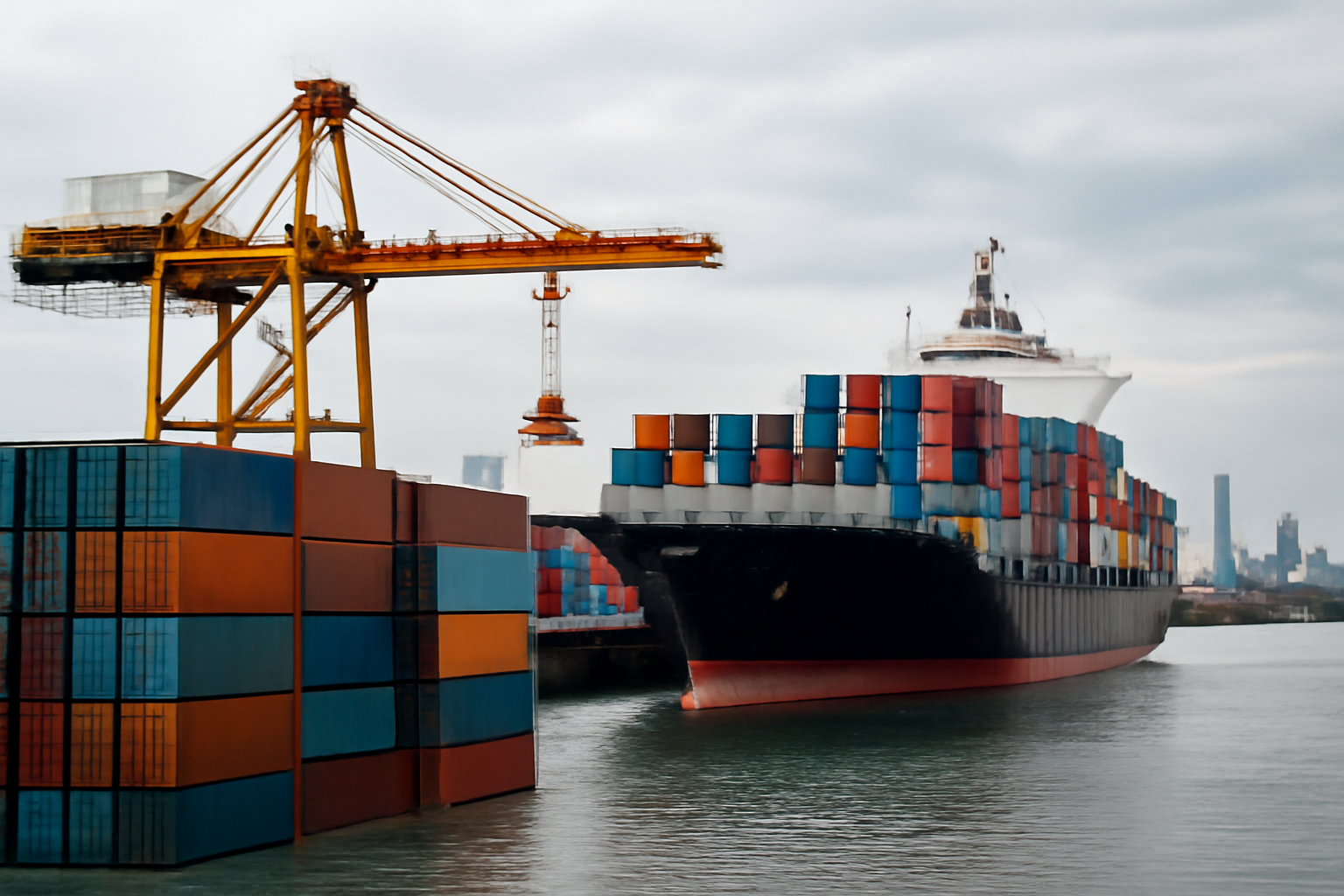
Industrial exports lead July growth
Thailand’s merchandise exports rose 21.6% year on year to $34.789 billion in July 2026, supported by electronics and products linked to advanced-technology investment. Imports increased more rapidly, climbing 36.7% to $38.399 billion and producing a monthly trade deficit of $3.610 billion, according to InfoQuest.
Industrial goods generated $28.692 billion in exports, up 24.2%, marking a twenty-eighth consecutive month of growth. Expanding categories included video and audio equipment and components, telephones and parts, computers and components, electrical transformers, copper products, circuit boards, and machinery. Electrical appliances and mobile-phone components also continued to perform strongly.
The Ministry of Commerce identified sustained global demand across technology supply chains and digital infrastructure as a central driver. Demand connected with artificial intelligence is expected to support shipments during the remainder of the year. Importers have also accelerated purchases ahead of possible changes to United States trade policy.
Imports support production but widen the deficit
High imports largely consisted of raw materials, capital goods and machinery used in export manufacturing, said Nuntapong Jiralertpong, director of the Trade Policy and Strategy Office. He described these flows as part of co-production and investment in infrastructure for the electronics cycle and advanced-technology industries, rather than simply a sign of weakening trade performance.
The imbalance is nevertheless substantial. During January-July 2026, exports reached $231.531 billion, an increase of 18.2%, while imports totaled $266.885 billion. Thailand consequently recorded a cumulative trade deficit of $35.354 billion over the seven-month period.
Hong Kong was the fastest-growing major export market, followed by the United States, the European Union, Australia and Canada. Shipments contracted most sharply in Switzerland, followed by the Middle East, the United Kingdom and South Asia. These divergent results underline the sectoral and regional concentration of the current expansion.
Agriculture returns to growth
Agricultural exports increased 0.6% to $2.766 billion, their first expansion in three months. Rubber, fresh and frozen chilled shrimp, processed chicken and rice were among the products recording growth. Fisheries products, fresh vegetables and livestock goods also supported the broader result.
Agro-industrial exports moved in the opposite direction, falling 3.3% to $2.070 billion and declining for a fourth consecutive month. Pet food and canned and processed seafood remained among the categories that expanded, but their gains were insufficient to reverse the segment’s overall contraction.
Forecast raised as policy risks remain
The ministry expects annual export growth to reach double digits and sees scope for an increase of more than 12%, compared with its previous forecast of 8-11%. Growth of 12% would bring full-year exports to $381 billion, while growth of 15% would raise the total to $391.267 billion. The target is due to be reviewed around October 2026.
The outlook remains exposed to potential country- and product-specific United States tariffs and to tensions in the Strait of Hormuz, which could raise and destabilize energy costs. Thailand is seeking to conclude an Agreement on Reciprocal Trade with the United States to reduce uncertainty for exporters. The strength of electronics demand may continue into 2027, but the size of the import bill and the timing of trade-policy changes will determine how much export growth translates into an improved external balance.