Thai lawmaker submits industrial-waste and palm-oil bills tied to 400 billion baht borrowing plan
Thai lawmaker Atavit Suwannapakdee has submitted bills covering industrial waste and the palm-oil industry as Thailand considers a 400 billion baht borrowing program. The proposals address waste from technology adoption and the palm sector’s exposure to the end of biofuel price compensation.
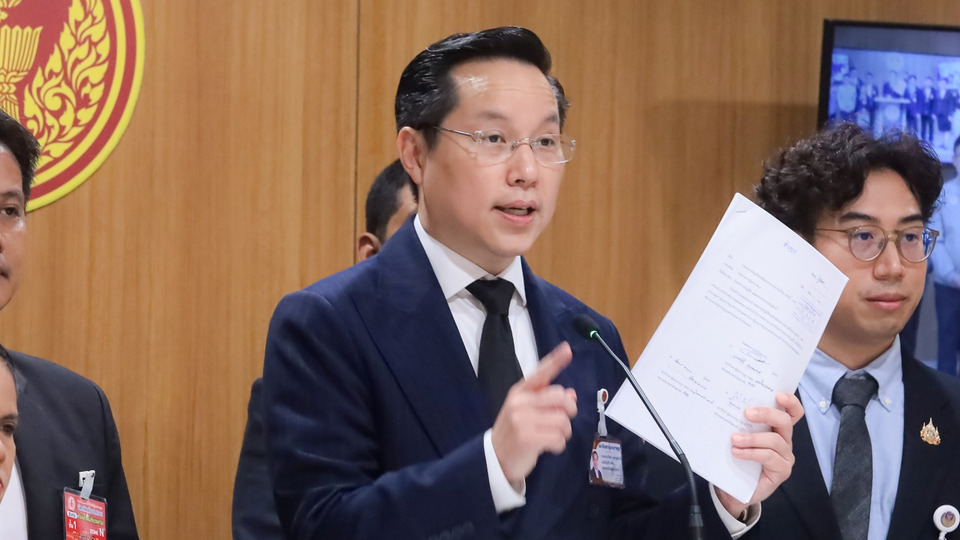
Two bills accompany borrowing proposal
Thai lawmaker Atavit Suwannapakdee of the United Thai Nation Party has submitted two bills intended to govern industrial waste and promote the palm-oil industry. The proposals are linked to a 400 billion baht emergency borrowing decree supported by his party, Siam Rath reported.
Speaking at parliament on August 26, 2026, Atavit said 200 billion baht of the proposed borrowing would be allocated to technology transition. Lawmakers have raised questions about which authorities would assume practical responsibility for waste generated by that process, including end-of-life electric vehicles, used batteries and electronic circuit boards.
Atavit said the legislation was needed before public funds were injected into technology adoption. Without a defined system for handling the resulting equipment and components, investment intended to modernize the economy could leave unresolved disposal, environmental and administrative problems.
Industrial-waste bill covers electronic refuse
The proposed Industrial Waste Management Act has already been filed with the House of Representatives. According to Siam Rath, it is Thailand’s first proposed law dedicated specifically to industrial waste and electronic refuse. Its 143 sections were prepared over several hundred hours and are designed to provide a model for systematic waste administration.
The bill’s significance extends beyond conventional factory residue. Electric-vehicle bodies, batteries and electronic assemblies will become a larger management issue as technology changes. A dedicated statute could clarify oversight and give companies investing under the transition program a more predictable framework for the treatment of obsolete assets, although the source report does not specify individual agency responsibilities or compliance costs.
Palm sector faces biofuel deadline
Atavit submitted the Palm Oil Industry Promotion Act on the same day. The proposal responds to concern over fuel and agricultural commodity prices ahead of a change in Thailand’s Oil Fuel Fund rules. Siam Rath reported that the fund will no longer be permitted to compensate prices for fuel containing biofuel from September 24, 2026.
The change directly affects B7 diesel, whose price will no longer qualify for fund compensation. It also creates a risk for oil-palm growers because more than one-third of palm output is used as a biofuel component. Any weakening of demand from fuel blending could therefore pass through to fresh fruit bunch and crude palm oil prices, affecting growers, mills, refiners and fuel suppliers.
The palm bill draws on the model of the Office of the Cane and Sugar Board under the Ministry of Industry. Farmers would continue selling fresh palm fruit but would also receive a share of profits from crude palm oil, or CPO, products. Atavit described it as the country’s first bill designed to oversee palm pricing and farmer benefits in this way. He asked the government to consider both bills alongside the borrowing decree, arguing that rules for waste and agricultural returns should be in place as technology spending advances and biofuel support changes.