Thailand Allocates 46.6 Million Baht to Absorb Coconuts as Surplus Drives Prices Down
Thailand is allocating 46.6 million baht to absorb mature coconuts and copra after concentrated production created a domestic surplus. Full warehouses, rising costs and limited processor capacity are adding pressure to prices and growers.
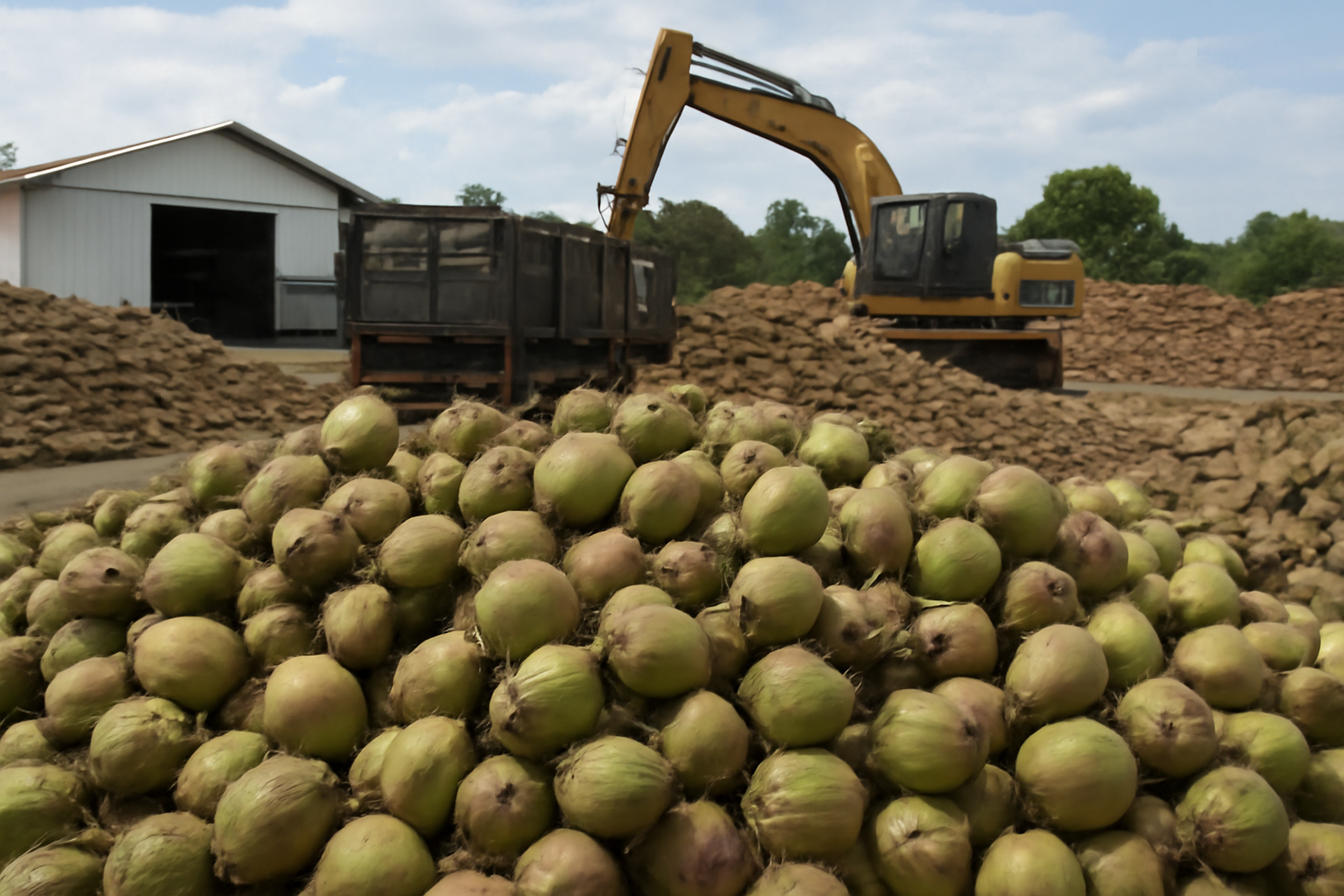
Government moves to absorb excess supply
Thailand’s Ministry of Commerce is allocating 46.6 million baht to support the absorption of mature coconuts and copra after a concentrated period of production left the domestic market with excess supply. The intervention follows a sharp decline in coconut prices and mounting concern among growers about their ability to sell the current crop at sustainable levels.
The available information does not specify how much coconut the program will purchase, how long it will operate or which organizations will handle procurement. It also does not provide current farm-gate prices or the level from which prices have fallen. The announced budget nevertheless signals that authorities see the surplus as sufficiently severe to require direct market support rather than relying solely on commercial demand.
Processors and warehouses under strain
The imbalance is not confined to farms. Coconut processors are struggling to carry additional stocks, while warehouses are reported to be full and operating costs are rising. This reduces the industry’s ability to take delivery even when raw material is available at lower prices. A factory facing limited storage space and higher costs cannot continuously increase purchases without securing an outlet for processed products.
Concentrated output is central to the pressure. When a large share of production reaches the market within a short period, buying capacity, storage and processing lines must absorb the crop at the same time. If any part of that chain is already full, the adjustment falls mainly on growers through weaker bids, delayed purchases or unsold fruit. Funding purchases of both mature coconuts and copra may spread the intervention across fresh raw material and a storable processed form, but its impact will depend on execution details that have not been disclosed.
Growers seek a review of the 10-baht ceiling
Growers are also calling on the government to reconsider a 10-baht ceiling associated with the support arrangements. The available source material does not clarify the precise calculation, eligibility conditions or transaction stage to which that ceiling applies. Those details will matter because a nominal limit can affect farmers, buyers and processors differently depending on whether it governs a purchase price, subsidy or another form of assistance.
For market participants, the immediate question is whether the 46.6-million-baht allocation can remove enough supply to restore normal commercial buying. The longer-term issue is coordination between seasonal production, storage capacity and processor demand. If warehouses remain full, publicly supported purchases could shift inventory within the chain without resolving the shortage of storage or end-market demand. Producers will therefore watch the program’s purchasing volume and payment terms, while processors will focus on stock clearance and operating costs. Traders and investors will need those implementation details before judging whether the measure can stabilize prices beyond the initial intervention period.