Thailand Enlists 13 Carmakers to Push E20 Fuel and Cut Crude Import Reliance
Thailand's Department of Energy Business and the Thai Automotive Industry Association launched a joint campaign to lift consumer take-up of E20 gasoline, which now averages 5.88 million litres per day, or 18% of gasoline demand. Officials say 28 ethanol plants are running at 50-60% of a 7 million litre per day capacity. The push comes as refiners ask the Energy Ministry to unlock diesel exports.
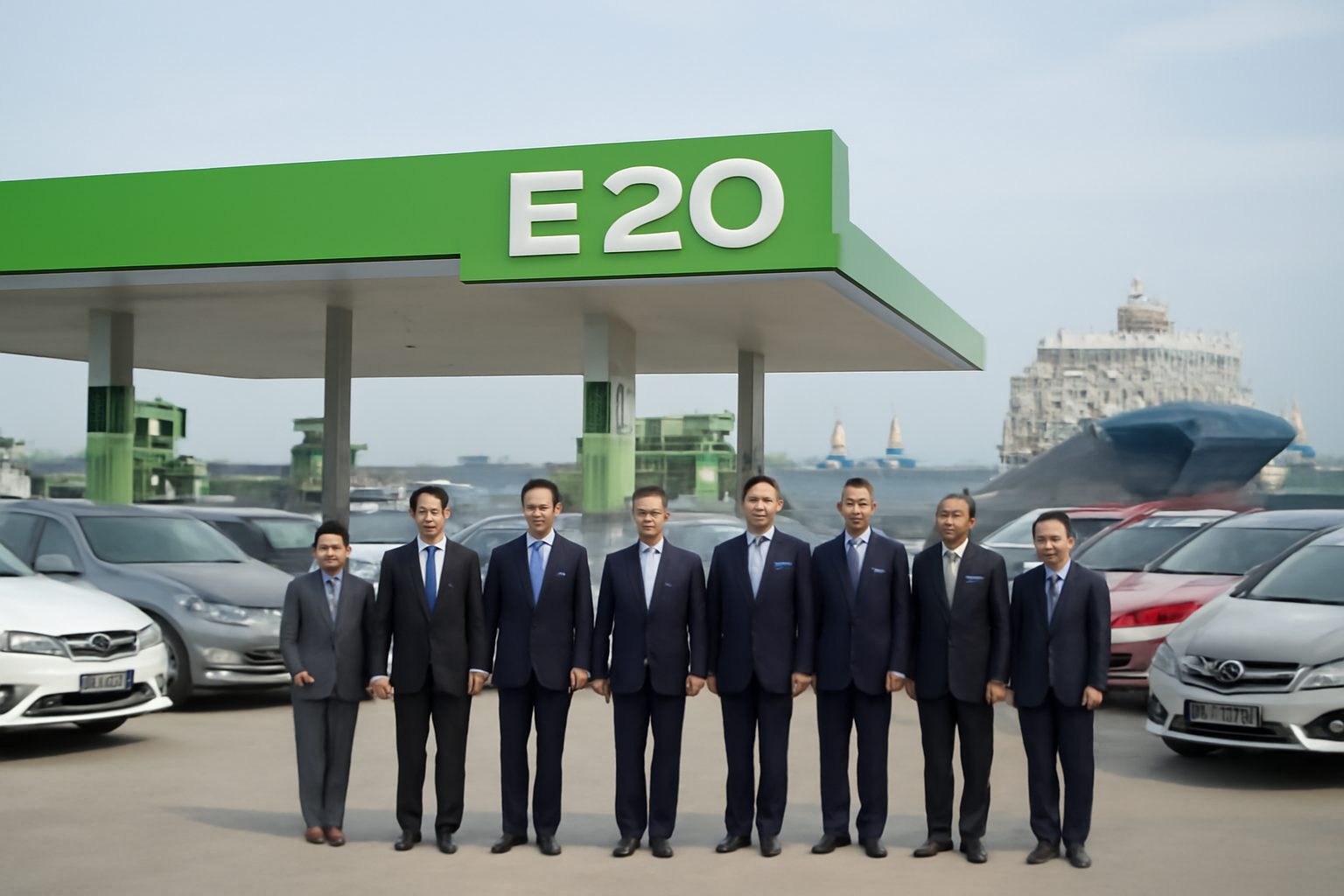
Thailand's Department of Energy Business (DOEB) and the Thai Automotive Industry Association announced a joint campaign on 31 August to build consumer confidence in E20 gasoline, the blend containing 20% ethanol, with the stated aims of strengthening domestic energy security and reducing the country's dependence on imported crude oil. The InfoQuest news agency reported that officials framed the push against a prolonged situation in the Middle East that has left global oil markets highly uncertain.
The campaign brings together 13 car brands - Toyota, Honda, Mazda, Mitsubishi, Suzuki, BMW, Mercedes-Benz, Volvo, BYD, Deepal, Ford, Great Wall Motor and Geely - five motorcycle brands - Yamaha, Honda, Suzuki, Kawasaki and Royal Enfield - and seven fuel retailers: PTT Station, Bangchak, PT, Shell, Caltex, Susco and Sinopec.
A compatible fleet that is not filling up on E20
DOEB Director-General Sarawut Kaewtathip said E20 sales currently average 5.88 million litres per day, equal to 18% of consumption in the gasoline group, even though more than 4 million cars and roughly 80% of motorcycles on Thai roads can already run on the blend. Domestic ethanol output, he said, is sufficient to support a wider rollout, leaving a clear gap between what the vehicle fleet can absorb and what drivers actually buy.
A survey cited by the department identified two barriers. Some motorists do not know whether their vehicle accepts E20. Others believe the blend can damage the engine, weaken acceleration or raise fuel consumption. The participating manufacturers confirmed test results showing no engine damage in any supported car or motorcycle model. DOEB has asked the association and the brands to supply lists of compatible models, which it will publish on its website so owners can check their own vehicle. The department said it supervises fuel quality from the refinery through to the service station. Fuel retailers confirmed they are ready to distribute E20 across the national station network and are preparing benefit campaigns and special discount promotions to draw drivers to the pump.
Ethanol plants running at half capacity
Adisak Chusuk, Deputy Director-General of the Department of Alternative Energy Development and Efficiency, said Thailand has 28 ethanol plants producing fuel-grade output, with combined capacity of about 7 million litres per day. Actual production runs at roughly 3-4 million litres per day, or 50-60% of capacity, leaving room to absorb an additional 3-4 million litres per day of demand from the fuel sector.
Relevant agencies are monitoring the chain from feedstock volumes through production, stockholding and delivery of ethanol to cover rising demand. Officials tied the policy directly to farm incomes, arguing that domestically produced biofuel adds value to agricultural output and supports the stability of Thai crop prices, and that every litre of ethanol made and consumed at home turns a domestic resource into national energy security.
Refiners press for export flexibility
Sarawut said the Federation of Thai Industries and the refinery group had met the Energy Minister to propose unlocking fuel exports, particularly diesel, where stock levels are high. Consumption over the past one to two months has declined and refiners have already cut part of their run rates. Whether exports are permitted, he said, is a decision for policymakers.
Thailand currently exports JET A-1 jet fuel to a number of countries, including Vietnam, the Philippines and Singapore.