Thailand’s DPO plans inventory overhaul as dairy stock reaches 1.5 billion baht
Thailand’s Dairy Farming Promotion Organization is shifting to market-led production to clear 36,000 tonnes of processed dairy inventory valued at 1.5 billion baht. It aims to lift monthly sales to 550-600 million baht while limiting raw milk purchases and developing higher-value products.
DPO shifts from production-led to market-led operations
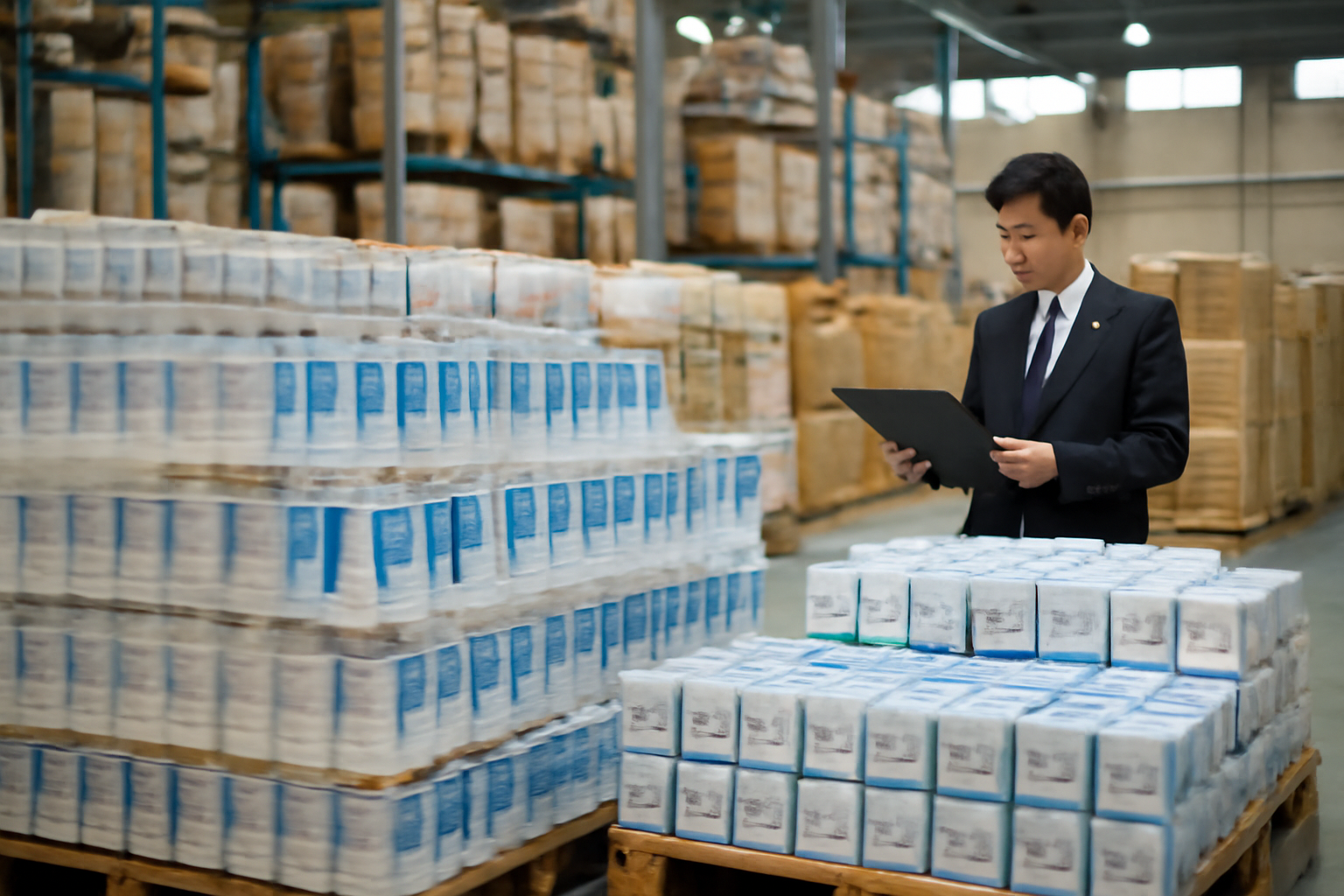
Thailand’s Dairy Farming Promotion Organization, or DPO, has outlined a restructuring plan intended to reduce accumulated dairy stocks, restore liquidity and align production more closely with demand. Thansettakij reported that the state organization holds 36,000 tonnes of processed dairy products valued at 1.5 billion baht and wants to reduce inventory to no more than 30,000 tonnes by the end of 2026.
DPO director Watcharee Wansri said the organization’s losses were not caused solely by weak sales. It had also been required to purchase surplus raw milk under government policy without a corresponding budget or clearly defined market. When she took office, the organization had more than 2.4 million cases, or over 80 million cartons, of expired products, alongside close to 1 billion baht in debts for packaging paper and machinery maintenance.
Purchasing controls and direct sales
The turnaround rests on four measures. DPO plans to limit normal raw milk purchases to the 320 tonnes per day specified in its memoranda of understanding and has asked the government to establish a central mechanism for surplus milk. Since January 2025, the Dairy and Milk Products Board has asked DPO to absorb an additional 140 tonnes per day without dedicated funding or supporting measures.
The organization will also clear its 1.5 billion baht inventory without disrupting market prices. Employees at its five regional plants will not be dismissed; some will be retrained as direct-sales teams targeting government agencies, hospitals, schools and large organizations. DPO also plans to reduce its reliance on modern trade, traditional wholesalers and distributors by selling directly to communities through a local modern-trade model. A high-protein alternative milk product is being prepared for the higher-margin commercial market.
Monthly sales, which fell below 400 million baht during the school holiday, recovered to almost 500 million baht between April and July, according to Thansettakij. DPO’s next target is 550-600 million baht a month. The organization says this would strengthen cash flow enough to pay dairy farmers at least 200 million baht monthly. It expects full liquidity could be restored within three months if the additional 140 tonnes of daily surplus is successfully managed.
School milk and factory network under review
Extending Thailand’s school milk program through the ninth grade could create demand for approximately 90 tonnes per day. However, the national surplus stands at 211 tonnes per day, leaving 121 tonnes even after that demand is deducted. Allocation quotas for the expanded program also remain to be clarified.
DPO pays 5 million baht per month to rent warehouses for inventory across five regions and plans to build an initial company-owned warehouse in the central region. It is also considering consolidating five factories into three principal production bases in Saraburi-Muak Lek, Khon Kaen and southern Thailand. The Chiang Mai and Sukhothai plants could become distribution centers, although the proposal requires discussion with DPO’s new board. Separately, land held across Thailand may be developed as training, conference and agricultural tourism sites with private-sector participation.