Thailand advances China market access with two MOUs and GI registration for three products
Thailand is accelerating access to China’s premium consumer market through two MOUs and geographical indication registration for three products. The initiative also targets opportunities for fruit, health food, MSMEs, electric vehicles and green industries.
Thailand targets China’s premium market
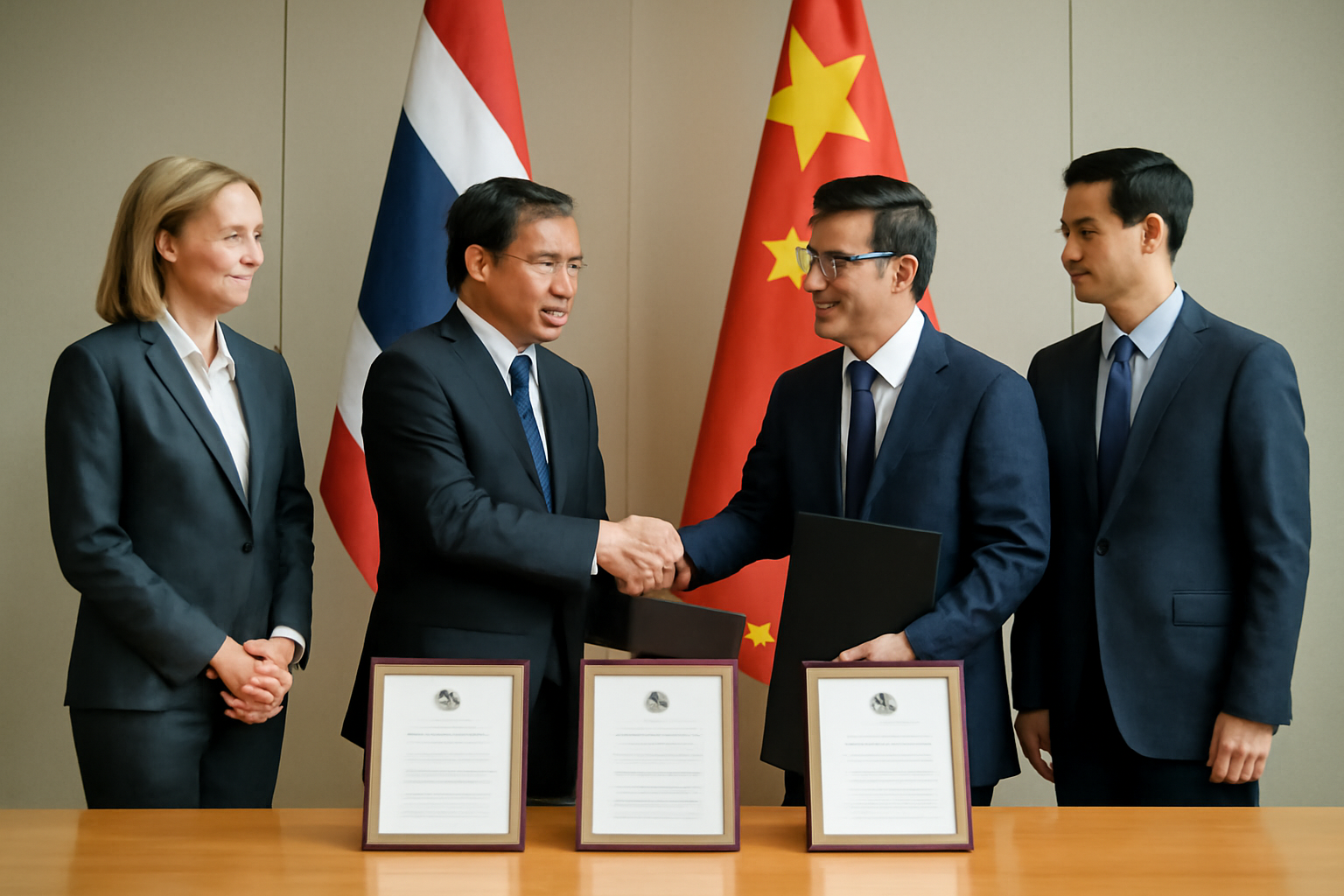
Thailand is moving to expand the position of its products in China’s premium market, with a package covering geographical indications, fruit, health food and cooperation in emerging industries. The initiative is being led by Thailand’s deputy prime minister and commerce minister and combines product registration with two memoranda of understanding.
A central part of the effort is the accelerated registration of three Thai geographical indication products in China. The products were not identified in the available information. GI protection links a product to its place of origin and can help distinguish regional goods from competing or imitative products in a large consumer market.
For Thai producers, successful registration would provide a clearer basis for marketing the three products by origin in China. It could also support premium positioning, particularly where buyers value provenance, production methods and regional identity. Registration alone does not guarantee higher sales, but it can strengthen brand protection and give exporters a more defined commercial proposition.
Fruit and health food among priority categories
The broader plan seeks additional opportunities for Thai fruit and health food in China. These categories are closely connected to consumer preferences, product quality and market-entry requirements. Producers and exporters will still need to meet the applicable Chinese rules and the specifications agreed with buyers, while maintaining reliable supply and consistent product standards.
The focus on premium channels indicates that Thailand is seeking value as well as volume. For fruit suppliers, this places greater weight on grading, handling and product presentation. Health-food companies must compete on product differentiation and buyer confidence. GI products add another route by using recognized origin as part of their market identity.
China offers a large customer base, but access to its higher-value segments can be demanding. Thai exporters may need coordination between producers, processors, distributors and public authorities to turn registration and government-level cooperation into repeat orders. Smaller companies may face particular challenges in documentation, promotion and establishing relationships with Chinese commercial partners.
Two MOUs widen cooperation beyond food
Thailand also signed two MOUs intended to support micro, small and medium-sized enterprises, electric vehicles and green industries. The available information does not identify the Chinese counterparties or set out financial commitments, implementation schedules or capacity targets. The agreements therefore establish areas for cooperation, while their commercial effect will depend on subsequent projects and participation by companies.
The combination of GI registration and the two MOUs gives the initiative both an immediate product-access component and a wider industrial agenda. Food and regional-product exporters may benefit from stronger recognition in China, while MSMEs could gain channels for business cooperation. Electric vehicles and green industries broaden the relationship into manufacturing and technology. Market participants will now watch which three GI products receive registration, how the MOUs are implemented and whether the measures produce measurable sales, investment or business partnerships.