Thailand’s aquaculture output rises as seabass production gains ground
Thailand’s tilapia output has reached about 270,000 tonnes a year, while seabass production increased 6% to 65,330 tonnes in 2569. Improved breeding, precise water and feed management, and semi-natural farming systems are supporting growth.
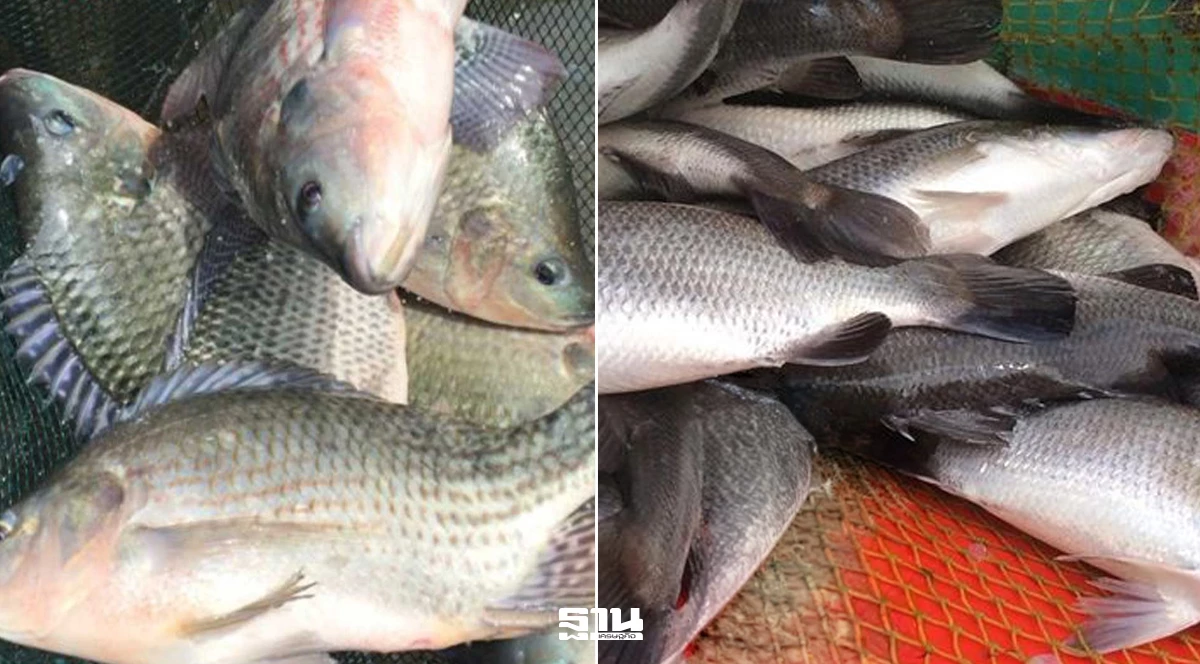
Tilapia remains Thailand’s largest farmed freshwater fish
Thailand’s production of major farmed freshwater and brackish-water species has continued to expand over the past three years, despite multiple challenges facing the aquaculture sector. Tilapia remains the country’s most widely farmed freshwater fish, while seabass is emerging as a faster-growing, higher-value segment.
According to Thansettakij, tilapia production has increased by an average of 3.18% a year. In 2569, more than 330,000 farms were raising the species, with total annual output reaching approximately 270,000 tonnes and generating more than 13.6 billion baht in economic value.
The tilapia market is overwhelmingly domestic. More than 98% of production is consumed within Thailand, indicating that output growth is primarily serving local food demand rather than an export-led expansion. This large domestic base also gives farmers a broad market, although it leaves the sector closely exposed to changes in local consumption and production costs.
Breeding and closed systems lift survival rates
Production gains have been supported by improvements in tilapia strains. Farmers are using fish that are more resistant to disease, grow faster and produce firmer flesh. These characteristics can shorten production cycles, reduce losses and improve the consistency of fish supplied to processors and wholesale markets.
Farming methods are also changing. Tilapia is increasingly raised in cages in flowing water and in earthen ponds equipped with smart closed systems. These systems allow more precise control of water quality and feeding, helping to raise juvenile survival rates. For producers, better control can translate into more predictable harvests and more efficient use of feed.
The spread of controlled farming is particularly relevant because feed, fish health and water conditions directly influence margins. Stronger juveniles and closer monitoring can reduce biological risk, while more uniform output helps buyers plan processing and distribution.
Seabass output passes 65,000 tonnes
Seabass is expanding more rapidly. Thansettakij reported production of 59,407 tonnes in 2567 and 61,631 tonnes in 2568, an increase of 3.7%. Output reached 65,330 tonnes in 2569, representing a further increase of 6%. The publication estimates the species generates about 60 billion baht annually for farmers.
One factor behind this growth is the adoption of semi-natural polyculture. Some farmers stock seabass together with tilapia in earthen ponds, allowing young tilapia to serve as a natural food source. The practice reduces dependence on pellet feed, which can lower one of the main operating costs in intensive fish farming.
Public- and private-sector support for standardized hatchery technology has also increased the availability of robust seabass juveniles. These fish can be distributed to a wider range of production areas, including inland saline waters in northeastern Thailand. The combination of stronger seed stock and adaptable farming systems is widening the geographic base of production and could give farmers more options to balance volume, quality and feed expenditure.