Thai and Vietnamese Demand Nearly Doubles Cattle Prices at Northern Thailand Market
Stronger buying by Thai and Vietnamese traders has lifted cattle prices at the Ban Chiang Ban market in Phayao. Prices for cow-calf pairs rose from about 10,000–12,000 baht to 20,000–22,000 baht over the past 2–3 months, while competition is improving farmers’ bargaining power.
Cross-border demand strengthens the market
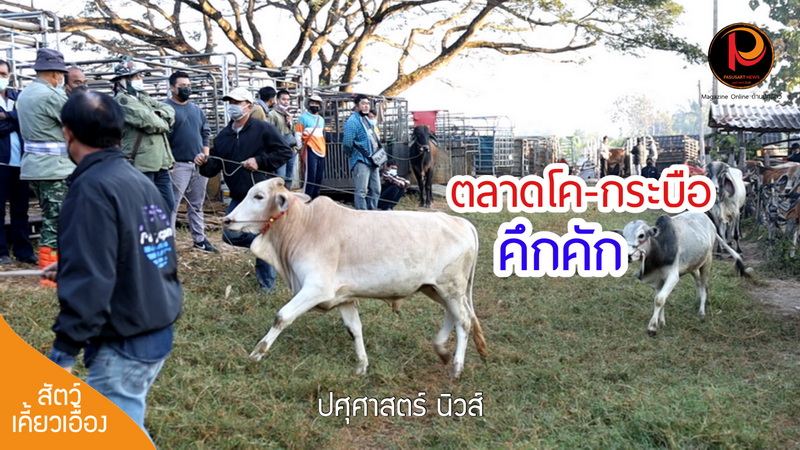
Buying by Thai and Vietnamese traders has intensified at the Ban Chiang Ban cattle and buffalo market in Chiang Kham district, Phayao province, supporting a sharp recovery in northern Thailand’s beef cattle prices. Pasusart reported that competition for suitable animals has made trading more active and given farmers more options when negotiating sales.
Thanakrit Homnan, owner of the Ban Chiang Ban market, said cattle values remain sensitive to size, frame, age, breed and physical condition. Buyers increasingly favor well-fleshed, properly proportioned animals with large frames, while thin cattle attract less interest and generally sell at lower prices.
The clearest increase has occurred in the cow-calf segment. According to Pasusart, average prices were about 10,000–12,000 baht per head during the past 2–3 months but have now risen to approximately 20,000–22,000 baht, an increase of almost 100%. The advance reflects stronger demand as Thai and Vietnamese traders expand their search for cattle.
Quality determines a wide price range
Prices for cattle sold by the head vary substantially. Small cattle, young stock and animals entering the fattening stage are valued at approximately 7,900–15,000 baht per head. Heifers and breeding-ready heifers fetch around 22,000–35,000 baht, while large-frame beef cattle and finished animals trade at roughly 30,000–48,000 baht.
Ordinary breeding cows are priced at about 28,000–42,000 baht. Cow-calf pairs can sell from 45,000 baht to more than 100,000 baht, depending on their quality and characteristics. These quotations show that the strongest premiums are concentrated in productive breeding animals and cattle that already meet traders’ preferred specifications.
Liveweight sales provide another benchmark. Native Thai cattle and Thai crossbred cattle average about 70–82 baht per kilogram. Large-frame animals and Brahman crosses are quoted at approximately 80–98 baht per kilogram, while premium finished cattle command around 100–115 baht per kilogram or more. Actual prices can change with market conditions and negotiations on the trading day.
Tighter availability improves farmers’ leverage
Competition among traders is improving the bargaining position of cattle farmers. Large buyers seeking well-conditioned, heavy animals for onward sale or export can push prices higher in the categories they target. At the same time, some farmers are delaying sales, reducing the number of cattle reaching the market and intensifying competition for available quality stock.
The gains are therefore uneven. Farmers with large, healthy and well-fleshed cattle are best placed to benefit, while animals with weaker body condition remain less competitive. Future prices will depend on trader competition, export-market demand and the volume of cattle that producers decide to release.
Disease controls remain essential
Stronger trade does not remove animal-health risks. The market must enforce livestock health inspections and Department of Livestock Development movement requirements, with particular surveillance for foot-and-mouth disease, haemorrhagic septicaemia and anthrax. Compliance will be important for buyer confidence and for maintaining uninterrupted cattle movements as commercial activity increases.