Indonesian Food Industry Seeks Flexible Sugar Supply Rules as Thai Output Is Projected to Fall in 2026-2027
Indonesia's food and beverage producers have begun preparing for tighter global sugar supply after Thailand's output was projected to decline in the 2026-2027 season, Kontan reported. The industry association Gapmmi is asking for more flexible rules governing industrial sugar supply. The request focuses on the ability to adjust volumes and timing rather than on a specific tonnage.
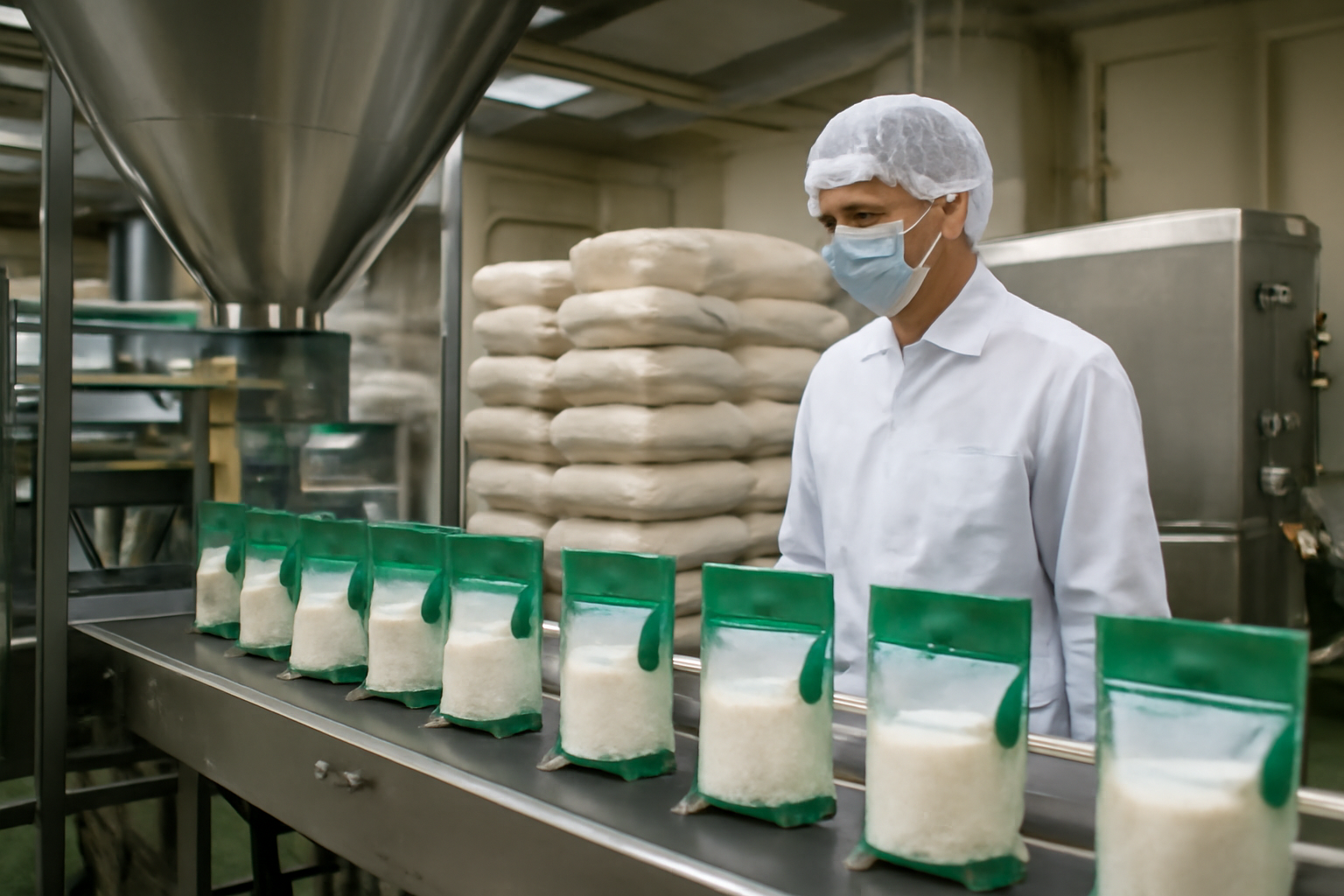
Indonesia's food and beverage industry has started preparing for tighter global sugar supply after Thai output was projected to fall in the 2026-2027 season, Kontan reported. The Indonesian Food and Beverage Producers Association (Gapmmi) has responded by asking for more flexible rules on how industrial sugar supply is regulated.
A projected decline in Thai output
Kontan reported from Jakarta that Indonesian food and beverage manufacturers are beginning to anticipate potential pressure on global sugar supply after Thailand's production was projected to decline in the 2026-2027 season. The report does not quantify the expected shortfall and does not name the forecaster behind the projection.
Thailand is one of Asia's largest sugar exporters and a standard origin for buyers across Southeast Asia. A smaller Thai crop is therefore felt first in neighbouring importing markets, where shipping distances are short and delivery windows are measured in weeks rather than months. Indonesian refiners and processors are among the buyers exposed to that dynamic, because a substantial share of the sugar used by the country's food and beverage plants is refined from imported raw sugar rather than drawn from domestic cane.
Gapmmi's case for flexibility
The association's request, as reported by Kontan, concerns the rules themselves rather than a specific tonnage. Industrial sugar supply in Indonesia is administered through allocations and import approvals set ahead of the production year. When conditions in the external market change between the moment a plan is approved and the moment cargoes have to be booked, manufacturers have limited room to adjust either the volume or the timing of their purchases.
Gapmmi's position is that a framework able to respond to shifting supply conditions would reduce the risk of processors being caught between a fixed allocation and a market that has already moved. The association has not, in the reported account, asked for an increase in permitted volumes as such; the emphasis is on the speed and responsiveness of the mechanism.
Why timing matters for processors
- Contract cycles: food and beverage plants commit to product pricing and customer contracts months ahead, so an input cost that moves after those commitments cannot easily be passed on.
- Freight lead times: sourcing from origins further away than Thailand extends the gap between a purchase decision and delivery to the plant.
- Alternative origins: replacing Thai supply means competing for cargoes from other exporting countries at whatever price the wider market sets at that moment.
- Capacity utilisation: refineries and processing lines run on scheduled throughput, and a delayed cargo translates directly into idle capacity.
What to watch in the 2026-2027 season
For the regional market, the immediate question is how large the Thai decline turns out to be and how much of it is absorbed by Thailand's domestic market rather than its export programme. Thailand's export availability, not its gross output alone, is what determines how much supply reaches importers in Southeast Asia.
The second variable is the regulatory response in Jakarta. Whether Indonesian authorities adjust the industrial sugar framework in the direction Gapmmi is requesting will shape how quickly domestic processors can react if Thai availability tightens. A mechanism that allows in-year adjustment would let buyers move earlier in the procurement cycle; one that does not would leave them dependent on decisions taken before the extent of the Thai decline is known.
For exporters in other origins, a reduced Thai crop opens a window into a buying market that has historically favoured short-haul supply. How much of that window they capture depends on price, freight and on how Indonesia's approval process handles a change in sourcing patterns mid-season.