Thai rice exports rise 53.6% as weak baht supports competitiveness
Thailand exported 4,085,198 tonnes of rice in the first seven months, up 53.6%, according to the Thai Rice Exporters Association. A weaker baht is supporting sales, although Thai 5% broken white rice remains more expensive than the Vietnamese equivalent.
Seven-month shipments exceed 4 million tonnes
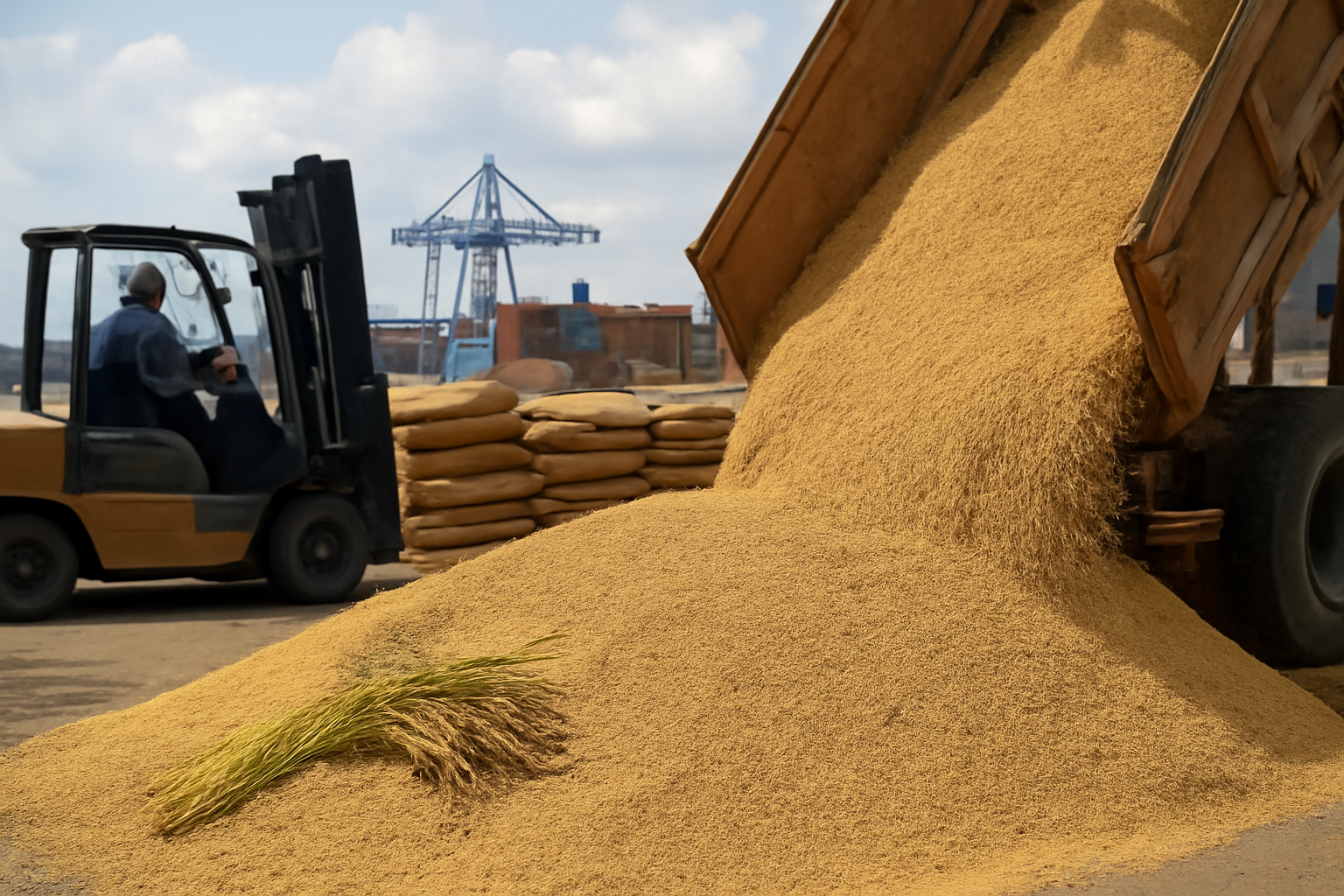
Thailand exported 4,085,198 tonnes of rice during the first seven months of the year, according to Chookiat Ophaswongse, honorary president of the Thai Rice Exporters Association, speaking to INN News. The shipments were valued at 71.11 billion baht.
Export volume increased by 53.6% compared with the corresponding period, while value rose by 41.9%. The slower increase in revenue than in physical shipments indicates that the average baht value earned per tonne was lower, even as exporters handled substantially more cargo. The association nevertheless expects the expansion to continue, supported by outstanding contracts and demand across several regions.
Weak baht supports prices and order execution
The association estimated that August exports would reach approximately 600,000-650,000 tonnes. It identified the weaker baht as a favorable factor for marketing Thai rice abroad because currency depreciation allows exporters to offer lower dollar-denominated prices without an equivalent reduction in local-currency receipts.
Thai rice prices were already tending to decline in line with the weaker currency. Thai 5% broken white rice averaged $428 per tonne, compared with $393-397 per tonne for the Vietnamese product. Thailand therefore retained a premium of $31-35 per tonne over Vietnam, showing that exchange-rate support had narrowed the commercial pressure but had not eliminated the price gap with a major regional competitor.
Orders span the Middle East, Asia, Africa and North America
Exporters still had contracts awaiting delivery from previous months in a broad group of markets. The association highlighted Iraq in the Middle East; China, Japan, Hong Kong and the Philippines in Asia; South Africa, Benin, Mozambique and Angola in Africa; and the United States and Canada in North America. This geographic spread reduces dependence on any single buyer, while the pending contracts provide exporters with a base of shipments to execute in the following months.
The association remained confident that full-year rice exports could reach the target of 7.5 million tonnes. After 4,085,198 tonnes in seven months, exporters would need to ship about 3.4 million tonnes during the remaining five months to meet that objective. August shipments of 600,000-650,000 tonnes would be broadly consistent with the required pace, although performance will also depend on continued demand, fulfillment of outstanding contracts and the baht’s direction. For producers and processors, sustained volumes support mill utilization and domestic procurement. For traders, the central issue is whether currency-driven price reductions can make Thai rice more competitive while preserving baht-denominated margins against lower-priced Vietnamese supply.