Tesla registers Vietnamese entity as VinFast holds 92% of the country's EV market
Tesla has registered a legal entity, Tesla Motors Vietnam, opening the way into Southeast Asia's largest electric vehicle market. It faces VinFast, which controls about 92% of Vietnam's EV sales and operates an exclusive network of more than 150,000 charging points. No launch timetable has been disclosed.
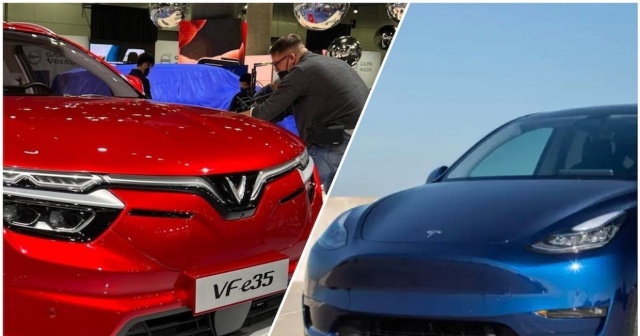
Tesla registers a local entity
Tesla has registered a legal entity, Tesla Motors Vietnam, this month, according to business registration data reported by Vietstock. The filing opens the way for a formal expansion into the country, although no timetable for sales, deliveries or a service network has been disclosed.
The market Tesla is approaching is the largest for electric vehicles in Southeast Asia. Vietnam took that position in 2025, when EV sales more than doubled and accounted for close to 40% of all new cars sold, according to International Energy Agency data published in May. Electric vehicle sales rose a further 89% year on year in the second quarter of 2026, according to Peter Richardson, vice president and research director at Counterpoint Research.
VinFast controls 92% of electric vehicle sales
The incumbent is VinFast, which holds about 92% of Vietnam's electric vehicle market, according to HSC Research. The Nasdaq-listed manufacturer is backed by Vingroup (HOSE: VIC), one of Vietnam's largest private conglomerates, founded by billionaire Pham Nhat Vuong. Vingroup reported revenue of 221.97 trillion dong ($8.52 billion) for the first half of 2026 in its reviewed interim consolidated financial statements.
VinFast's position in the wider passenger car market has strengthened as well. Its share rose to about 36% in 2025 from 22% a year earlier, according to corporate filings, and the company says it sold more than 154,000 vehicles in Vietnam in the first eight months of 2026, keeping it the country's best-selling automaker for 24 consecutive months.
Analysts interviewed by CNBC point to several advantages that a newcomer cannot replicate quickly:
- Brand recognition and Vingroup's wider consumer ecosystem, including an affiliated electric taxi fleet, according to Koketso Tsoai, senior automotive analyst at BMI, part of Fitch Solutions.
- An exclusive network of more than 150,000 charging points reserved for VinFast vehicles, according to Supparoek Sawangwong, ASEAN analyst at Mobility Global.
- An after-sales service network that answers two of the most common concerns of first-time EV buyers: where to charge and where to have the car serviced.
“Tesla will find it hard to compete with VinFast in Vietnam, because VinFast's advantages go well beyond what it offers as a product,” Tsoai said. Sawangwong noted that charging infrastructure has also been a difficulty for BYD in Vietnam.
Growth bought at a cost
VinFast's expansion has been expensive. Group revenue reached 23.11 trillion dong ($920.7 million) in the first quarter, up almost 42% year on year, while the net loss widened 59% to $1.12 billion.
Tesla's counterweights are intangible. “Tesla's biggest advantages in Vietnam are a strong global brand, advanced technology and software,” Richardson said, adding that these can appeal to buyers looking for a premium electric vehicle. Rising incomes support that case: the Vietnamese economy grew 8% in 2025 and GDP per capita reached $5,066, according to World Bank data.
Model 3, Model Y and the regional comparison
All three analysts interviewed by CNBC expect the Model 3 and Model Y to be the first vehicles Tesla brings to Vietnam, with the initial focus on high-income buyers and the premium segment. The Model 3 is Tesla's lowest-priced sedan and the Model Y its crossover SUV. Richardson said Tesla could start with technology-oriented consumers, adding that the company's Shanghai plant gives it regional manufacturing capacity and more control over supply.
Sawangwong expects the two brands to act initially as benchmarks for each other rather than compete head-on across the whole market, with the Model 3 aimed at the near-premium segment and the Model Y becoming Tesla's volume model among premium SUV buyers. Moving beyond that segment would require more competitive pricing or a cheaper model, he said.
Vietnam also differs from the other Southeast Asian markets Tesla is targeting. According to Tsoai, Thailand's EV market rests on a long-established vehicle manufacturing base with a growing presence of Chinese brands, while Indonesia's strategy is tied to battery raw materials and incentives for local production. Vietnam instead has a national champion and a fast-expanding mobility ecosystem. That means Tesla does not need to create demand from scratch, but it will have to convince buyers that its brand, technology and ownership experience justify a price above domestic alternatives.