Tasmanian potato growers reach crunch point in contract dispute with Simplot
Tasmanian potato growers are at a decision point in their contract dispute with Simplot, the United States-owned processor that buys much of the state's crop for frozen French fries. Because processing potatoes are planted only under contract, the terms on the table determine both grower margins and the raw material supply behind Simplot's processing lines.
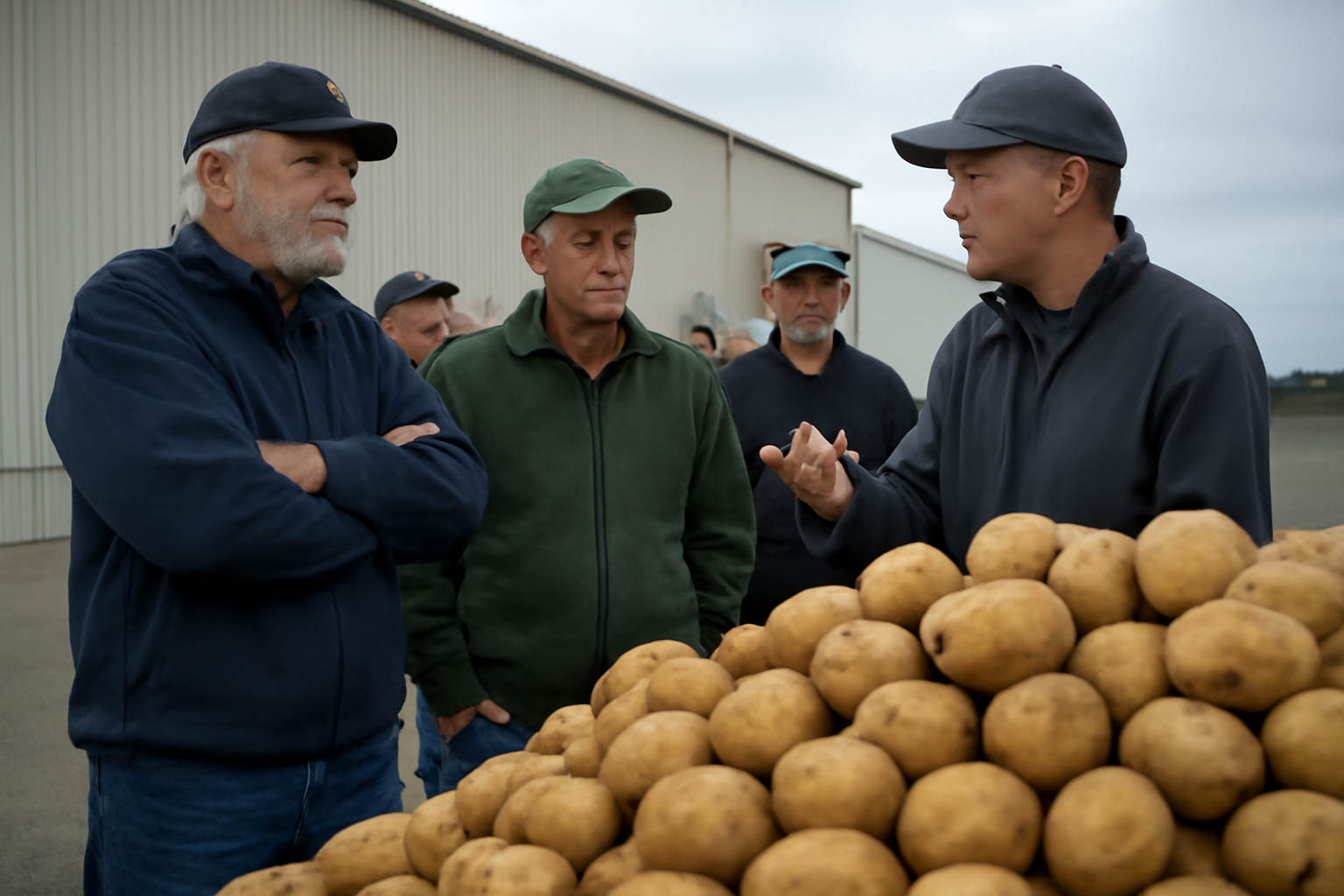
Tasmanian potato growers are at a decision point in an ongoing contract dispute with Simplot, the United States-owned processor that buys much of the state's crop for frozen French fries. The negotiation has been described as crunch time for the sector, with growers weighing whether to commit to the coming season on the terms currently offered.
A crop that is sold before it is planted
Processing potatoes differ from most horticultural commodities in that they are not grown for an open market. Volumes, delivery windows, quality specifications and, above all, the price per tonne are agreed before seed goes into the ground. A grower who does not sign a contract generally does not plant the crop, because there is no spot market of meaningful size able to absorb processing-grade tonnage. That structure creates an unusual degree of mutual dependence: the processor cannot run its lines without committed hectares, and the grower cannot plant without a committed buyer.
It also concentrates a full year of risk into a single negotiation. The contract price is fixed months before harvest, while the grower's costs — seed, fertiliser, fuel, irrigation, labour and freight — are incurred afterwards and move independently. Where input costs rise faster than the contracted price, the margin is compressed with no mechanism to recover it during the season.
Why growers are pushing back
For a farm business, the question is not only whether potatoes are profitable, but whether they are more profitable than the next best use of the same paddock. Tasmanian cropping land can carry cereals, poppies, pasture or dairy support, and those alternatives set the floor under what a processing contract has to pay. When that floor rises, contract terms that were acceptable in earlier seasons stop clearing the hurdle.
The points that typically decide whether a grower signs are narrow and concrete:
- The contract price per tonne relative to the full cost of growing and delivering the crop
- Returns available from alternative uses of the same land
- Contracted tonnage and the treatment of over-delivery and under-delivery
- Quality specifications and the deductions applied on receival
- The length of the commitment and how movements in input costs are shared
Supply security on the processing side
Frozen French fry manufacturing is capital-intensive and highly sensitive to throughput. Lines are sized for a given volume of raw potatoes, and fixed costs are spread across the tonnes that pass through them. Every hectare that leaves the contracted pool raises the unit cost of every tonne that remains, which is why processors have a strong incentive to secure planted area even in a difficult pricing environment.
If Tasmanian volumes fall short, the alternatives are unattractive. Raw material can be sourced from mainland growing regions, but potatoes are bulky and low value by weight, and freight across Bass Strait works against long supply lines. The other option is to lean more heavily on imported finished product, which competes with domestic manufacturing in the Australian frozen potato market and undermines the case for processing capacity located close to the growing region.
What is at stake for the Tasmanian potato chain
The dispute matters beyond the two parties at the table. Processing potatoes anchor a network of seed producers, contractors, machinery dealers, transport operators and cool-store capacity, and they occupy a place in local crop rotations that is not easily filled. Growing area that exits the crop does not return quickly: agronomic experience, specialised harvesting equipment and grading infrastructure are shed faster than they can be rebuilt.
Disputes of this kind in contracted vegetable supply usually end with a signed agreement. The more consequential measure is how many growers sign, and how many hectares they commit. A settlement that keeps the plant supplied but leaves a smaller, more concentrated grower base changes the balance of the chain for seasons to come, and reduces the buffer available when a poor harvest or an adverse season arrives.