Tamil Nadu plans subsidised onion sales through ration shops after price surge
Tamil Nadu plans to sell onions through ration shops at ₹30–40 per kilogram after retail prices increased. The state has requested 70,000 kilograms from NAFED, according to The Hans India.
Tamil Nadu seeks NAFED onions as retail prices rise
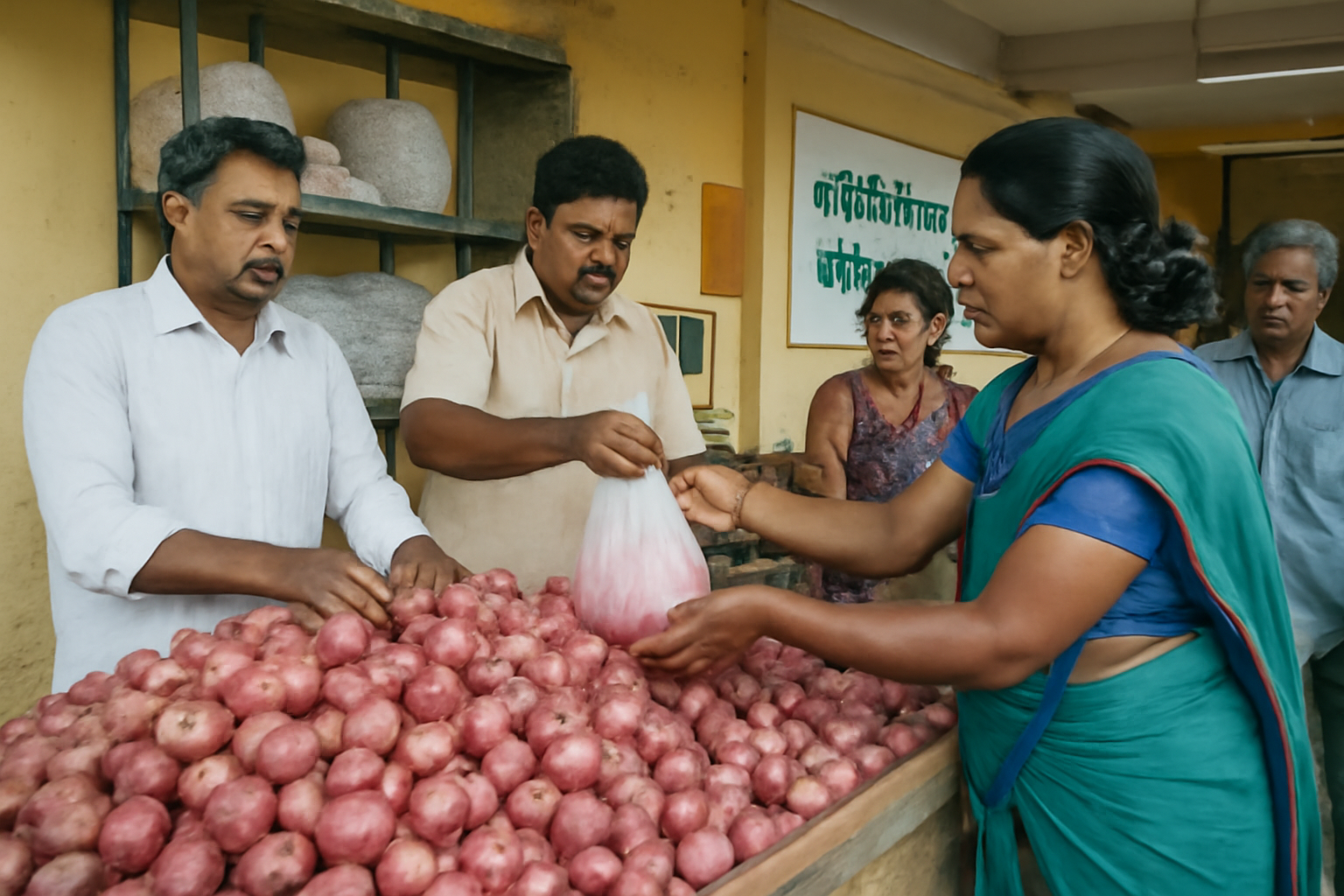
Tamil Nadu plans to distribute subsidised onions through its ration-shop network after a rise in retail prices, The Hans India reported. The state government has requested 70,000 kilograms of onions from the National Agricultural Cooperative Marketing Federation of India, known as NAFED, for the proposed intervention.
The onions are expected to be sold at ₹30–40 per kilogram. The plan is intended to give households access to a lower-priced supply through an established public distribution channel. The report did not specify when sales would begin, how many ration shops would participate or how the onions would be allocated among districts.
The measure remains a planned intervention linked to the availability of the requested NAFED stocks. The reported volume and selling-price range provide the principal parameters, but no procurement price, transport cost or subsidy expenditure was disclosed.
Ration shops provide an existing retail channel
Using ration shops would allow Tamil Nadu to place onions directly into a network already used by consumers. For a perishable staple, however, execution depends on procurement, transport, storage and rapid movement to retail points. These operational details will determine how widely and how quickly the 70,000 kilograms reach households.
The proposed price of ₹30–40 per kilogram creates a clear consumer benchmark. Its effect on the wider market will depend on the gap between that range and prevailing retail prices, as well as the geographic concentration and duration of the sales. The available source material does not state the current market price, so the size of the discount cannot be calculated.
The requested quantity is likely to offer targeted relief rather than replace normal commercial supply across Tamil Nadu. Retailers, wholesalers and traders will therefore continue to depend primarily on regular market arrivals. Subsidised sales could have a more visible local effect where ration shops receive meaningful allocations and commercial prices remain elevated.
NAFED supply is central to implementation
NAFED’s role places the proposed programme within India’s existing system of public agricultural procurement and market intervention. For Tamil Nadu, securing the requested onions is the first practical requirement before the state can set a distribution schedule and confirm participating outlets.
The intervention is focused on consumer affordability rather than a permanent change to the onion trade. Onion prices can transmit quickly through household food budgets because the crop is a widely used staple. Temporary public sales can provide an alternative source during a price spike, although their market reach is limited by the amount released.
Industry participants will watch whether the programme proceeds at the full 70,000-kilogram volume and whether the ₹30–40 price is maintained across outlets. Distributors will also need clarity on delivery timing and district allocations. Until those details are announced, the direct impact on wholesale demand, private retail prices and inter-state onion flows remains uncertain.
Market impact depends on scale and timing
The immediate significance of the plan lies in its combination of a defined request and a defined consumer price. If NAFED supplies the onions promptly, Tamil Nadu can use ration shops to offer short-term relief without building a new sales network.
For producers and traders, the measure does not by itself indicate a change in production or harvest conditions. It is a downstream response to higher retail prices. The programme’s effectiveness will therefore be judged by actual availability at ration shops, the number of consumers served and whether market prices remain high while the subsidised stock is distributed.