Taebaek signs clean-methanol pact as former coal city seeks new industrial base
Taebaek has signed a five-party agreement to connect domestic clean-methanol production with shipping, logistics and commercial demand. The South Korean city is seeking a replacement industry after the early closure of the Jangseong coal mine.
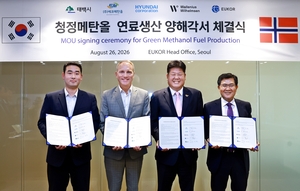
Five parties plan an integrated methanol chain
Taebaek, a former coal-producing city in South Korea’s Gangwon State, has signed a memorandum of understanding to develop a clean-methanol industry linking production, distribution, maritime logistics and end demand. The agreement brings the municipal government together with Eco Methanol, Hyundai Corporation, global shipping group Wallenius Wilhelmsen and Eukor Car Carriers.
According to the Korea Herald Business, the project is a central replacement industry within Taebaek’s economic development program. Its scope extends beyond building a production facility: the participants intend to create a commercial chain capable of moving domestically produced methanol to shipping and logistics users. The agreement remains a cooperation framework, however, and the report provides no production capacity, investment value, construction schedule or targeted start date.
Roles span production, bunkering and demand
Eco Methanol is expected to establish clean-methanol production infrastructure in Taebaek. Wallenius Wilhelmsen and Eukor Car Carriers will cooperate on marine logistics and bunkering networks for cleaner vessel fuel. Hyundai Corporation will examine the adoption of domestically produced clean fuel as part of a shift toward lower-emission logistics. Taebaek will support the project by securing a site, handling permits and coordinating with the central government.
The participation of shipping and logistics companies gives the proposal a route to actual fuel demand rather than leaving it as a production-only project. The Korea Herald Business said South Korea currently relies entirely on overseas supplies of marine fuel. A domestic clean-methanol base could therefore add another source of vessel fuel while supporting the shipping sector’s response to carbon rules. The report did not specify whether the proposed output would substitute imports completely, serve particular ports or also be offered to overseas buyers.
Coal closure raises the stakes for Taebaek
The plan follows the early closure of the Jangseong mine under national policy, ending the coal industry that had long supported Taebaek’s economy. The city is promoting clean methanol and other replacement industries to create employment and investment after mining. Mayor Lee Sang-ho described the agreement as a potential model for a just transition from coal, although its economic effect will depend on financing, construction and firm purchase commitments.
Taebaek plans to ask the central government for the early transfer of the closed mine site and measures to create an initial market. These include a temporary carbon contract for difference, or CCfD, intended to support the price gap faced by clean methanol. The policy request reflects a central challenge for the project: private project financing must arrive on time while prospective buyers need a competitive fuel price. Demand could strengthen as International Maritime Organization and European Union shipping carbon rules become substantially tighter from 2028, but the MOU must still be converted into funded production, logistics infrastructure and binding demand.