Sukkari Dates Lead Buraidah Carnival Sales Above 98 Million Riyals
Sales at the 2026 Buraidah International Dates Carnival exceeded 98 million Saudi riyals, led by different varieties of Sukkari dates. The result highlights the commercial weight of Sukkari, although no figures were provided for volume, prices or individual varieties.
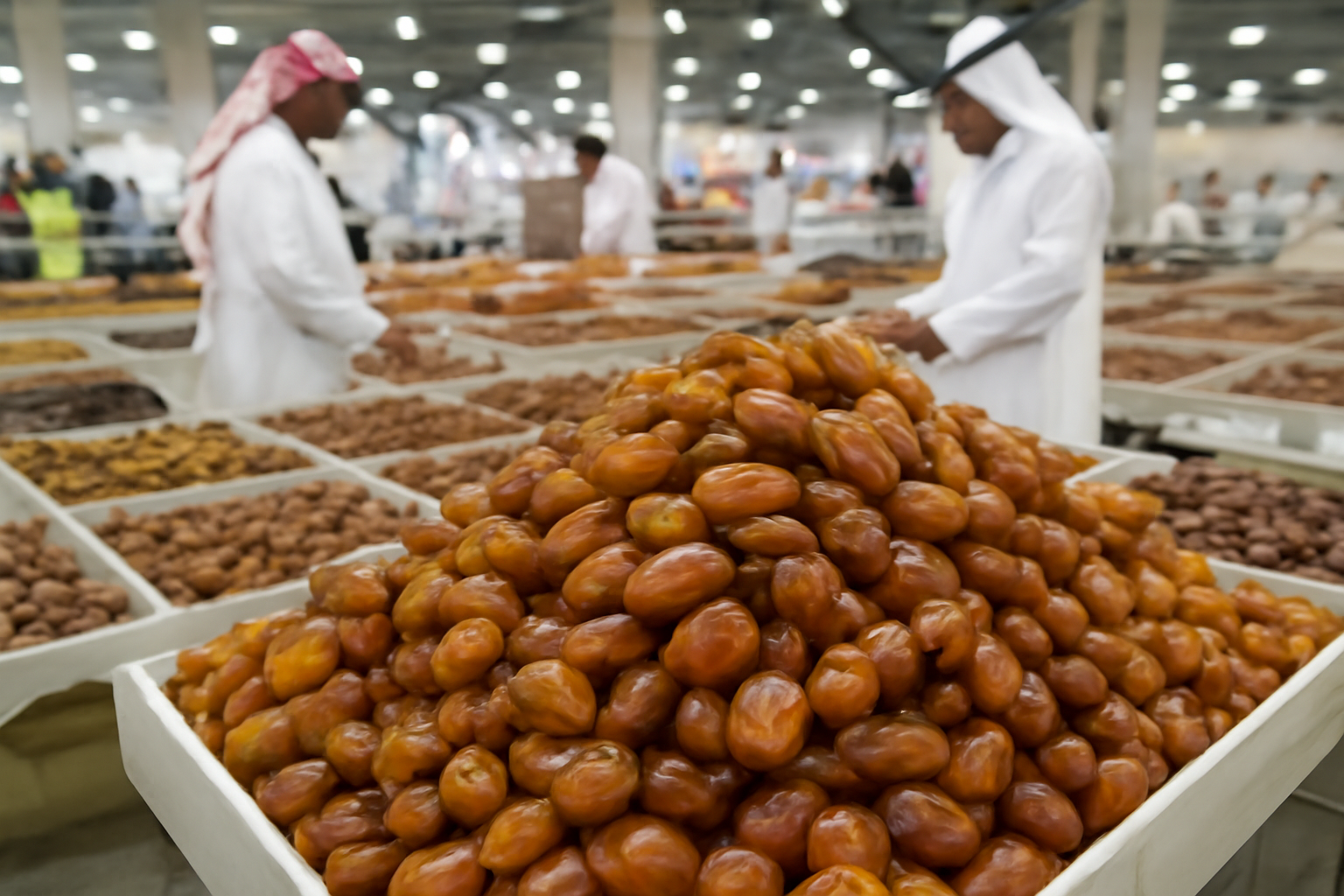
Sukkari takes the lead in Buraidah
Different varieties of Sukkari dates led activity at the 2026 Buraidah International Dates Carnival, where total sales exceeded 98 million Saudi riyals. The reported result puts Sukkari at the center of the event’s commercial performance and underlines the product’s importance within Saudi Arabia’s date market.
The available information does not divide the 98 million-riyal total by variety, seller or transaction type. It also provides no sales volume, average price or comparison with an earlier carnival. The figure therefore measures the overall value generated at the event, but it cannot show whether the result came from larger quantities, higher prices, a more valuable product mix or a combination of these factors.
A market built around product differentiation
The reference to multiple Sukkari varieties is commercially significant. Dates are not a uniform commodity: variety, grade, size, appearance, moisture, packaging and intended use can all affect how products are positioned and sold. An event where several forms of Sukkari lead sales gives producers and buyers a concentrated venue for comparing quality and market acceptance.
For growers and processors, the sales result indicates strong purchasing interest in the Sukkari category during the carnival. For wholesalers and retailers, it confirms that the variety can anchor a broad commercial offer rather than a single standardized product. However, without a detailed breakdown, the relative performance of premium, standard or processed presentations cannot be assessed.
Implications for handling and distribution
Sales above 98 million Saudi riyals also imply a substantial flow of orders through the carnival. Converting those transactions into completed deliveries requires sorting, packing, storage and transport capacity. Dates destined for immediate consumption, longer storage or further processing may need different handling, making coordination between sellers, packers, carriers and buyers an important part of the market.
The event’s international designation may support wider commercial visibility, but the supplied information does not identify foreign buyers, export destinations or cross-border shipment volumes. It would therefore be premature to treat the sales total as an export figure. The clearest conclusion is that the carnival functioned as a major domestic marketplace for dates, with possible relevance for broader regional trade.
What the headline figure does not reveal
Market participants will need more data to judge the result in operational terms. Transaction volumes would allow calculation of an implied average sales value, while grade-level information would show which parts of the Sukkari range generated the strongest demand. Buyer origin and destination data would help separate local consumption, domestic redistribution and any export-linked purchases.
Even with those limitations, the reported total gives producers, processors and traders a clear signal: Sukkari varieties were the leading commercial feature of the 2026 carnival. The next test is whether the value recorded at Buraidah is followed by efficient fulfillment and sustained demand beyond the event itself.