Sugar imports take larger share of South African market as local sales fall
South African cane growers say rising sugar imports are displacing domestic production despite the country producing enough to meet local demand. Duty-paid imports reached 124,594 tonnes in the first half of 2026, while local sales have fallen by about 188,000 tonnes over three seasons.
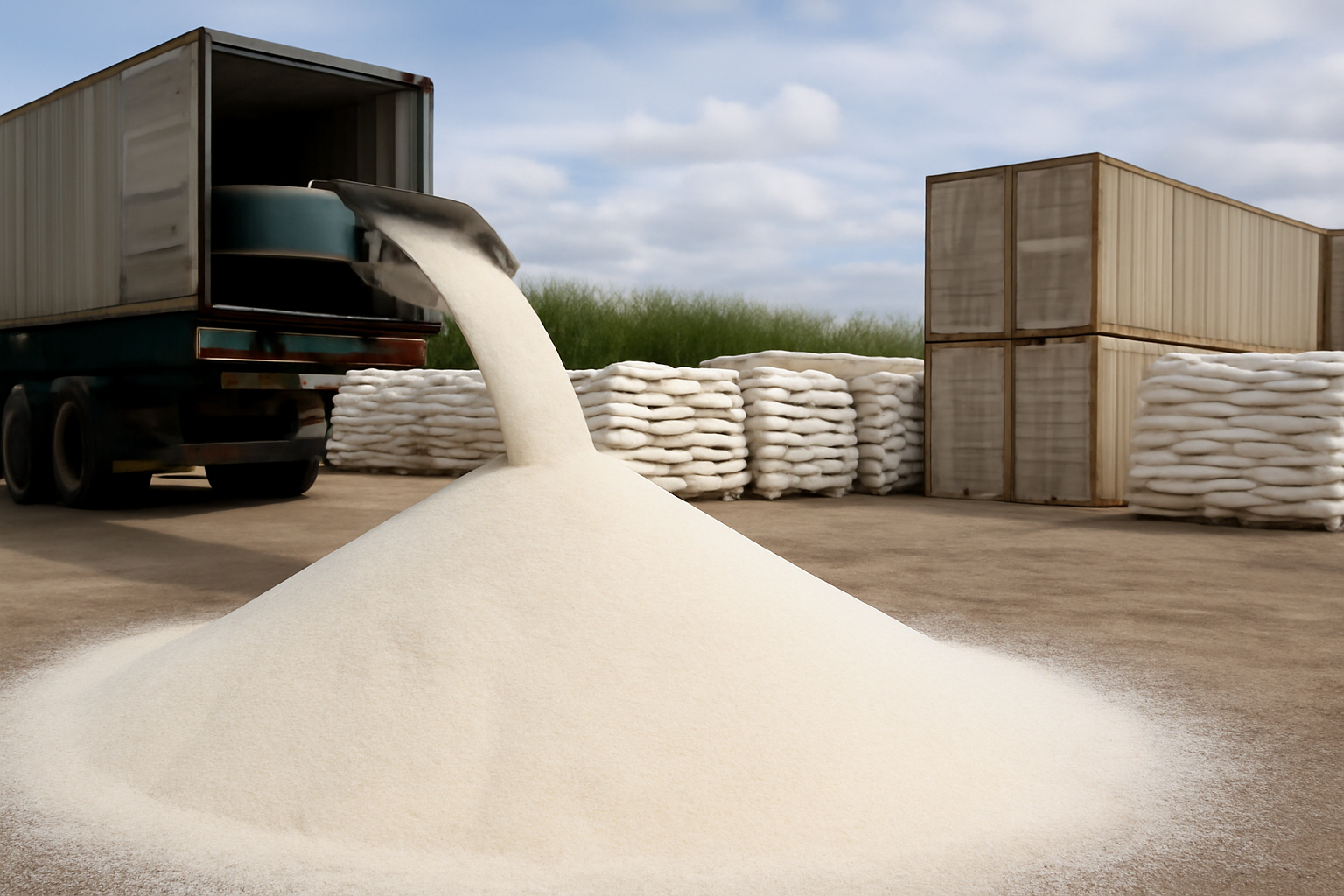
Imports accelerate in the first half of 2026
Imported sugar is taking a larger share of South Africa’s domestic market, increasing pressure on the country’s cane growers and mills. Eyewitness News reported that imports from Brazil, India, Thailand and Eswatini are increasingly competing with locally produced sugar on retail shelves and in the food manufacturing sector.
South African Revenue Service data cited by Eyewitness News show that 124,594 tonnes of duty-paid sugar entered South Africa between January and June 2026. That compares with only 1,619 tonnes during the same period in 2022. The increase has occurred even though South Africa produces enough sugar to meet domestic demand, according to SA Canegrowers CEO Dr Thomas Funke.
Local sales decline and exports rise
SA Canegrowers says sales of locally produced sugar have fallen by about 35%, equivalent to 188,000 tonnes, over three seasons. As domestic outlets have narrowed, the share of South African sugar that must be exported at a loss has increased from 22% to 37%.
The shift matters across the production chain. SA Canegrowers represents thousands of growers in KwaZulu-Natal and Mpumalanga, while the wider sugar value chain supports more than one million livelihoods. Lower domestic sales can reduce the volume handled by local mills and expose growers and processors to the lower prices available on the world market.
The industry’s concerns centre partly on the Sugar Cane Value Chain Master Plan, developed by the government and industry. Under the plan, retailers and food manufacturers appeared to commit to sourcing 95% of their sugar from South African producers. Growers now argue that this commitment is not being honoured as imported products gain shelf space and industrial customers.
Tariffs do not cover every supplier
The government adjusted the dollar-based reference price used for imported sugar to $785 per tonne in August. SA Canegrowers says the change may not fully close the gap between imported and domestic sugar. The reference price can affect duties on shipments from overseas suppliers, but the competitive position of regional trade is different.
Funke said sugar from neighbouring Eswatini can enter South Africa duty-free. He also pointed to cheaper electricity in Eswatini as one difference in production conditions. In his assessment, sugar arriving from Eswatini has the same commercial effect as Brazilian imports: it displaces South African output from the domestic market and pushes that volume onto the low-priced world market.
The figures indicate that the central issue is not a shortage of domestic production but access to the local customer base. For growers, mills, retailers and manufacturers, the next test will be whether the 95% local-sourcing commitment translates into purchasing decisions and whether the revised reference price slows duty-paid imports without addressing duty-free regional competition.