Sugar futures fall as improved Indian monsoon rains lift cane crop prospects
New York raw sugar and London white sugar futures declined as improved monsoon rains strengthened expectations for India’s sugarcane crop. The change in weather eased supply concerns, although the available market reports provided no production estimate.
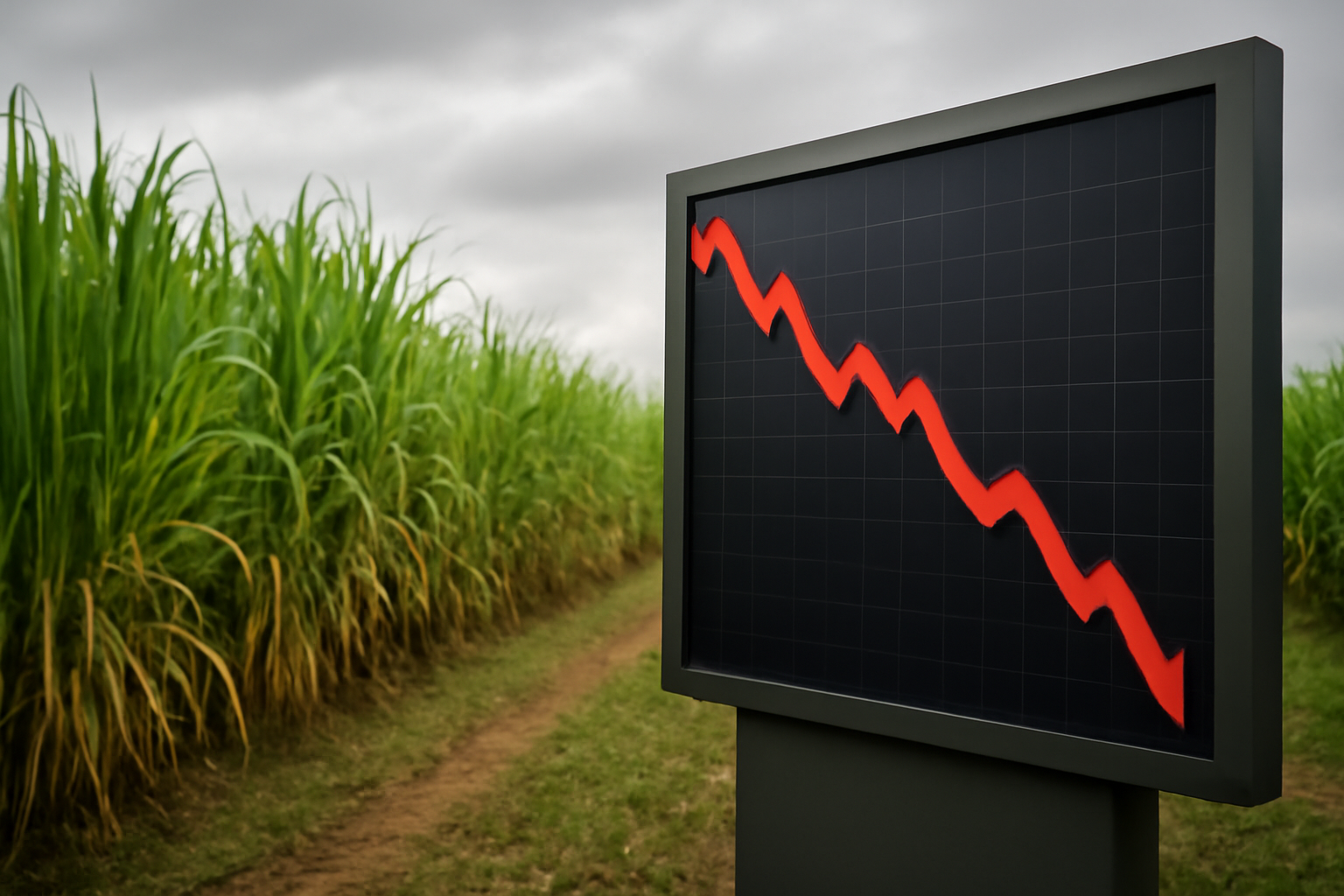
Indian rainfall weighs on sugar futures
Global sugar futures moved lower on Wednesday as improved monsoon rains in India supported expectations for a strong sugarcane crop. October New York world sugar No. 11 settled 0.14 lower, a decline of 0.94%, while October London ICE white sugar No. 5 closed down 4.60, or 0.98%.
The contracts had posted larger losses earlier in the session. October New York sugar was down 0.19, or 1.28%, while the London white sugar contract had fallen 5.20, or 1.11%. The smaller declines at settlement indicate that both markets recovered part of their intraday losses, but neither contract erased the pressure associated with the improved Indian weather outlook.
Crop expectations reshape the supply outlook
The market reaction reflects India’s importance to expectations for global sugar availability. Better monsoon rainfall can improve conditions for sugarcane, and the prospect of a stronger crop reduces concern about future supply. The available reports did not provide rainfall totals, crop forecasts or an estimate of India’s potential sugar output, so the price move was based on a change in production expectations rather than a confirmed increase in supply.
That distinction matters for producers, processors and traders. Rainfall can strengthen crop prospects, but futures markets must continue to assess whether improved conditions persist and ultimately translate into higher cane and sugar production. Without a quantified crop estimate, the current decline signals greater market confidence in Indian supply rather than certainty about the size of the harvest.
Raw and white sugar contracts moved by similar percentages at settlement. New York No. 11 lost 0.94%, while London No. 5 declined 0.98%. The parallel movement shows that the Indian weather signal affected both the raw sugar benchmark and the market for refined white sugar, rather than remaining confined to one contract.
Implications for market participants
For sugar producers, a sustained improvement in Indian crop prospects could add pressure to forward prices and influence decisions on sales and hedging. Processors and industrial buyers may see lower futures as an opportunity to review coverage, although the session’s partial recovery demonstrates that prices can respond quickly as weather expectations change.
Traders will now have to distinguish between better growing conditions and actual additional supply. The reports establish that monsoon rains improved and that futures declined, but they contain no figures for production, stocks, exports or domestic consumption. Those missing variables will determine how much Indian sugar is ultimately available to the world market.
Wednesday’s trading therefore marks an easing of supply anxiety, not confirmation of a surplus. India’s monsoon has become the immediate bearish factor, and the losses in both New York and London show that the weather outlook is already being reflected across the principal sugar benchmarks. Further direction will depend on whether crop expectations are supported by measurable production results.