Spanish rice growers take price crisis to Brussels as origin prices fall 40%
Spanish farm organisation Unión de Uniones has asked European Union institutions in Brussels for measures to address a crisis in the rice sector. The group says the price paid to growers at origin has fallen by 40% and attributes the decline to competition from imported rice.
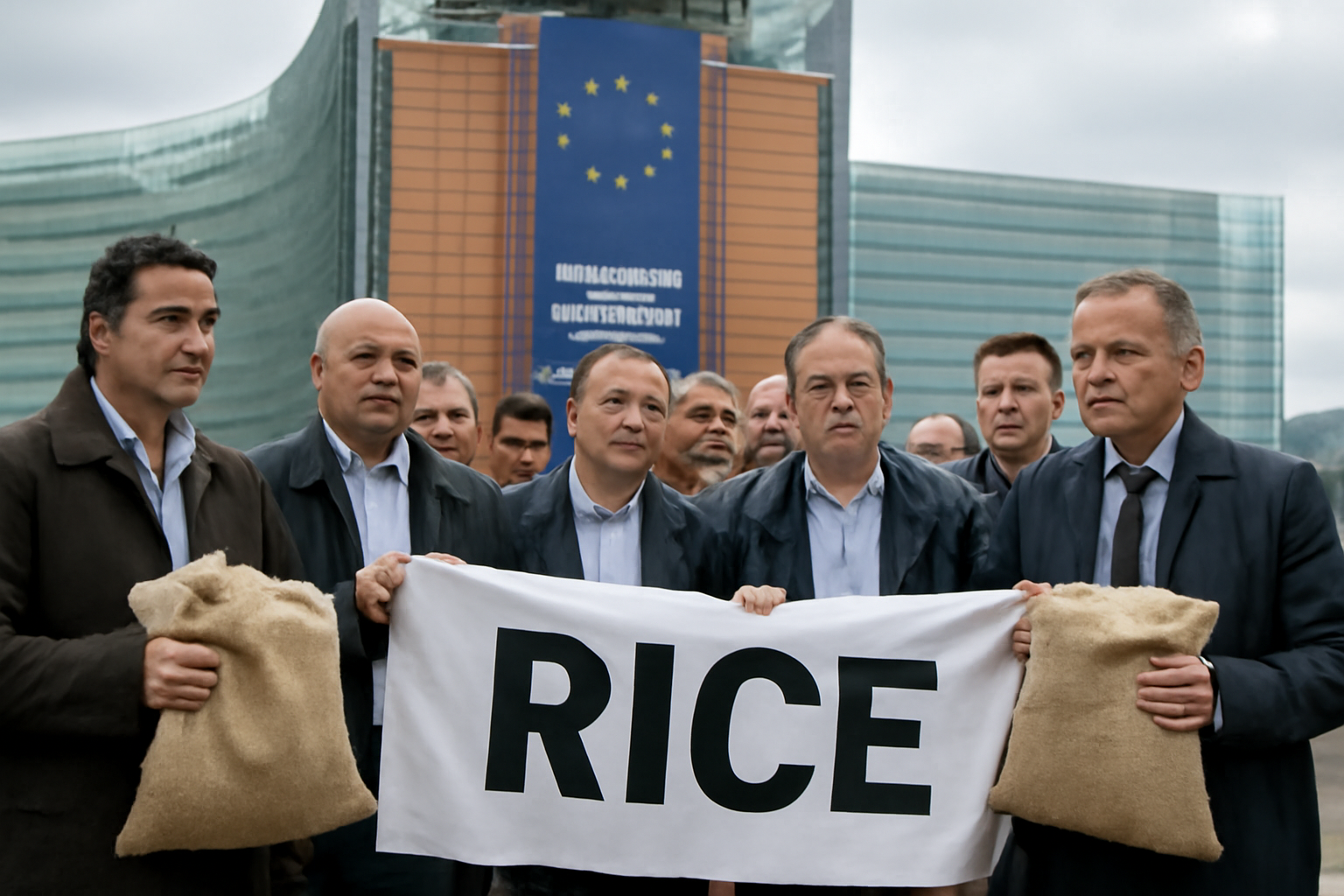
Spanish growers take the rice price complaint to Brussels
Unión de Uniones, one of Spain's farm and livestock organisations, has taken the rice sector's price situation to Brussels, asking European Union institutions for measures to address what it calls a crisis in the crop. The organisation says the price paid to growers at origin has fallen by 40%, and attributes the decline to competition from imported rice rather than to any weakening of domestic demand.
The distinction matters for how the complaint should be read. The 40% refers to the price at origin, the figure settled with producers when the crop leaves the farm, not to wholesale quotations or shelf prices, which move more slowly and are set further down the chain. A fall of that size at the first point of sale lands entirely on the grower, because most of the cost of a rice crop is committed long before the selling price is known.
What a 40% drop at the farmgate does to margins
Rice in Spain is grown under irrigation, which ties the crop to water allocations, pumping and energy costs, alongside seed, fertiliser, plant protection, machinery and land. Those costs are largely fixed by the time of harvest. When the origin price falls by 40% and the cost base does not follow, the loss is absorbed in a single season, and the usual response is a cut in planted area the following year rather than a reduction in cost per hectare.
For the rest of the chain the same movement reads differently. Mills, packers and traders that buy paddy at origin see their raw material repriced downwards, while importers competing against domestic supply gain ground when landed prices undercut local offers. Unión de Uniones frames imports as the cause of the fall, which places the complaint in trade policy rather than in domestic market management. Whether the shift in share proves durable depends on how long imported product stays cheaper than local supply.
Why the appeal goes to the EU rather than Madrid
That is also why the case was made in Brussels. Tariff schedules, preferential access granted to third countries, safeguard clauses and the monitoring of import volumes are European Union competences. A national government can support producers through domestic measures, but it cannot change the terms on which rice enters the single market. Any instrument capable of addressing an import-driven price fall, whether a safeguard review, tighter import monitoring or changes to preferential arrangements, has to be decided at EU level. The organisation's choice to raise the matter there is itself a statement about which lever it considers relevant.
What remains unclear
The account of the appeal is limited in detail. Several points will determine how much market impact it carries:
- the reference period over which the 40% fall in origin prices was measured;
- the specific instruments Unión de Uniones is asking the European Union to apply;
- the origins and volumes of the imported rice the organisation points to;
- whether producer groups in other EU rice-growing regions are raising the same complaint.
Until those are clarified, the number to track is the origin price itself. It is the variable that decides whether Spanish rice area holds or contracts in the next campaign, and it is the one the organisation has now placed in front of the European Union.