Spanish hog price reaches yearly high of €1.35/kg as ASF detections pause
Spain’s hog price has risen to €1.35 per kilogram, its highest level since the beginning of the year. The increase coincides with the first week without a newly detected African swine fever case since detections began.
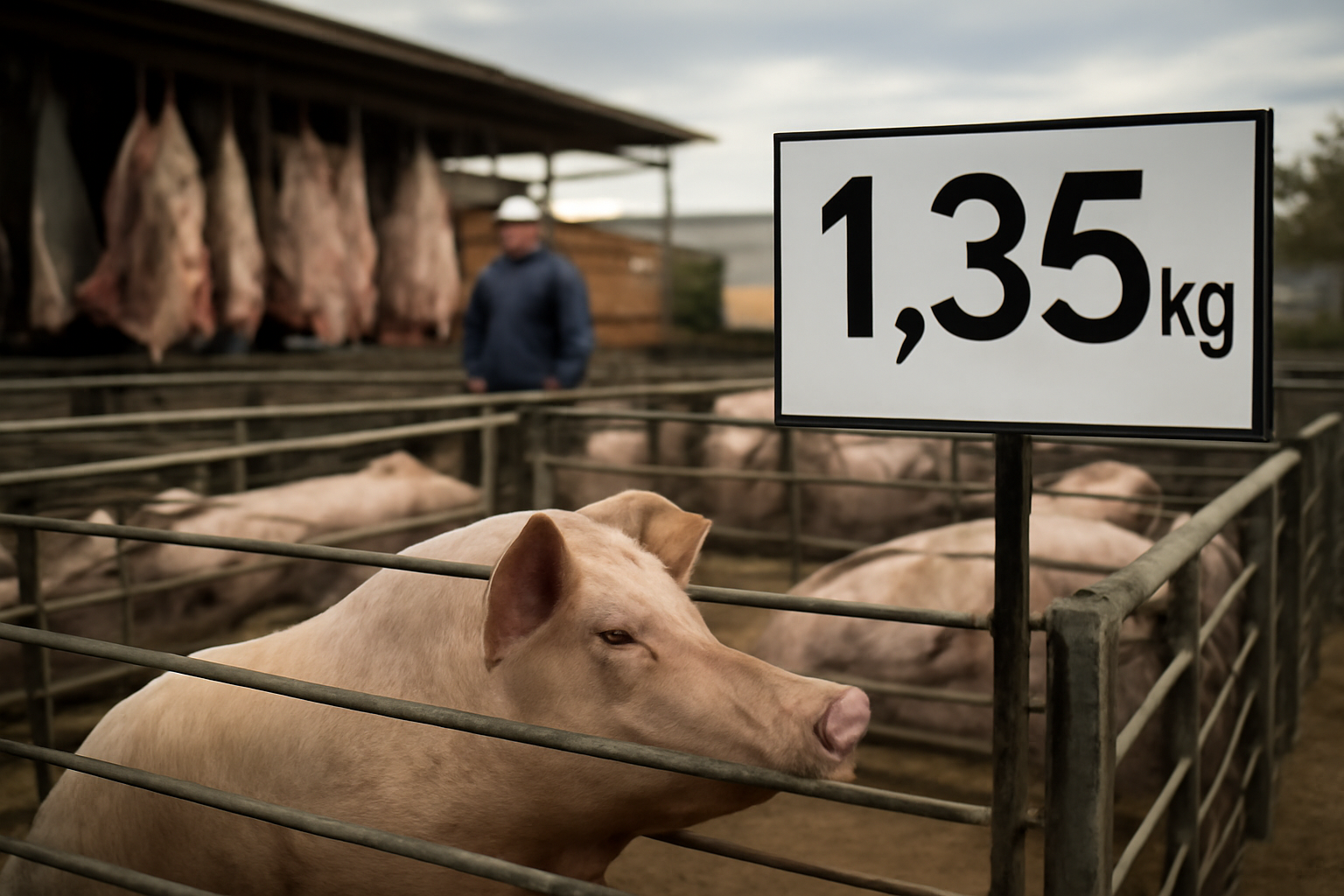
Hog price reaches €1.35 per kilogram
The price of hogs in Spain has reached €1.35 per kilogram, the highest level recorded since the beginning of the year. The move gives producers a firmer market reference after a period in which African swine fever, or ASF, detections added uncertainty to the outlook for the country’s pig sector.
The price increase coincides with the first week without a newly detected ASF case since detections began. A single case-free week does not establish that the animal-health risk has ended, but the pause is relevant for market confidence. Disease developments can affect expectations for farm operations, animal movements, slaughter availability and the commercial position of pork suppliers.
Case-free week supports confidence
The absence of new detections offers some immediate relief to producers and other companies across the pork chain. For farmers, the combination of a yearly price high and no new case during the week may reduce short-term pressure on sentiment. Processors and traders, however, still need to assess supply conditions cautiously because the available information does not indicate that the ASF threat has been eliminated.
The material provided does not specify the number or location of earlier cases, the date on which detections started, or whether authorities have changed disease-control measures. It also gives no figures for slaughter volumes, herd size, pork output or export sales. The rise to €1.35 per kilogram therefore cannot be attributed to a single supply, demand or regulatory factor on the basis of the available facts.
Market implications remain conditional
For producers, the higher price improves the value attached to market-ready animals, although its effect on margins also depends on costs that are not detailed in the source material. For slaughterhouses and processors, a stronger livestock price can raise raw-material costs. Whether those costs can be passed through to wholesale or retail pork buyers will depend on demand and contractual arrangements that have not been disclosed.
The next disease reports will be important for determining whether the case-free week marks the start of a more stable period or only a temporary pause. Market participants will also need to watch whether the €1.35-per-kilogram level is sustained. For now, the two confirmed signals are a yearly high in the Spanish hog price and one week without a newly detected ASF case; broader conclusions about supply or trade would require additional production, epidemiological and commercial data.